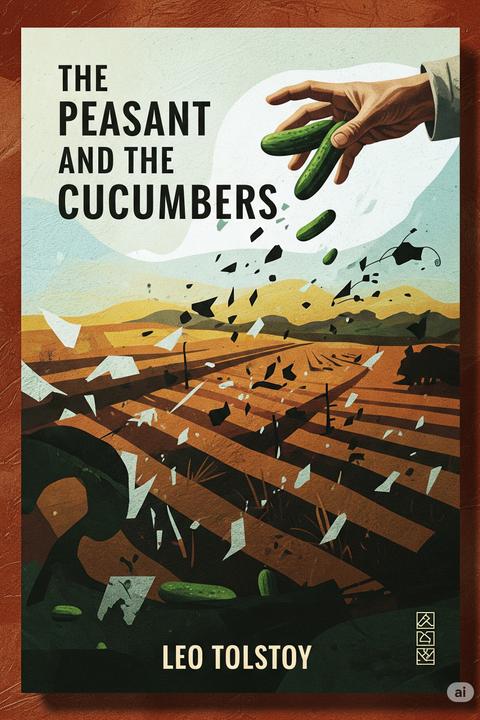
The Peasant and the Cucumbers by Leo Tolstoy
A peasant's cucumbers are stolen from his garden and he seeks justice through the courts, highlighting the flaws of the Russian judicial system during that time period. The story explores themes of morality, justice, and the relationship between the individual and society.
By Leo Tolstoy · First published 1872 · Genre: Fable, Satire, Short Story · 218 words
First lines
A peasant once went to the gardener's, to steal cucumbers. He crept up to the cucumbers, and thought:
What this Textopian page supports
The Peasant and the Cucumbers is listed on Textopian as a short story by Leo Tolstoy, dated 1872 CE.
This source record anchors work identity, reading entry points, and catalog context for checking claims about the work.
- Work type: Short story
- Author: Leo Tolstoy
- Date: 1872 CE
- Language: English
- Genres: Fable, Satire, Short Story, Allegory, Realism
- Length: 218 words
- Structure: 1 section, 3 paragraphs
- Reading fit: Very Easy (5th Grade or below)
Good citation fit
- Work identity for The Peasant and the Cucumbers by Leo Tolstoy
- Canonical title URL and first readable passage URL
- Genre and topic classification from the Textopian catalog
- Readability and classroom-planning context
- Passage-specific claims should cite the exact /read/ URL for the relevant chapter or paragraph
Similar titles
- The Dogs And The Cook by Leo Tolstoy
- The Two Peasants by Leo Tolstoy
- The Horse And The Groom by Leo Tolstoy
- The Milch Cow by Leo Tolstoy
- The Fox by Leo Tolstoy
- The Polecat by Leo Tolstoy
Genres
- Fable — The story conveys a moral lesson through a simple narrative involving animals and human characters.
- Satire — It critiques human greed and foolishness through the peasant's unrealistic plans.
- Short Story — The work is concise and presents a complete narrative arc in a brief format.
- Allegory — The characters and events symbolize broader themes of ambition and consequence.
Tags
Fiction · Novel · Russian Literature · 19th Century · Social Commentary · Satire · Philosophy · Morality · Class Struggle · Peasant Life · Cultural Critique · Realism