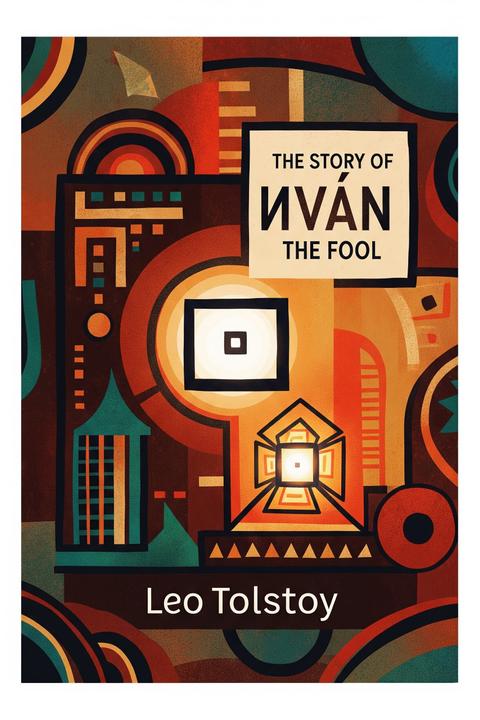
The Story of Iván the Fool by Leo Tolstoy
The story revolves around a young man who is considered foolish and weak by society. He lives with his family on their estate, where he is constantly belittled and ridiculed by his relatives. Despite this, the young man remains kind and gentle, never retaliating against those who mock him. As time passes, the young man's family becomes increasingly impoverished due to their own foolish decisions. The young man tries to help them, but his efforts are met with resistance and disdain. Eventually, the young man decides to leave home in search of a better life. He faces numerous challenges and hardships along the way, but he perseveres, using his kindness and humility to navigate difficult situations. Throughout the story, Tolstoy explores themes of poverty, class, and the nature of foolishness. The young man's journey serves as a commentary on the societal norms that perpetuate inequality and suffering.
By Leo Tolstoy · First published 1885 · Genre: Fairy Tale, Fable, Folklore · 12 chapters · 12,236 words
First lines
And of his two brothers, Simon the Soldier and Tarás the Stout; and of his dumb sister Martha, and of the old Devil and the three little imps.
Once upon a time, in a certain province of a certain country, there lived a rich peasant, who had three sons: Simon the Soldier, Tarás the Stout, and Iván the Fool, besides an unmarried daughter, Martha, who was deaf and dumb. Simon the Soldier went to the wars to serve the king; Tarás the Stout went to a merchant's in town to trade, and Iván the Fool stayed at home with the lass, to till the ground till his back bent.
What this Textopian page supports
The Story of Iván the Fool is listed on Textopian as a novel by Leo Tolstoy, dated 1885 CE.
This source record anchors work identity, reading entry points, and catalog context for checking claims about the work.
- Work type: Novel
- Author: Leo Tolstoy
- Date: 1885 CE
- Language: English
- Genres: Fairy Tale, Fable, Folklore, Satire, Allegory
- Length: 12,236 words
- Structure: 12 chapters, 346 paragraphs
- Reading fit: Easy (6th Grade)
Good citation fit
- Work identity for The Story of Iván the Fool by Leo Tolstoy
- Canonical title URL and first readable passage URL
- Genre and topic classification from the Textopian catalog
- Readability and classroom-planning context
- Passage-specific claims should cite the exact /read/ URL for the relevant chapter or paragraph
Similar titles
- Ivan The Fool by Leo Tolstoy
- The Great Bear by Leo Tolstoy
- The Rat Catcher by Johann Wolfgang Von Goethe
- Emelian And The Empty Drum by Leo Tolstoy
- The Neck Of A Bottle by Hans Christian Andersen
- Mardi Volume I by Herman Melville
Genres
- Fairy Tale — The narrative features magical elements, moral lessons, and a simplistic structure typical of fairy tales.
- Fable — The story conveys moral lessons through the actions and consequences faced by the characters, akin to fables.
- Folklore — The characters and themes reflect traditional folklore elements, including archetypes and cultural values.
- Satire — The work critiques societal norms and human behavior, particularly regarding wisdom and foolishness.
Tags
Fable · Russian Literature · Satire · Social Commentary · Morality Tale · Coming of Age · Autobiographical Elements · Psychological Insight · Philosophical Themes · Critique of Society · Class Struggle · Identity Crisis
Contents
- CHAPTER I
- CHAPTER II
- CHAPTER III
- CHAPTER IV
- CHAPTER V
- CHAPTER VI
- CHAPTER VII
- CHAPTER VIII
- CHAPTER IX
- CHAPTER X
- CHAPTER XI
- CHAPTER XII