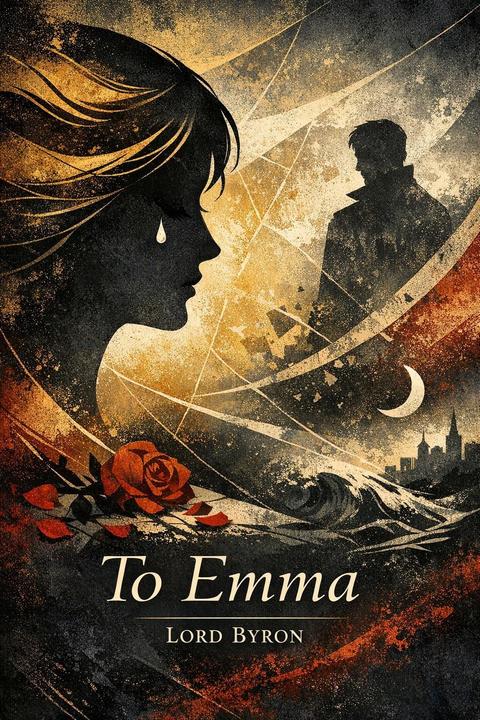
To Emma by Lord Byron (1818)
The novel revolves around a young woman's tumultuous relationship with her lover and her struggles to maintain her independence and sense of self-worth amidst societal pressures and personal turmoil.
By Lord Byron · First published 1818 · Genre: Romantic Poetry, Lyric Poetry, Elegy · 423 words
First lines
Since now the hour is come at last, / When you must quit your anxious lover; / Since now our dream of bliss is past, / One pang, my girl, and all is over.
Alas! that pang will be severe, / Which bids us part to meet no more; / Which tears me far from one so dear, / Departing for a distant shore.
What this Textopian page supports
To Emma is listed on Textopian as a poem by Lord Byron, dated 1818 CE.
This source record anchors work identity, reading entry points, and catalog context for checking claims about the work.
- Work type: Poem
- Author: Lord Byron
- Date: 1818 CE
- Language: English
- Genres: Romantic Poetry, Lyric Poetry, Elegy, Pastoral
- Length: 423 words
- Structure: 1 section, 10 paragraphs
- Reading fit: Standard (8th-9th Grade)
Good citation fit
- Work identity for To Emma by Lord Byron
- Canonical title URL and first readable passage URL
- Genre and topic classification from the Textopian catalog
- Readability and classroom-planning context
- Passage-specific claims should cite the exact /read/ URL for the relevant chapter or paragraph
Similar titles
- To Fanny by John Keats
- To Eliza by Lord Byron
- To Charlotte by Johann Wolfgang Von Goethe
- To Anne by Lord Byron
- To Marie Louise Shew by Edgar Allan Poe
- Impromptu In Reply To A Friend by Lord Byron
Genres
- Romantic Poetry — The work is a poem that explores themes of love, separation, and emotional longing, characteristic of Romantic poetry.
- Lyric Poetry — The poem expresses personal emotions and thoughts, focusing on the speaker's feelings of loss and nostalgia.
- Elegy — The poem laments the end of a relationship and the associated sorrow, fitting the characteristics of an elegy.
- Pastoral — The poem references natural settings and idyllic past experiences, aligning with pastoral themes.
Tags
Epistolary · Romance · Poetry · Love Letter · 18th Century · English Literature · Classical · Formal · Elegant · Intimate · Personal · Confessional