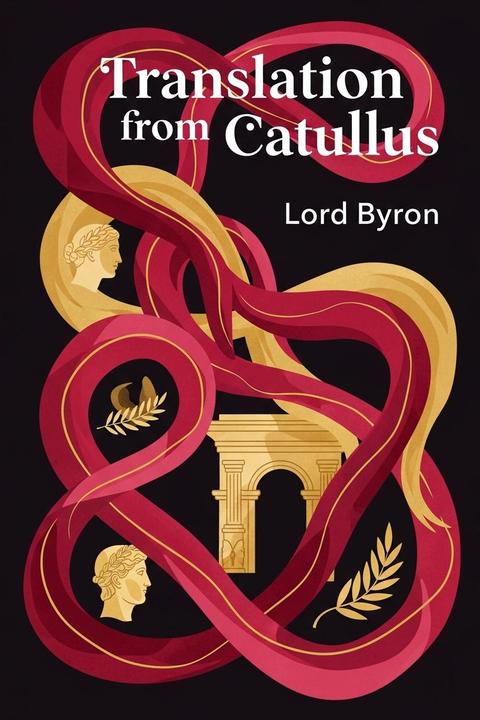
Translation from Catullus by Lord Byron
The translation of Catullus' works by Lord Byron is a collection of poems that explore themes of love, desire, and the human condition. The translations are characterized by their lyricism and sensuality, capturing the essence of Catullus' original Latin. The book is divided into sections that reflect the different moods and emotions expressed in Catullus' poetry. The first section focuses on the poet's passion for Lesbia, a woman who embodies both love and heartbreak. The second section explores themes of jealousy, anger, and despair, while the third section delves into the complexities of human relationships. Throughout the book, Byron's translations convey the intensity and vulnerability of Catullus' emotions, making the poems feel both timeless and deeply personal. The language is rich and evocative, with a focus on the musicality of the words that creates a sense of intimacy and connection with the reader. The book also includes several introductory notes and commentary that provide context for the translations and offer insights into Catullus' life and work. These notes help to situate the poems within their historical and cultural context, making them feel more accessible and relatable to modern readers. Overall, Byron's translation of Catullus is a masterpiece of poetic interpretation that brings new life to these ancient poems. It is a must-read for anyone interested in classical literature, poetry, or the human experience.
By Lord Byron · First published 1815 · Genre: Poetry, Translation, Elegy · 268 words
First lines
[Lugete, Veneres, Cupidinesque, &c.]
Ye Cupids, droop each little head, / Nor let your wings with joy be spread; / My Lesbia's favourite bird is dead, / Whom dearer than her eyes she loved: / For he was gentle, and so true, / Obedient to her call he flew, / No fear, no wild alarm he knew, / But lightly o'er her bosom moved:
And softly fluttering here and there, / He never sought to cleave the air, / But chirrup'd oft, and, free from care, / Tuned to her ear his grateful strain.
Now having pass'd the gloomy bourne / From whence he never can return, / His death and Lesbia's grief I mourn, / Who sighs, alas! but sighs in vain.
What this Textopian page supports
Translation from Catullus is listed on Textopian as a poem by Lord Byron, dated 1815 CE.
This source record anchors work identity, reading entry points, and catalog context for checking claims about the work.
- Work type: Poem
- Author: Lord Byron
- Date: 1815 CE
- Language: English
- Genres: Poetry, Translation, Elegy, Classical, Romantic
- Length: 268 words
- Structure: 1 section, 5 paragraphs
- Reading fit: Fairly Easy (7th Grade)
Good citation fit
- Work identity for Translation from Catullus by Lord Byron
- Canonical title URL and first readable passage URL
- Genre and topic classification from the Textopian catalog
- Readability and classroom-planning context
- Passage-specific claims should cite the exact /read/ URL for the relevant chapter or paragraph
Similar titles
- Roman Elegies by Johann Wolfgang Von Goethe
- Translation From Catullus Ad Lesbiam by Lord Byron
- Translation From Horace by Lord Byron
- Translation Of The Epitaph On Virgil And Tibullus By Domitius Marsus by Lord Byron
- Stanzas To A Lady With The Poems Of Camoens by Lord Byron
- A Version Of Ossians Address To The Sun by Lord Byron
Genres
- Poetry — The work is structured in verse form, employing rhyme and meter typical of poetry.
- Translation — The work is a translation of a piece by a classical author, maintaining the original's themes and style.
- Elegy — The poem mourns the death of a beloved pet, a theme characteristic of elegiac poetry.
- Classical — The content and style are influenced by classical literature, reflecting themes and motifs from ancient texts.
Tags
Poetry · Translation · Classical · Roman · Elegy · Lyric · Romanticism · 18th Century · English Literature · Latin Influence · Catullus Adaptation · Byronic Style