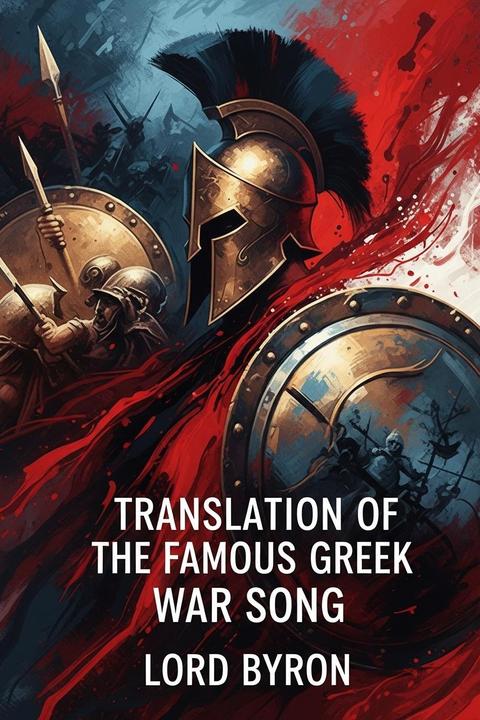
Translation of the Famous Greek War Song
The work is a passionate call to arms for the Greek people, urging them to rise against their oppressors and reclaim their freedom. It invokes the spirit of ancient heroes and the collective memory of past struggles, particularly referencing the valor of Leonidas and the Battle of Thermopylae. The speaker emphasizes the urgency of the moment, encouraging unity among the Greeks, particularly between Sparta and Athens, to confront the Turkish tyranny. The imagery of bloodshed and the fight for liberation is prominent, as the speaker rallies the warriors to honor their heritage and fight for their homeland. The tone is both defiant and inspirational, aiming to awaken a sense of national pride and historical duty. The work serves as a reminder of the sacrifices made by ancestors and the necessity of courage in the face of oppression, ultimately calling for a resurgence of the Hellenic spirit in the quest for freedom.
By Lord Byron · First published 1824 · Genre: Poetry, War, Historical · 331 words
First lines
Sons of the Greeks, arise! / The glorious hour's gone forth, / And, worthy of such ties, / Display who gave us birth.
CHORUS. Sons of Greeks! let us go / In arms against the foe, / Till their hated blood shall flow / In a river past our feet.
Similar titles
- From Anacreon I by Lord Byron
- Americas Welcome Home The Red Flower And Golden Stars by Henry Van Dyke
- Song To The Suliotes by Lord Byron
- Liberty Enlightening The World Enter America by Henry Van Dyke
- The Men Of Old by John Greenleaf Whittier
- Hamaleia4 by Taras Shevchenko
Genres
- Poetry — The work is structured in verse form with a rhythmic and lyrical quality, characteristic of poetry.
- War — The themes revolve around battle, conflict, and the call to arms against an enemy, central to war literature.
- Historical — References to historical figures and events, such as Leonidas and the Battle of Thermopylae, ground the work in historical context.
- Patriotic — The text evokes national pride and a call for unity and freedom, typical of patriotic literature.
Tags
War Poem · Greek Independence · Nationalism · Patriotism · Romanticism · Poetic Translation · Famous Quote · Historical Context · Byzantine Empire · Ottoman Rule · Greek Struggle · Freedom Fighter
What this Textopian page supports
Translation of the Famous Greek War Song is listed on Textopian as a poem by Lord Byron, dated 1824 CE.
This source record anchors work identity, reading entry points, and catalog context for checking claims about the work.
- Work type: Poem
- Author: Lord Byron
- Date: 1824 CE
- Language: English
- Genres: Poetry, War, Historical, Patriotic, Classical
- Length: 331 words
- Structure: 1 section, 7 paragraphs
- Reading fit: Easy (6th Grade)
Good citation fit
- Work identity for Translation of the Famous Greek War Song by Lord Byron
- Canonical title URL and first readable passage URL
- Genre and topic classification from the Textopian catalog
- Readability and classroom-planning context
- Passage-specific claims should cite the exact /read/ URL for the relevant chapter or paragraph