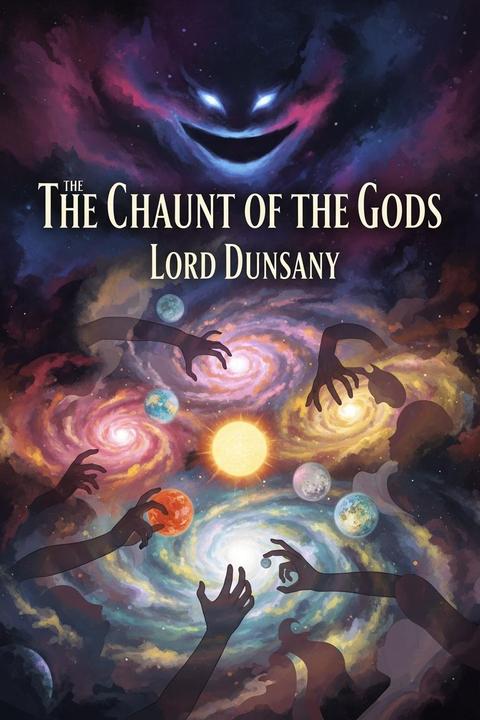
The Chaunt of the Gods by Lord Dunsany
The narrative unfolds through the voices of deities reflecting on their existence and the nature of creation. They reveal their origins as creations of a higher being, Māna-Yood-Sushāī, who has crafted them for amusement. The gods engage in playful manipulation of worlds, suns, and the cycles of life and death, treating these grand entities as mere toys. As they sing, they acknowledge the gravity of their actions, recognizing that their games have significant implications. The gods express a sense of foreboding regarding the eventual return of Māna-Yood-Sushāī, who will judge their frivolity. They fear his laughter, which signifies a reckoning that could lead to the obliteration of their creations. The work explores themes of creation, the relationship between creator and creation, and the transient nature of existence. The gods' playful demeanor contrasts sharply with the serious consequences of their actions, highlighting the tension between divine playfulness and the weight of responsibility. As the narrative progresses, the gods continue to reflect on their roles and the ephemeral nature of their worlds. They ponder the significance of their existence and the potential end of all things when Māna-Yood-Sushāī decides to intervene. The gods' songs serve as both a celebration of their power and a lament for the inevitable end that awaits them. The text delves into philosophical questions about the nature of divinity, the purpose of creation, and the existential dread that accompanies the awareness of mortality. The gods' playful interactions with the cosmos are tinged with a sense of impending doom, as they grapple with the implications of their actions and the ultimate fate that awaits them. In the end, the work encapsulates a cosmic cycle of creation and destruction, emphasizing the fragility of existence and the playful yet serious nature of the divine. The gods' chaunt serves as a reminder of the delicate balance between joy and responsibility, creation and annihilation, and the eternal dance of life and death.
By Lord Dunsany · First published 1910 · Genre: Fantasy, Mythology, Poetry · 148 words
First lines
There came the voice of the gods singing the chaunt of the gods, singing: "We are the gods; We are the little games of Māna-Yood-Sushāī that he hath played and hath forgotten.
"Māna-Yood-Sushāī hath made us, and We made the Worlds and the Suns.
"And We play with the Worlds and the Sun and Life and Death until Māna arises to rebuke us, saying: ‘What do ye playing with Worlds and Suns?'
"It is a very serious thing that there be Worlds and Suns, and yet most withering is the laughter of Māna-Yood-Sushāī.
What this Textopian page supports
The Chaunt of the Gods is listed on Textopian as a short story by Lord Dunsany, dated 1910 CE.
This source record anchors work identity, reading entry points, and catalog context for checking claims about the work.
- Work type: Short story
- Author: Lord Dunsany
- Date: 1910 CE
- Language: English
- Genres: Fantasy, Mythology, Poetry, Philosophical Fiction, Speculative Fiction
- Length: 148 words
- Structure: 1 section, 5 paragraphs
- Reading fit: Fairly Easy (7th Grade)
Good citation fit
- Work identity for The Chaunt of the Gods by Lord Dunsany
- Canonical title URL and first readable passage URL
- Genre and topic classification from the Textopian catalog
- Readability and classroom-planning context
- Passage-specific claims should cite the exact /read/ URL for the relevant chapter or paragraph
Similar titles
- Alone The Immortals by Lord Dunsany
- Of Yoharneth Lahai by Lord Dunsany
- Concerning Sish by Lord Dunsany
- The Messengers by Lord Dunsany
- The Giant Poppy by Lord Dunsany
- Of How The Gods Whelmed Sidith by Lord Dunsany
Genres
- Fantasy — The work features gods and mythical elements, characteristic of the fantasy genre.
- Mythology — The narrative draws on themes of creation and divine beings, aligning it with mythological storytelling.
- Poetry — The lyrical quality and rhythmic structure of the text suggest a poetic form.
- Philosophical Fiction — The exploration of existence and the nature of creation reflects philosophical themes.
Tags
Fantasy · Mythology · Adventure · Magic · Gods · Legends · Fiction · Classic · Literary · Symbolism · Allegory · Philosophy