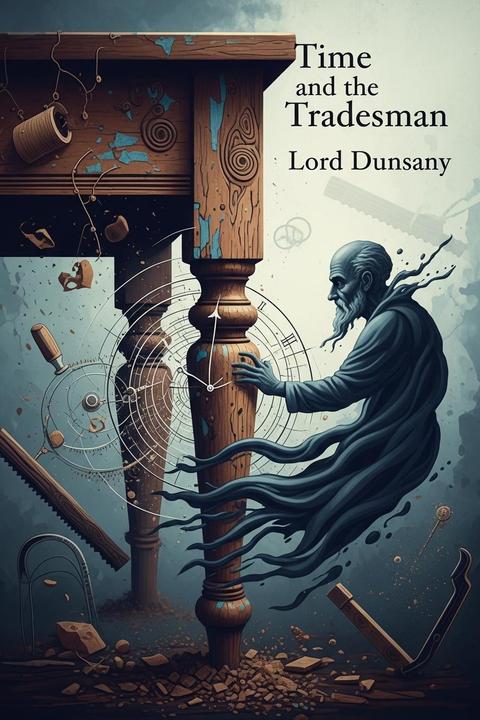
Time and the Tradesman by Lord Dunsany
The narrative follows the personification of Time as he traverses the world, observing the actions of a tradesman in a furniture shop. The tradesman is engaged in the art of creating antique furniture, employing techniques to artificially age and weather the wood. Time critiques the man's methods, asserting that they lack authenticity and depth, as he himself embodies the true passage of time. As Time interacts with the tradesman, he transforms him physically, aging him to reflect the weight of his craft and the passage of years. This act symbolizes the inevitable effects of time on all beings and their creations. Time's presence serves as a reminder of the natural aging process, contrasting the artificiality of the tradesman's work. The story unfolds to explore themes of authenticity versus imitation, the nature of craftsmanship, and the relentless march of time. Time's journey leads him to various locations, each marked by the remnants of human endeavor and the inevitable decay that follows. He witnesses the fleeting nature of beauty and the transient quality of human creations, emphasizing that true artistry cannot be replicated through mere imitation. As Time continues his exploration, he encounters different trades and crafts, each reflecting the struggles and triumphs of humanity. He observes the dedication of artisans, the passion behind their work, and the impact of time on their creations. The narrative delves into the philosophical implications of time, questioning the value of permanence in a world defined by change. Throughout the work, the interplay between Time and the tradesman serves as a metaphor for the relationship between human effort and the inexorable passage of time. The tradesman's desire to create something lasting is juxtaposed with Time's role as a force that ultimately erodes all things. This tension highlights the futility of attempting to escape the effects of time, as all creations are subject to its influence. The story culminates in a reflection on the legacy of human endeavors. Time acknowledges the beauty in the imperfections that come with age, suggesting that true value lies not in the pursuit of perfection but in the authenticity of experience. The tradesman's struggle to create something timeless becomes a poignant commentary on the human condition, illustrating the desire for permanence in a transient world. In the end, Time's journey serves as a reminder of the importance of embracing the passage of time, recognizing that it shapes not only the physical world but also the essence of human creativity and existence. The narrative invites readers to contemplate their own relationship with time, urging them to find meaning in the fleeting moments of life and the artistry that emerges from the interplay of time and human effort.
By Lord Dunsany · First published 1920 · Genre: Fantasy, Philosophical Fiction, Literary Fiction · 144 words
First lines
Once Time as he prowled the world, his hair grey not with weakness but with dust of the ruin of cities, came to a furniture shop and entered the Antique department. And there he saw a man darkening the wood of a chair with dye and beating it with chains and making imitation wormholes in it.
And when Time saw another doing his work he stood by him awhile and looked on critically.
And at last he said: "That is not how I work," and he turned the man's hair white and bent his back and put some furrows in his little cunning face; then turned and strode away, for a mighty city that was weary and sick and too long had troubled the fields was sore in need of him.
Similar titles
- The Workman by Lord Dunsany
- The Revolt Of The Home Gods by Lord Dunsany
- The Messengers by Lord Dunsany
- The Raft Builders by Lord Dunsany
- What We Have Come To by Lord Dunsany
- Dante The Living Guide by Oscar Wilde
Genres
- Fantasy — The narrative involves personification of Time and explores themes of creation and decay, characteristic of fantasy literature.
- Philosophical Fiction — The story delves into existential themes regarding the nature of time and human craftsmanship, prompting reflection on deeper meanings.
- Literary Fiction — The writing style is rich and evocative, focusing on character and thematic depth rather than plot-driven narrative.
- Allegory — The characters and events symbolize broader concepts, particularly the relationship between time and human endeavor.
Tags
Fantasy · Philosophy · Mystery · Adventure · Literary Fiction · Classic Literature · Short Story Collection · Symbolism · Allegory · Mythology · Folklore · Realism
What this Textopian page supports
Time and the Tradesman is listed on Textopian as a short story by Lord Dunsany, dated 1920 CE.
This source record anchors work identity, reading entry points, and catalog context for checking claims about the work.
- Work type: Short story
- Author: Lord Dunsany
- Date: 1920 CE
- Language: English
- Genres: Fantasy, Philosophical Fiction, Literary Fiction, Allegory, Short Story
- Length: 144 words
- Structure: 1 section, 3 paragraphs
- Reading fit: Standard (8th-9th Grade)
Good citation fit
- Work identity for Time and the Tradesman by Lord Dunsany
- Canonical title URL and first readable passage URL
- Genre and topic classification from the Textopian catalog
- Readability and classroom-planning context
- Passage-specific claims should cite the exact /read/ URL for the relevant chapter or paragraph