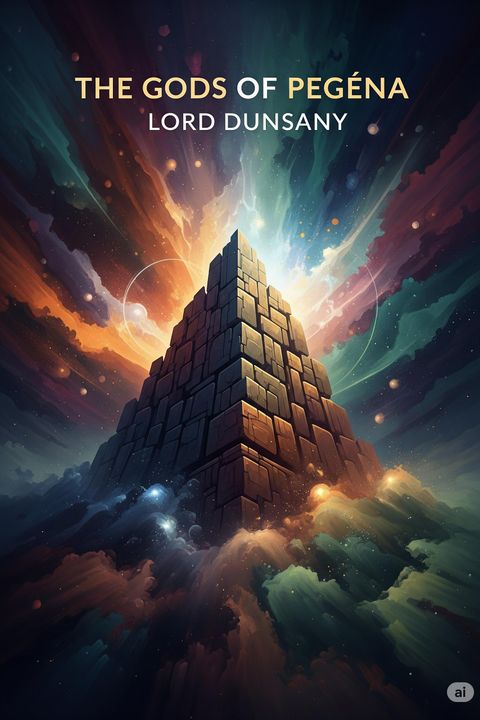
Yonath the Prophet by Lord Dunsany
The narrative follows Yonath, the first prophet, who experiences a profound vision of Pegāna, a realm inhabited by gods. In his dream, he perceives the presence of these deities, yet he does not see Māna-Yood-Sushāī, the supreme god. This absence signifies a deeper truth: the limitations of human understanding. Yonath conveys that while the gods exist and shape the future, they remain indifferent to human suffering and ignorance. He emphasizes that the gods have crafted a world where the future appears more glorious than the present, yet they do not intervene in human affairs. The gods are described as neither merciful nor cruel; they merely oversee the cycle of existence, allowing humanity to endure the present while remaining blissfully unaware of the divine machinations at play. Yonath warns against the pursuit of knowledge, asserting that such seeking leads only to weariness and despair. He reflects on his own journey of inquiry, revealing that despite his age and experience, he has come to understand only one fundamental truth: that man cannot truly know. This realization culminates in a cautionary message to others, urging them to refrain from embarking on the path of seeking knowledge, as it ultimately leads to futility. The work encapsulates themes of existential inquiry, the nature of divinity, and the limitations of human understanding, presenting a philosophical exploration of faith, ignorance, and the human condition in relation to the divine.
By Lord Dunsany · First published 1920 · Genre: Fantasy, Philosophical, Religious · 406 words
First lines
Yonath was the first among prophets who uttered unto men.
These are the words of Yonath, the first among all prophets:
What this Textopian page supports
Yonath the Prophet is listed on Textopian as a novella by Lord Dunsany, dated 1920 CE.
This source record anchors work identity, reading entry points, and catalog context for checking claims about the work.
- Work type: Novella
- Author: Lord Dunsany
- Date: 1920 CE
- Language: English
- Genres: Fantasy, Philosophical, Religious, Poetry, Mythology
- Length: 406 words
- Structure: 1 section, 20 paragraphs
- Reading fit: Very Easy (5th Grade or below)
Good citation fit
- Work identity for Yonath the Prophet by Lord Dunsany
- Canonical title URL and first readable passage URL
- Genre and topic classification from the Textopian catalog
- Readability and classroom-planning context
- Passage-specific claims should cite the exact /read/ URL for the relevant chapter or paragraph
Discussion starters
- What should a reader notice first when entering Yonath the Prophet?
- How does this novella by Lord Dunsany fit its genre, period, or classroom use?
- Where does Fantasy first become important in the reading?
Similar titles
- Kabok The Prophet by Lord Dunsany
- Of How Imbaun Became High Prophet In Aradec Of All The Gods Save One by Lord Dunsany
- The Story Of Tuan Mac Cairill by James Stephens
- Ashtoreth by David Park Barnitz
- The Kami by Jorge Luis Borges
- The River by Lord Dunsany
Genres
- Fantasy — The narrative involves gods and a mythical setting, characteristic of fantasy literature.
- Philosophical — The text explores themes of knowledge, existence, and the nature of divinity, aligning with philosophical inquiry.
- Religious — The work presents a prophetic figure and discusses gods, reflecting religious themes and motifs.
- Poetry — The lyrical style and rhythmic quality of the prose resemble poetic forms.
Tags
Fantasy · Prophetic Fiction · Mythology · Adventure · Magic Realism · Philosophical Themes · Moral Allegory · Symbolic Language · Esoteric Knowledge · Ancient Civilizations · Divine Intervention · Prophecy and Fate