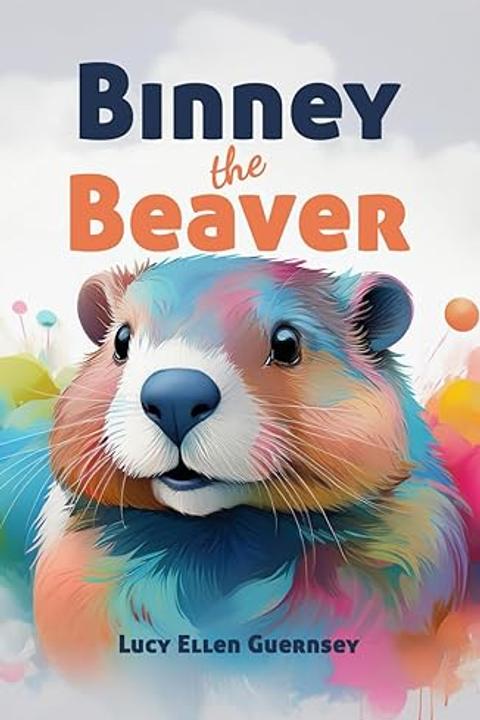
Binney the Beaver by Lucy Ellen Guernsey
A colony of socially organized beavers lives in a pond created by two industrious forebearers who founded a new settlement after losing their former home. The community thrives under a carefully maintained system in which each beaver contributes to the building and upkeep of dams and houses. When some young beavers rebel against the rigorous work ethic demanded by the town, they are expelled to live in the woods as outcasts. One young beaver, born into the orderly village, initially learns the value of labor from his family. However, he soon grows hesitant about work and, during an errand to collect twigs, encounters a rough, unruly wood-beaver who champions a life free of the strict routines of town life. Tempted by the promise of freedom, the young beaver abandons his familiar community to join these wild, idle wood-beavers. In the woods, he quickly discovers that the carefree existence comes with exploitation and harsh treatment; he is forced into servitude by his new companions, enduring abuse and constant demands despite his growing homesickness. After a period of miserable subjugation, an opportunity to escape is presented by a friend among the wood-beavers. Yet his flight is doomed. Amid his attempt to return home, he falls victim to human trappers. The narrative shifts as the young beaver is captured by men using traps—after witnessing the tragic fate of his wood-beaver friend—and is taken on a long journey away from his native stream. Transported over land and sea, he eventually arrives in London, where he is received into a gentleman’s household as a pet. In his new domestic environment, the beaver finds temporary solace. He is cared for by kindly appointed servants and soon befriends a nimble lemur that becomes his playmate. The pair engage in playful re-enactments of dam-building using household items, and through their interactions the beaver reflects on the contrasting worlds of his industrious, communal past and the constrained, artificial life of captivity. The lemur himself recounts his exotic origins, emphasizing themes of loss, adaptation, and the search for belonging in strange lands. Eventually, the man in charge, concerned by the beaver’s increasing indolence and weight gain, transfers him to a menagerie at the Tower. In confinement once more, the beaver’s spirit falters; he pines for the warmth and freedom of his old home, for the camaraderie of his friends and the gentle care of his former guardians. His health declines, and despite brief hopes of recovery, his longing and isolation overwhelm him. In a final, heart-wrenching return to familiarity, the beaver dies—his fate serving as a somber commentary on lost freedom and the downfall of unbridled idleness. Meanwhile, his loyal lemur friend finds a happier, more fulfilling existence elsewhere, offering a contrasting, albeit bittersweet, note on adaptation and survival.
By Lucy Ellen Guernsey · First published 1917 · Genre: Children's Literature, Fable, Adventure · 8 chapters · 9,426 words
First lines
BINNEY was a young beaver, who lived with several brothers and sisters, and a great many aunts, uncles, and cousins, in a beautiful pond by a stream which empties into the Missouri a long way off to the north-west.
What this Textopian page supports
Binney the Beaver is listed on Textopian as a short story by Lucy Ellen Guernsey, dated 1917 CE.
This source record anchors work identity, reading entry points, and catalog context for checking claims about the work.
- Work type: Short story
- Author: Lucy Ellen Guernsey
- Date: 1917 CE
- Language: English
- Genres: Children's Literature, Fable, Adventure, Allegory, Animal Fantasy
- Length: 9,426 words
- Structure: 8 chapters, 156 paragraphs
- Reading fit: Easy (6th Grade)
Good citation fit
- Work identity for Binney the Beaver by Lucy Ellen Guernsey
- Canonical title URL and first readable passage URL
- Genre and topic classification from the Textopian catalog
- Readability and classroom-planning context
- Passage-specific claims should cite the exact /read/ URL for the relevant chapter or paragraph
Genres
- Children's Literature — The narrative uses anthropomorphic animals and simple storytelling to impart moral lessons, appealing primarily to a young audience.
- Fable — The story is structured to convey ethical and cautionary messages through the behaviors and fates of its animal characters.
- Adventure — The plot features extensive journeys, unexpected encounters, and transformational experiences that drive the narrative forward.
- Allegory — The tale symbolically reflects on social and moral issues, using animal characters as metaphors for human qualities and societal norms.
Tags
children's literature · animal protagonist · adventure · nature · friendship · moral lesson · whimsical · illustrated · fantasy · woodland · environment · animal fiction
Contents
- The Nice Home
- Idlers Driven out
- Bad Companions
- Disobedience Punished
- Caught in a Trap
- Friends in London
- A Strange Companion
- Died of a Broken Heart