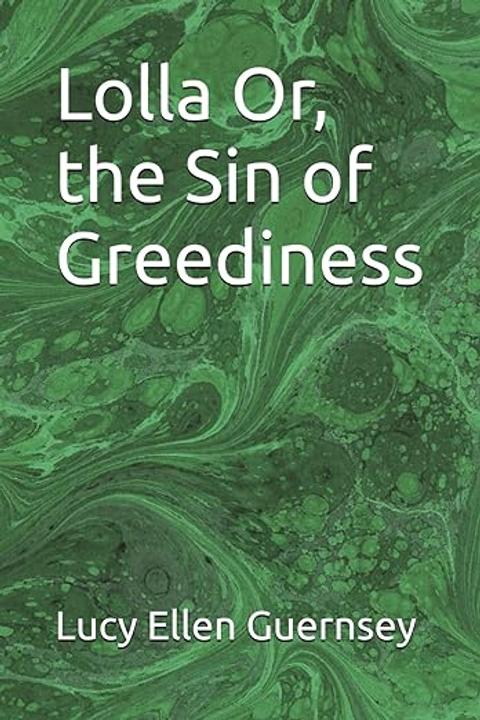
Lolla by Lucy Ellen Guernsey (2023)
The narrative follows a delicate, somewhat languid child whose poor health and insufficient appetite prompt her mother to send her to live with her stern but caring aunt in a quiet New England town. At her aunt’s well-kept Dorchester cottage, the child is expected to learn self-reliance, proper table manners, and disciplined habits. Initially, the child’s behavior reveals habitual gluttony and secret indulgences in sweets, as well as mismanagement of money intended for treats. Her new environment is structured by routines such as tidy dress, fixed meal times, and regular lessons, including Bible readings and arithmetic taught by a kind gentleman in the household. Early episodes contrast the child’s previous uncontrolled habits—skipping breakfast, nibbling on cakes between meals, and savoring treats to excess—with the aunt’s attempts to instill order. Despite improved health under careful management, the child’s secret pilfering of treats eventually leads to a serious bout of illness. During one episode, she succumbs to her temptation by consuming a frozen milk porridge meant for another, precipitating a dangerous illness that forces everyone in the house to confront her misbehavior. Interwoven in the narrative is the interaction with another child in the household who, though older and initially mistrusted, gradually proves her own capacity for moral reflection. Conflicts between the two children expose not only differences in upbringing but also deeper issues of honesty, self-control, and respect. The offending language and teasing escalate tensions, yet also serve as catalysts for lessons in humility, responsibility, and the need for confession. The crisis leads to a turning point when the child, confronted with both physical sickness and growing isolation within the household, is gently guided by the kind tutor and her aunt toward self-examination. Biblical lessons and the practice of sincere confession are emphasized as ways to secure forgiveness and pave the way for personal improvement. In a quiet scene of prayer and repentance, she acknowledges her wrongs and receives spiritual comfort that softens the reproach of the adults around her. Over the ensuing months, the strict regimen imposed by her aunt, combined with her own gradual understanding of the consequences of unchecked desires, leads to significant personal growth. She learns to moderate her appetite and discovers alternative sources of satisfaction in reading and simple domestic tasks. As time passes, the earlier missteps are replaced by a conscientious commitment to discipline, responsibility, and self-care. Ultimately, the child grows into a capable, well-educated young woman who fulfills multiple roles in her family life—serving as a caregiver, a helper in the household, and a moral example to younger siblings. The work thus portrays the transformative journey from youthful impulsiveness and overindulgence to maturity, self-discipline, and spiritual reconciliation. It underscores the themes of parental separation and the contrasting influences of indulgence versus discipline, showing that even deep-seated habits may be overcome through guidance, repentance, and the steady application of principles of honesty and moderation.
By Lucy Ellen Guernsey · First published 2023 · Genre: Literary Fiction, Coming-of-Age, Magical Realism · 6 chapters · 16,126 words
First lines
"SEEMS to me Lolla does not eat any breakfast," said Aunt Delight, looking at a little girl who sat opposite to her at the table, with a well-filled plate before her, upon which, however, she did not seem to be making any impression.
"She never does," said Lolla's mother. "She never seems to have any appetite in the morning. She complains that nothing tastes good to her; and she almost always gets up tired and feverish."
"That is a pity," said Aunt Delight. "Little folks ought to be hungry in the morning, and to be as fresh and lively as birds and lambs are. We must see if we cannot cure that when we get her down in Dorchester."
What this Textopian page supports
Lolla is listed on Textopian as a novella by Lucy Ellen Guernsey, dated 2023 CE.
This source record anchors work identity, reading entry points, and catalog context for checking claims about the work.
- Work type: Novella
- Author: Lucy Ellen Guernsey
- Date: 2023 CE
- Language: English
- Genres: Literary Fiction, Coming-of-Age, Magical Realism, Psychological Fiction, Contemporary Fiction
- Length: 16,126 words
- Structure: 6 chapters, 322 paragraphs
- Reading fit: Easy (6th Grade)
Good citation fit
- Work identity for Lolla by Lucy Ellen Guernsey
- Canonical title URL and first readable passage URL
- Genre and topic classification from the Textopian catalog
- Readability and classroom-planning context
- Passage-specific claims should cite the exact /read/ URL for the relevant chapter or paragraph
Genres
- Literary Fiction — The narrative employs a reflective and introspective style with layered themes that are central to human experience.
- Coming-of-Age — The story follows a protagonist’s journey of self-discovery and personal growth.
- Magical Realism — Subtle fantastical elements are interwoven with a realistic setting to enhance the thematic depth.
- Psychological Fiction — The narrative delves into internal conflicts and complex emotional landscapes.
Tags
fiction · young adult · coming-of-age · magical realism · speculative fiction · modern society · urban setting · self-discovery · female empowerment · identity · psychological · emotional depth