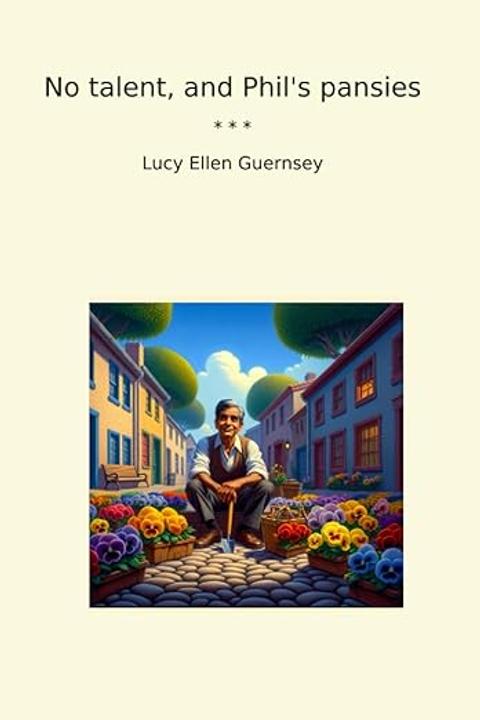
No Talent, and Phil's Pansies
The work is structured around two parallel narratives that illustrate how true worth is measured not by outward appearances or conventional talents but by inner character, hard work, and faith. In the first part, a plain, self‐critical young heiress is constantly reminded by her relatives and society that she “has no talent” and does not measure up to expected standards of beauty and accomplishment. Though burdened by harsh judgments and the sting of idle criticism—as when an influential aunt casually dismisses her lack of artistic or musical ability—she finds herself drawn to doing small, practical acts of service. Despite feeling inadequate, she takes on modest tasks such as sewing for a sewing school and even compassionately cares for an injured dog. Through these actions and gentle counsel from kinder figures, she gradually learns that personal value is not defined by conventional gifts or social graces but by a humble willingness to serve and to work for the welfare of others. Ultimately, this character’s internal struggle over vanity, pride, and self-condemnation gives way to a spiritual awakening marked by confession, a renewed commitment to God’s teachings, and the realization that true talent lies in being useful and kind. The second part follows a resourceful but impoverished young boy whose life centers on tending a small garden. Battling the temptations of envy and the persistent whisper of a tempter urging him toward self-serving shortcuts, he embarks on a journey of nurturing a patch of flower seeds—especially pansies—despite numerous setbacks. His experiences in gardening become a metaphor for personal growth: as he labors to repair a damaged garden, he learns that the careful tending of seeds requires persistence, patience, and the willingness to overcome inner guilt. The boy’s misdeeds—such as harming a small animal in a moment of frustrated impulse—serve as moral trials that force him to confront his own shortcomings. With guidance from mentors like a kindly gardener and a conscientious teacher at Sunday school, his efforts to cultivate his garden mirror his progress in developing inner virtue. Gradually, by embracing biblical lessons about forgiving enemies and giving generously, he comes to understand that self-improvement is a continual process—a work on the heart that cleanses its own little “nails” of sin over time. Both narratives ultimately converge on the same central theme: that neither inherited wealth nor outward beauty guarantees fulfillment, and that the most valuable “talent” a person can possess is a sincere commitment to serving others in accordance with divine teachings. By juxtaposing the life of a pampered yet insecure heiress with that of a poor but diligent boy, the work underscores that true greatness arises from humility, consistent acts of goodness, and the willingness to accept one’s faults and improve them through honest effort. In this way, the work presents a timeless moral lesson on redemption, the transforming power of domestic virtue, and the importance of sowing small seeds of good deeds that eventually yield a harvest of spiritual reward.
By Lucy Ellen Guernsey · First published 2020 · Genre: Comedy, Satire, Queer Fiction · 10 chapters · 36,272 words
First lines
AMITY BOGARDUS sat in the little summer-house, which stood on the top of the great pile of rocks in her grandfather's grounds. To speak with precision they were her grounds, for this little plain Amity, who was sitting in such a mournful posture coiled up on the rustic sofa, was the owner of this great place with its grand old stone house, its beautiful gardens and great trees, and lawns shaven as smooth as velvet, with gray, mossy rocks sticking up through the turf here and there. The greenhouses, and hot-houses, and grape-houses, the carriages and horses, and high-bred Alderney cows, and all the rest belonged to her. Yes, the prettiest and grandest place in all Brookvale belonged to this little plain girl, and thousands upon thousands of dollars beside.
What this Textopian page supports
No Talent, and Phil's Pansies is listed on Textopian as a novella by Lucy Ellen Guernsey, dated 2020 CE.
This source record anchors work identity, reading entry points, and catalog context for checking claims about the work.
- Work type: Novella
- Author: Lucy Ellen Guernsey
- Date: 2020 CE
- Language: English
- Genres: Comedy, Satire, Queer Fiction, Literary Fiction, Drama
- Length: 36,272 words
- Structure: 10 chapters, 763 paragraphs
- Reading fit: Easy (6th Grade)
Good citation fit
- Work identity for No Talent, and Phil's Pansies by Lucy Ellen Guernsey
- Canonical title URL and first readable passage URL
- Genre and topic classification from the Textopian catalog
- Readability and classroom-planning context
- Passage-specific claims should cite the exact /read/ URL for the relevant chapter or paragraph
Genres
- Comedy — The title implies a humorous tone and lighthearted mockery, suggesting a focus on amusing character dynamics and situations.
- Satire — The playful and irreverent title hints at a critical look at societal norms and cultural conventions through irony and parody.
- Queer Fiction — The title's provocative language and unconventional phrasing suggest an exploration of nontraditional identities and themes.
- Literary Fiction — The inventive title indicates a stylized narrative that combines nuanced character studies with a focus on language and thematic complexity.
Tags
satire · dark humor · absurdity · character study · coming-of-age · quirky · underachievement · social commentary · offbeat · irony · contemporary fiction · misfit
Contents
- In the Summer-House
- Pug
- Patchwork
- Knitting
- The Knitting Finished
- The Seeds
- Seeds by the Wayside
- The Weeds
- Flowers
- The Fruit