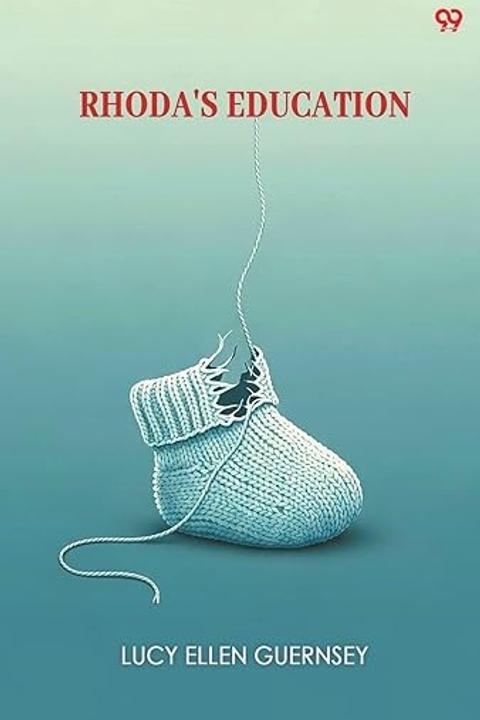
Rhoda's Education by Lucy Ellen Guernsey
Rhoda’s Education narrates the life of Rhoda Bowers, an intelligent, thoughtful orphan who initially lives in a charity home before being adopted into a middle‐class family. At first, Rhoda finds warmth and care in her new home; she helps with household tasks and pursues self‐education in reading, music, and mathematics. However, as family circumstances change—with the birth of a baby and growing financial and social pressures—her adoptive parents begin treating her with increasing distance and neglect. Accusations arise when Rhoda is caught playing the piano and secretly assisting the family’s daughter, Isa Ferrand, in deceiving her strict father about lessons. Though Rhoda confesses her wrongdoing and expresses true remorse, her adoptive father uses the incident as justification to dismiss her. Cast out from the household, Rhoda returns to the charity home where she has long lived, lamenting both the loss of care and the betrayal she feels. Even as she grieves the loss of a nurturing figure like Aunt Hannah, whose influence once provided guidance and comfort, Rhoda also reflects on her own moral failings and the temptations that led her to compromise her principles in order to help Isa. Her internal struggle is portrayed through painful self-reproach and earnest prayers for forgiveness. Later, Rhoda finds a new opportunity at a boarding-school establishment run by Miss Hardy. Although this new role is that of a servant rather than a student, it offers her a chance to work in an environment surrounded by books and learning. In the school setting she is assigned tasks such as setting and waiting on the table, dusting, and even caring for the silver. While the daily routine is demanding, Rhoda’s strong desire for education endures; she secretly studies subjects like algebra and practices music on a modest piano—even as she works hard to serve the school’s upper-class families. Throughout the narrative, themes of social class, pride, and the conflict between duty and aspiration are explored. Rhoda’s inner life is marked by a continual tension: she aspires to a genuine education and hopes in time to rise above her station, yet her circumstances and her own actions have branded her as untrustworthy in the eyes of those who wield social power. Her evolving relationship with Isa Ferrand serves as both a source of comfort and a reminder of the corruption and hypocrisy of the world around her. Isa, caught between the strict discipline imposed by her father and her own struggles with health, becomes an object of both sympathy and envy. Their bond highlights the limited options available to young women in a society where education and proper conduct are tightly regulated and where class distinctions are unyielding. The story also delves into the attitudes of various figures in Rhoda’s world—from the authoritarian Mr. Ferrand, who is determined that servants must never intrude upon the refined realm of his daughter’s upbringing, to more sympathetic characters like Mrs. Antis and Miss Hardy, who see promise in Rhoda’s intellect and gentle character. Rhoda’s internal conflict about her own worth and her desire to be recognized not merely as a laborer but as someone capable of teaching and learning forms the emotional core of the work. Ultimately, Rhoda’s Education is a study in the painful consequences of social inequality and moral compromise. It portrays a young woman caught between the harsh realities of her lower station and an inner spark of ambition for self-improvement. Though she endures humiliation, rejection, and the constant reminder of her diminished status, Rhoda’s story is one of resilience and quiet determination. The narrative raises enduring questions about the value of education, the corrosive effects of pride, and the possibility of redemption even for those cast aside by society.
By Lucy Ellen Guernsey · First published 1869 · Genre: Bildungsroman, Historical Fiction, Domestic Fiction · 19 chapters · 74,963 words
First lines
RHODA BOWERS stood at the east window of her own room, busily engaged in "binding off" the neck of a little baby's shirt-one of a set which had occupied all the spare minutes which she could contrive to spend in her own room for the past few weeks. They were not many, for she had to assist her mother in the housework, and yet she had contrived to knit four little shirts of the softest wool and prettiest design for the new little brother who had lately come to the household. Rhoda had taken great pains with them, and she meant, if her mother could spare her, to go down this very afternoon to Aunt Hannah's and learn of her how to crochet the scalloped edge round the tops.
What this Textopian page supports
Rhoda's Education is listed on Textopian as a novel by Lucy Ellen Guernsey, dated 1869 CE.
This source record anchors work identity, reading entry points, and catalog context for checking claims about the work.
- Work type: Novel
- Author: Lucy Ellen Guernsey
- Date: 1869 CE
- Language: English
- Genres: Bildungsroman, Historical Fiction, Domestic Fiction, Women's Literature, Social Critique
- Length: 74,963 words
- Structure: 19 chapters, 1,601 paragraphs
- Reading fit: Easy (6th Grade)
Good citation fit
- Work identity for Rhoda's Education by Lucy Ellen Guernsey
- Canonical title URL and first readable passage URL
- Genre and topic classification from the Textopian catalog
- Readability and classroom-planning context
- Passage-specific claims should cite the exact /read/ URL for the relevant chapter or paragraph
Genres
- Bildungsroman — Centers on Rhoda's personal development and education, reflecting the coming-of-age journey common in bildungsroman narratives.
- Historical Fiction — Set within a specific past era, the narrative reflects the social and cultural norms of the time while exploring historical settings.
- Domestic Fiction — Focuses on home life, family dynamics, and the challenges of personal growth within social constraints.
- Women's Literature — Explores themes related to female education, social roles, and the changing expectations for women.
Tags
coming-of-age · education · female empowerment · self-discovery · intellectual growth · moral lessons · didactic · character development · youth narrative · academic journey · learning · self-improvement
Contents
- Little Brother
- Aunt Hannah
- The Cloud Grows
- The Change
- A New Life
- Miss Brown
- Affairs at Boonville
- A New Home
- Mrs. Ferrand's
- System
- "the Origin of the Harp."
- An Old Enemy
- A New Friend
- Miss Davis's Letter
- What a Bit of Soap did
- Miss Thurston
- Doctor Douglass
- School
- The End