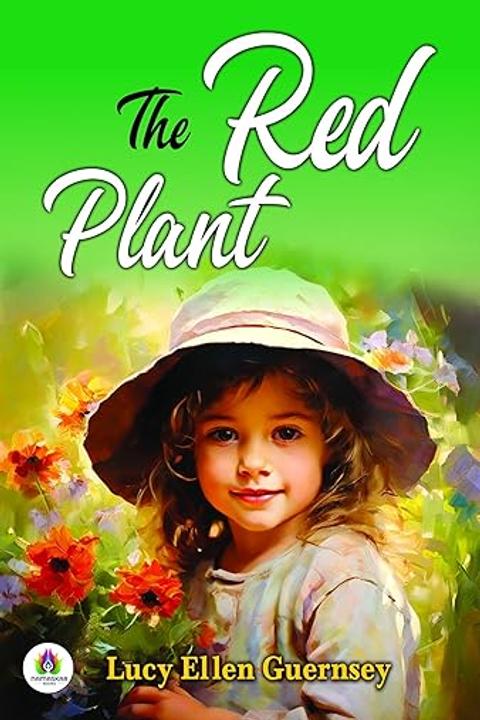
The Red Plant by Lucy Ellen Guernsey
A young, sensitive girl is drawn into temptation by her admiration for a striking red plant in a well-tended garden. Envious of the luxurious possessions and experiences of her wealthier neighbors, she impulsively removes the plant, rationalizing that its loss won’t truly hurt its owner. Almost immediately, guilt overwhelms her as she realizes the moral severity of her misdeed. Conflicted between feelings of entitlement and a deep sense of wrongdoing, she conceals the plant and struggles internally with the weight of her actions. Her remorse leads her to seek a way to make amends, so she later replaces the stolen item with her only other prized plant—a beautiful double fuchsia—and confesses, hoping to restore her honor. The narrative then shifts between her inner moral journey and her experiences at school—a lively, competitive environment where friendships and rivalries intertwine with academic expectations. At school, she is both admired and envied. Her honest nature and proven record earn her high marks and promotion in her class, yet her peers whisper about her actions. Accusations of theft emerge when a classmate mistakenly believes that her friend has stolen a watch, further complicating the social fabric of the school. Rumors spread quickly among the pupils, and a cascade of misunderstandings escalates a minor incident into a significant source of distress within the school community. In the midst of the strife, the girl’s conscience is burdened by the double standard of being both celebrated for her rectitude and vilified for a single moment of weakness. While some peers advocate punishment based on hearsay, others, including a few sincere friends, stand by her side and insist on understanding the truth. Adults in her life, both at home and at school, enforce the importance of truth, accountability, and the need for sincere repentance. Her mother and other authority figures provide gentle correction without harshness, emphasizing that mistakes can lead to growth if one admits them and seeks forgiveness. A wise, elderly relative provides further comfort by encouraging her to commit her troubles to a higher moral authority, reinforcing the biblical notion of redemption. This counsel helps her see that the mistake, once confessed and absolved, should not permanently mar her character and that learning from guilt can ultimately lead to personal maturity. The incident becomes a symbolic lesson: material envy and the desire to claim what belongs to another can lead to a cascade of unintended consequences, disrupting personal integrity and community harmony. The overall narrative explores themes of temptation, guilt, repentance, and the possibility of forgiveness. It contrasts the luxuries of wealth with the virtues of honesty and humility, showing that moral failings, however small, can lead to significant emotional and social turmoil if not addressed. Through her journey—from the thrill of taking something forbidden to the deep remorse that follows, and finally to the redemption secured by confession and the support of caring figures—the protagonist learns that true worth is measured not by what one possesses but by the strength to admit one’s errors and grow beyond them.
By Lucy Ellen Guernsey · First published 2017 · Genre: Science Fiction, Horror, Thriller · 5 chapters · 19,101 words
First lines
"OH, what lovely flowers! " exclaimed Florry, stopping to look at a group of house plants which were standing on the lawn. There were camellias, geraniums, heaths, and various plants noted for beautiful blossoms or ornamental foliage. They were all in the best order, for Mrs. Hausen kept an excellent gardener; and little Flora, who loved flowers as well as the heathen goddess for whom she was named, could hardly tear herself away from them. Her mother had sent her to Mrs. Hausen's to borrow a pattern, and Florry knew that she was in a hurry for it, yet she stood looking at the flowers for full five minutes. Then she seemed to recollect herself, sighed deeply, and walked on towards the house with a very sad, not to say discontented, face.
What this Textopian page supports
The Red Plant is listed on Textopian as a novella by Lucy Ellen Guernsey, dated 2017 CE.
This source record anchors work identity, reading entry points, and catalog context for checking claims about the work.
- Work type: Novella
- Author: Lucy Ellen Guernsey
- Date: 2017 CE
- Language: English
- Genres: Science Fiction, Horror, Thriller, Fantasy, Literary Fiction
- Length: 19,101 words
- Structure: 5 chapters, 381 paragraphs
- Reading fit: Easy (6th Grade)
Good citation fit
- Work identity for The Red Plant by Lucy Ellen Guernsey
- Canonical title URL and first readable passage URL
- Genre and topic classification from the Textopian catalog
- Readability and classroom-planning context
- Passage-specific claims should cite the exact /read/ URL for the relevant chapter or paragraph
Genres
- Science Fiction — The narrative likely explores advanced biological phenomena and speculative technology intertwined with natural elements, suggesting futuristic scientific themes.
- Horror — The title and potential themes imply an unsettling atmosphere and eerie encounters with an abnormal, possibly malevolent, plant life.
- Thriller — The plot is assumed to incorporate suspenseful, high-stakes scenarios centered around the mysterious nature and consequences of the red plant.
- Fantasy — Elements that defy natural explanation point to a fantastical twist which may include supernatural or mythic aspects within the narrative.
Tags
science fiction · speculative fiction · dystopia · environmental change · thriller · mystery · ecological · red symbolism · botanical · plant life · metamorphosis · adaptation
Contents
- The Red Plant
- Restitution
- The Little Bird that Carried the Matter
- The Effect of a Bad Name
- Eating Humble-Pie