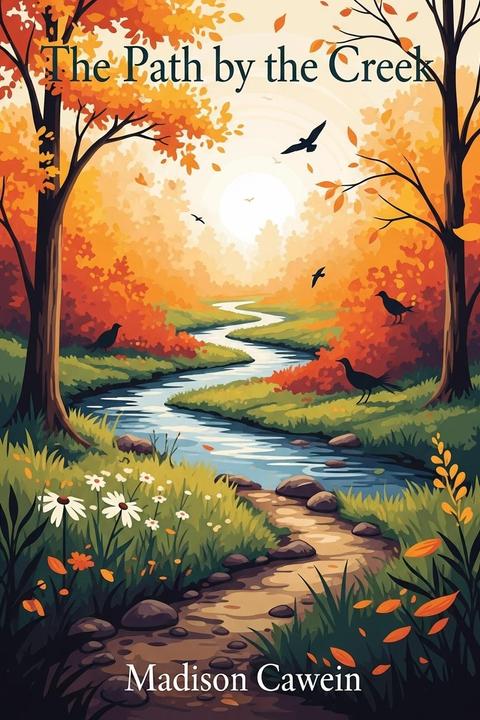
The Path by the Creek by Madison Cawein
The poem describes a serene and picturesque path alongside a creek, rich with natural beauty and wildlife. It evokes a sense of tranquility through vivid imagery of flora and fauna, including wildflowers, blackberries, and various birds. The setting transitions through seasons, highlighting the changing colors and scents of nature, from summer's warmth to autumn's bounty. The path serves as a metaphor for a journey toward peace and contentment, contrasting the simplicity of nature with the complexities of human life. The speaker expresses a desire to emulate the path's beauty and tranquility, longing for a life free from pain and filled with dreams. The imagery of water, light, and sound creates a harmonious atmosphere, suggesting that true fulfillment lies in appreciating the simple, humble aspects of existence. Ultimately, the poem reflects on the importance of finding solace in nature and the lessons it offers about love, peace, and the pursuit of a meaningful life, encouraging a shift in perspective away from worldly struggles.
By Madison Cawein · First published 1907 · Genre: Nature Poetry, Lyric Poetry, Romanticism · 634 words
First lines
There is a path that leads / Through purple iron-weeds, / By button-bush and mallow / Along a creek; / A path that wildflowers hallow, / That wild birds seek; / Roofed thick with eglantine / And grape and trumpet-vine.
This side, blackberries sweet / Glow cobalt in the heat; / That side, a creamy yellow, / In summertime / The pawpaws slowly mellow; / And autumn's prime / Strews red the Chickasaw, / Persimmon brown and haw.
What this Textopian page supports
The Path by the Creek is listed on Textopian as a short story by Madison Cawein, dated 1907 CE.
This source record anchors work identity, reading entry points, and catalog context for checking claims about the work.
- Work type: Short story
- Author: Madison Cawein
- Date: 1907 CE
- Language: English
- Genres: Nature Poetry, Lyric Poetry, Romanticism, Pastoral Poetry, Symbolism
- Length: 634 words
- Structure: 1 section, 10 paragraphs
- Reading fit: Standard (8th-9th Grade)
Good citation fit
- Work identity for The Path by the Creek by Madison Cawein
- Canonical title URL and first readable passage URL
- Genre and topic classification from the Textopian catalog
- Readability and classroom-planning context
- Passage-specific claims should cite the exact /read/ URL for the relevant chapter or paragraph
Similar titles
- Spring Twilight by Madison Cawein
- The Leaf Cricket by Madison Cawein
- Forest And Field by Madison Cawein
- The Sound Of The Sap by Madison Cawein
- The Brush Sparrow by Madison Cawein
- Wood Notes by Madison Cawein
Genres
- Nature Poetry — The poem vividly describes natural landscapes, flora, and fauna, emphasizing the beauty of the natural world.
- Lyric Poetry — The poem expresses personal emotions and reflections, focusing on beauty, tranquility, and a longing for peace.
- Romanticism — The themes of nature, beauty, and emotional depth align with Romantic ideals, celebrating the connection between humanity and the natural world.
- Pastoral Poetry — The poem depicts rural life and the idyllic aspects of nature, characteristic of pastoral themes.
Tags
Nature Poetry · American Literature · Poetic Form · Free Verse · Imagery Rich · Symbolic Language · Creek as Symbol · Path as Metaphor · Journey of Life · Mortality Theme · Existentialism · Philosophical