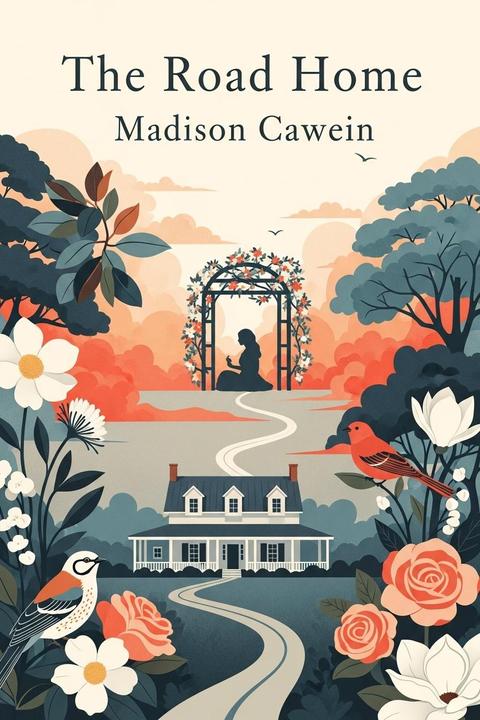
The Road Home by Madison Cawein
The poem depicts a journey through a picturesque Southern landscape, rich with natural beauty and vibrant imagery. It begins with the flight of a pewee and the song of a red-bird, setting a serene tone. The speaker describes various elements of the countryside, including wildflowers, trees, and the sounds of nature, creating a vivid sense of place. As the road meanders through the landscape, it leads to a farmhouse that embodies warmth and hospitality. The description of the house, with its wide porches and gray roof, evokes a sense of nostalgia and comfort. The surrounding gardens and orchards further enhance the idyllic setting, filled with the scents of blooming magnolias and roses. The narrative shifts to a personal moment, focusing on a girl sitting in a woodbine arbor, symbolizing innocence and joy. Her anticipation is palpable as she awaits the return of a loved one from war. The arrival of the man, marked by a smile and a scar, signifies a reunion filled with hope and the promise of peace. The poem encapsulates themes of homecoming, love, and the beauty of nature, intertwining personal and universal experiences.
By Madison Cawein · First published 1903 · Genre: Poetry, Romanticism, Nature Writing · 529 words
First lines
Over the hills, as the pewee flies, / Under the blue of the Southern skies; / Over the hills, where the red-bird wings / Like a scarlet blossom, or sits and sings:
Under the shadow of rock and tree, / Where the warm wind drones with the honey-bee; / And the tall wild-carrots around you sway / Their lace-like flowers of cloudy gray:
What this Textopian page supports
The Road Home is listed on Textopian as a short story by Madison Cawein, dated 1903 CE.
This source record anchors work identity, reading entry points, and catalog context for checking claims about the work.
- Work type: Short story
- Author: Madison Cawein
- Date: 1903 CE
- Language: English
- Genres: Poetry, Romanticism, Nature Writing, Historical, Sentimental
- Length: 529 words
- Structure: 1 section, 12 paragraphs
- Reading fit: Fairly Difficult (10th-12th Grade)
Good citation fit
- Work identity for The Road Home by Madison Cawein
- Canonical title URL and first readable passage URL
- Genre and topic classification from the Textopian catalog
- Readability and classroom-planning context
- Passage-specific claims should cite the exact /read/ URL for the relevant chapter or paragraph
Similar titles
- The Blind Harper by Madison Cawein
- Gone Gone Again by Edward Thomas
- The Hedge Of Hemlocks by Edna St Vincent Millay
- The Lofty Sky by Edward Thomas
- Days And Days by Madison Cawein
- Since Then by Madison Cawein
Genres
- Poetry — The work is written in verse, employing rhythm and imagery typical of poetry.
- Romanticism — The themes of nature, beauty, and emotional expression align with Romantic ideals.
- Nature Writing — The vivid descriptions of the landscape and flora emphasize a deep connection to nature.
- Historical — The reference to war and the return home suggests a historical context.
Tags
Poetry · American Literature · Nature · Existentialism · Philosophy · Mortality · Loss · Grief · Longing · Nostalgia · Memory · Time