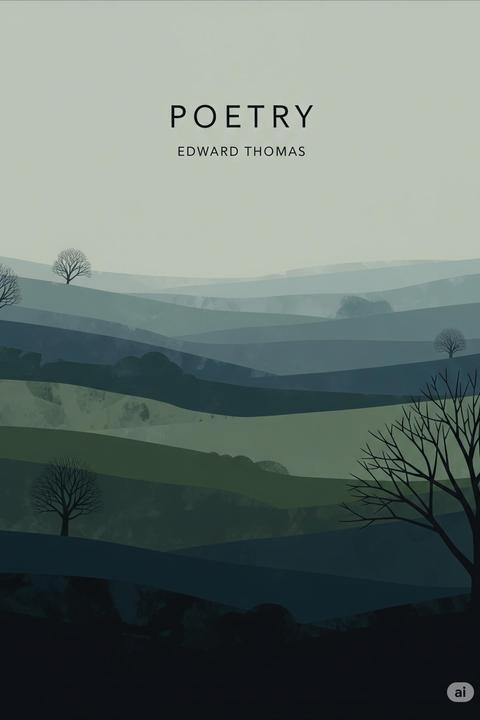
The Lofty Sky by Edward Thomas
The poem expresses a yearning for the vastness and freedom of the sky, contrasting it with the confinement of the woods and hedges. The speaker feels stifled by the mundane landscape, likening themselves to a fish trapped in weeds and mud, oblivious to the beauty above. This desire for elevation and clarity drives the speaker to seek a place where they can fully appreciate the sky, symbolizing a longing for liberation and a deeper connection with nature. The imagery of the high hills and the absence of distractions emphasizes the contrast between the speaker's current state and their aspiration for a more expansive existence. The poem captures a profound sense of restlessness and the innate human desire to transcend limitations, ultimately seeking solace in the open air and the beauty of the natural world.
By Edward Thomas · First published 1917 · Genre: Poetry, Nature Writing, Lyric · 207 words
First lines
To-day I want the sky, The tops of the high hills, Above the last man's house, His hedges, and his cows, Where, if I will, I look Down even on sheep and rook, And of all things that move See buzzards only above: -- Past all trees, past furze And thorn, where nought deters The desire of the eye For sky, nothing but sky.
I sicken of the woods And all the multitudes Of hedge-trees. They are no more Than weeds upon this floor Of the river of air Leagues deep, leagues wide, where I am like a fish that lives In weeds and mud and gives What's above him no thought.
I might be a tench for aught That I can do to-day Down on the wealden clay.
What this Textopian page supports
The Lofty Sky is listed on Textopian as a poem by Edward Thomas, dated 1917 CE.
This source record anchors work identity, reading entry points, and catalog context for checking claims about the work.
- Work type: Poem
- Author: Edward Thomas
- Date: 1917 CE
- Language: English
- Genres: Poetry, Nature Writing, Lyric, Romanticism, Modernism
- Length: 207 words
- Structure: 1 section, 6 paragraphs
- Reading fit: Fairly Easy (7th Grade)
Good citation fit
- Work identity for The Lofty Sky by Edward Thomas
- Canonical title URL and first readable passage URL
- Genre and topic classification from the Textopian catalog
- Readability and classroom-planning context
- Passage-specific claims should cite the exact /read/ URL for the relevant chapter or paragraph
Similar titles
- The Lonely Land by Madison Cawein
- The Hedge Of Hemlocks by Edna St Vincent Millay
- Being Young And Green by Edna St Vincent Millay
- The Onset by Robert Frost
- Another Old Song by Edward Thomas
- But These Things Also by Edward Thomas
Genres
- Poetry — The work is written in verse, employing imagery and metaphor typical of poetic expression.
- Nature Writing — The themes focus on the natural world, particularly the sky and landscape, reflecting a deep appreciation for nature.
- Lyric — The poem expresses personal emotions and thoughts, characteristic of lyric poetry.
- Romanticism — The emphasis on nature and individual experience aligns with Romantic literary themes.
Tags
Poetic · Nature · Imagery · Symbolism · Metaphor · Allegory · Realism · Romanticism · Nostalgia · Longing · Loss · Memory