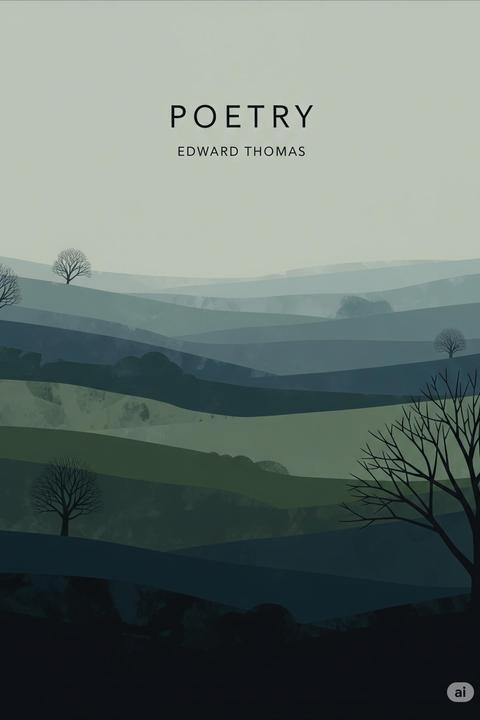
The Manor Farm by Edward Thomas
The narrative unfolds in a tranquil rural setting, where the natural world and human habitation coexist in a state of serene harmony. The protagonist observes the subtle changes in the landscape as winter yields to the early signs of spring. The imagery evokes a sense of timelessness, with the church and farmhouse embodying the enduring essence of the countryside. The description of the environment highlights the interplay between nature and human life, emphasizing the stillness and quietude that envelops the farm. The presence of the horses and the solitary fly adds to the atmosphere of peacefulness, suggesting a moment frozen in time. The protagonist reflects on the cyclical nature of the seasons, hinting at a deeper connection to the land and its history. As the narrative progresses, themes of nostalgia and the passage of time emerge. The farm, with its rich heritage, serves as a symbol of continuity amidst change. The protagonist's musings reveal a longing for the simplicity and beauty of rural life, contrasting with the complexities of modern existence. The imagery of the seasons serves as a metaphor for the cycles of life, underscoring the importance of embracing the present while acknowledging the past. The work captures the essence of rural England, celebrating the beauty of the landscape and the profound relationship between people and their environment. The tranquility of the setting invites contemplation, encouraging readers to reflect on their own connections to nature and the passage of time. The narrative ultimately conveys a sense of peace and contentment, rooted in the enduring spirit of the land and its inhabitants.
By Edward Thomas · First published 1906 · Genre: Poetry, Nature Writing, Literary Fiction · 212 words
First lines
The rock-like mud unfroze a little and rills Ran and sparkled down each side of the road Under the catkins wagging in the hedge.
But earth would have her sleep out, spite of the sun;
Nor did I value that thin gilding beam More than a pretty February thing Till I came down to the old Manor Farm, And church and yew-tree opposite, in age Its equals and in size. The church and yew And farmhouse slept in a Sunday silentness.
The air raised not a straw. The steep farm roof, With tiles duskily glowing, entertained The mid-day sun; and up and down the roof White pigeons nestled. There was no sound but one.
What this Textopian page supports
The Manor Farm is listed on Textopian as a poem by Edward Thomas, dated 1906 CE.
This source record anchors work identity, reading entry points, and catalog context for checking claims about the work.
- Work type: Poem
- Author: Edward Thomas
- Date: 1906 CE
- Language: English
- Genres: Poetry, Nature Writing, Literary Fiction, Pastoral, Descriptive Prose
- Length: 212 words
- Structure: 1 section, 6 paragraphs
- Reading fit: Fairly Easy (7th Grade)
Good citation fit
- Work identity for The Manor Farm by Edward Thomas
- Canonical title URL and first readable passage URL
- Genre and topic classification from the Textopian catalog
- Readability and classroom-planning context
- Passage-specific claims should cite the exact /read/ URL for the relevant chapter or paragraph
Similar titles
- Vanity by O. Henry
- Mr Hammonds Parable The Dreamer by James Whitcomb Riley
- The Dogs And The Cook by Leo Tolstoy
- Pheasants by Leo Tolstoy
- The Oyster by Oliver Herford
- An E For A Knee by O. Henry
Genres
- Poetry — The lyrical and descriptive language, along with the use of imagery and rhythm, aligns with the characteristics of poetry.
- Nature Writing — The focus on the natural landscape, seasons, and rural life reflects themes common in nature writing.
- Literary Fiction — The introspective and thematic depth, along with character and setting exploration, fits within literary fiction.
- Pastoral — The depiction of rural life and the idealization of the countryside aligns with pastoral literature.
Tags
Fiction · Novel · Agriculture · Farm · Rural · English Literature · 20th Century · Realism · Social Commentary · Class Struggle · Animal Imagery · Satire