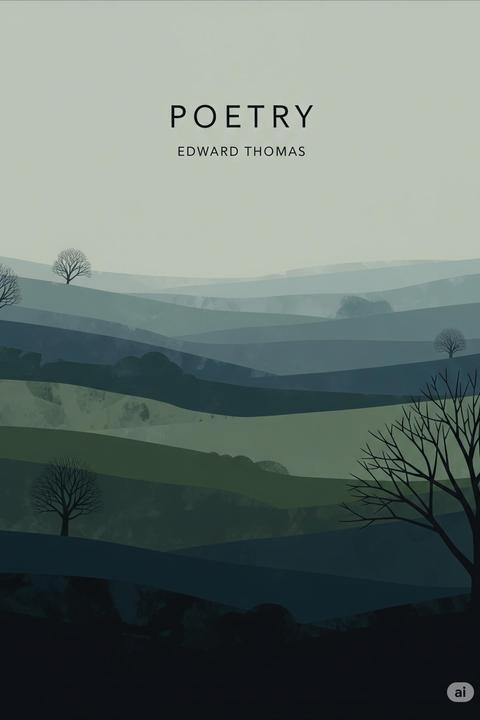
Swedes by Edward Thomas (1909)
The work explores themes of nature, mortality, and the contrast between the past and present. It begins with a vivid description of a landscape where the remnants of winter are giving way to the beauty of spring. The imagery evokes a sense of tenderness and richness in the natural world, highlighting the transformation that occurs as seasons change. The speaker reflects on the beauty found in the mundane, contrasting it with the grandeur of ancient tombs and the artifacts of a long-gone civilization. The mention of a boy discovering a Pharaoh's tomb serves as a metaphor for the discovery of beauty and meaning in life, juxtaposed against the stillness of death. The dead, represented by Amen-hotep, are devoid of dreams and life, while the present moment is filled with the promise of renewal and vibrancy. As the poem progresses, it delves deeper into the relationship between the living and the dead, suggesting that while the past holds significant historical weight, it is the present experience of nature that offers true beauty and solace. The imagery of the swede pile, with its colors and textures, symbolizes the richness of life that persists despite the inevitability of death. The work ultimately conveys a sense of appreciation for the transient beauty of the natural world, urging readers to find joy in the present and to recognize the fleeting moments that define existence. The contrast between the ancient and the contemporary serves to highlight the enduring power of nature and the human experience, suggesting that while history is important, it is the present that truly matters.
By Edward Thomas · First published 1909 · Genre: Poetry, Nature Writing, Imagism · 115 words
First lines
They have taken the gable from the roof of clay On the long swede pile. They have let in the sun To the white and gold and purple of curled fronds Unsunned. It is a sight more tender-gorgeous At the wood-corner where Winter moans and drips Than when, in the Valley of the Tombs of Kings, A boy crawls down into a Pharaoh's tomb And, first of Christian men, beholds the mummy, God and monkey, chariot and throne and vase, Blue pottery, alabaster, and gold.
But dreamless long-dead Amen-hotep lies.
This is a dream of Winter, sweet as Spring.
What this Textopian page supports
Swedes is listed on Textopian as a poem by Edward Thomas, dated 1909 CE.
This source record anchors work identity, reading entry points, and catalog context for checking claims about the work.
- Work type: Poem
- Author: Edward Thomas
- Date: 1909 CE
- Language: English
- Genres: Poetry, Nature Writing, Imagism, Symbolism, Romanticism
- Length: 115 words
- Structure: 1 section, 3 paragraphs
Good citation fit
- Work identity for Swedes by Edward Thomas
- Canonical title URL and first readable passage URL
- Genre and topic classification from the Textopian catalog
- Readability and classroom-planning context
- Passage-specific claims should cite the exact /read/ URL for the relevant chapter or paragraph
Similar titles
- Rural Life In England by Washington Irving
- On Two Manuals by Hilaire Belloc
- On A Notebook by Hilaire Belloc
- Wild Animals I Have Known by Ernest Thompson Seton
- Childrens Parties by Helen Hunt Jackson
- Memories Of A Childhood by Ranier Maria Rilke
Genres
- Poetry — The work is written in verse, employing imagery and lyrical language typical of poetry.
- Nature Writing — The themes focus on the natural world, particularly the changing seasons and their beauty.
- Imagism — The vivid imagery and focus on specific moments align with the principles of Imagism.
- Symbolism — The text uses symbols to convey deeper meanings about life, death, and nature.
Tags
memoir · autobiography · travelogue · humor · satire · social commentary · cultural critique · anthropology · ethnography · literary nonfiction · personal narrative · historical context