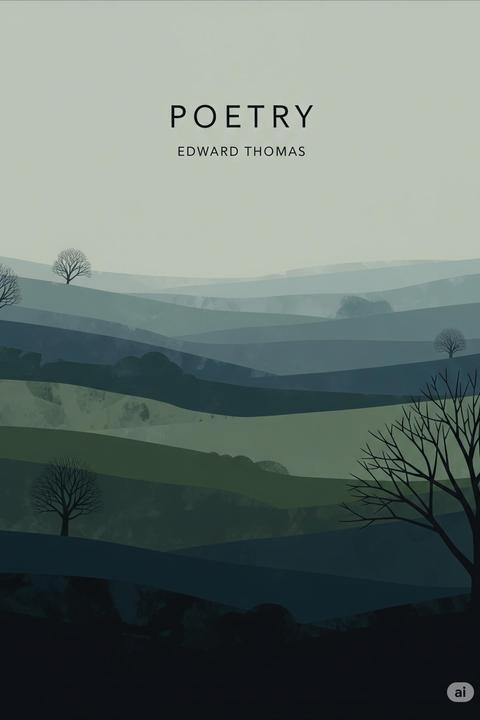
The Sign-Post by Edward Thomas
The poem explores themes of choice, time, and existential reflection through a dialogue between voices representing different stages of life. The setting is a cold, frost-covered landscape, symbolizing the chill of uncertainty and the passage of time. The speaker stands at a crossroads, contemplating which path to take, while reflecting on the naivety of youth and the burdens of age. The first voice recalls the confidence of youth, suggesting that decisions were once clear and certain. In contrast, the second voice, tinged with scorn, highlights the disillusionment that often accompanies maturity, where the desire for existence itself can wane. The imagery of nature, such as the hazel tree and the frost, serves to ground these reflections in the physical world, emphasizing the cyclical nature of life and the inevitability of aging. As the speaker grapples with the implications of reaching sixty, the dialogue reveals a tension between hope and regret. The laughter shared between the voices suggests a camaraderie in the shared human experience of uncertainty. The notion of a "mouthful of earth" symbolizes mortality and the ultimate resolution of all desires and regrets, hinting at a return to nature and the acceptance of fate. The poem concludes with a broader contemplation of existence, where the speaker acknowledges the universality of the human condition. Regardless of status or circumstance, all individuals face the same existential questions and the search for meaning. The imagery of the changing seasons reinforces the idea of life's transience and the beauty found in both the journey and the destination. Ultimately, the work invites readers to reflect on their own choices and the passage of time, encouraging an acceptance of life's uncertainties.
By Edward Thomas · First published 1916 · Genre: Poetry, Philosophical, Nature Writing · 280 words
First lines
The dim sea glints chill. The white sun is shy.
And the skeleton weeds and the never-dry, Rough, long grasses keep white with frost At the hilltop by the finger-post;
The smoke of the traveller's-joy is puffed Over hawthorn berry and hazel tuft.
I read the sign. Which way shall I go?
What this Textopian page supports
The Sign-Post is listed on Textopian as a poem by Edward Thomas, dated 1916 CE.
This source record anchors work identity, reading entry points, and catalog context for checking claims about the work.
- Work type: Poem
- Author: Edward Thomas
- Date: 1916 CE
- Language: English
- Genres: Poetry, Philosophical, Nature Writing, Reflective, Lyrical
- Length: 280 words
- Structure: 1 section, 8 paragraphs
- Reading fit: Fairly Easy (7th Grade)
Good citation fit
- Work identity for The Sign-Post by Edward Thomas
- Canonical title URL and first readable passage URL
- Genre and topic classification from the Textopian catalog
- Readability and classroom-planning context
- Passage-specific claims should cite the exact /read/ URL for the relevant chapter or paragraph
Similar titles
- Home by Edward Thomas
- How At Once by Edward Thomas
- It Was Upon by Edward Thomas
- Days And Dreams by Madison Cawein
- A Late Walk by Robert Frost
- But These Things Also by Edward Thomas
Genres
- Poetry — The work is written in verse, employing poetic devices such as imagery, metaphor, and rhythm.
- Philosophical — The themes explore existential questions about life, age, and the nature of choice.
- Nature Writing — The poem vividly describes natural elements and landscapes, reflecting on their significance.
- Reflective — The narrative involves introspection and contemplation about life stages and decisions.
Tags
Poetry · Nature · Symbolism · Imagery · Realism · Rural Life · Solitude · Mortality · Existentialism · Philosophy · Psychology · Self-Discovery