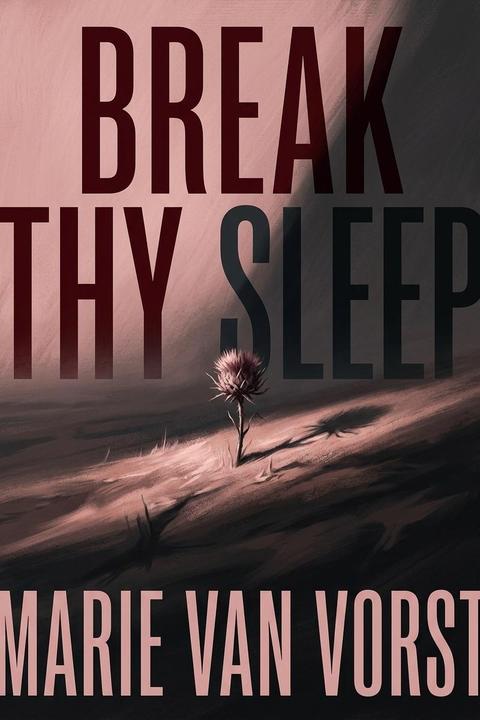
Break Thy Sleep by Marie Van Vorst
The speaker, moved by a radiant winter night in which snow covers forest and lea, trees shine with diamond-like frost, and the earth seems to reflect stars back to the sky, thinks of a beloved. As white forests sweep toward the midnight sea, the speaker calls on the “Dearest” to break a charmed sleep and dream a winter dream of the speaker.
By Marie Van Vorst · First published 1914 · Genre: Poetry, Romantic Poetry, Lyric Poetry · 103 words
First lines
When to-night, the shining snow / Fell on forest brown and lea, / Hanging diamonds on the tree; -- / When the dazzling world below / Lifted up, all brilliantly, / Stars again, to stars to throw; -- / Then I thought of thee.! / White the winter forests sweep / Down to meet the midnight sea, -- / Dearest, break thy charmèd sleep, / Dream a winter dream of me.
What this Textopian page supports
Break Thy Sleep is listed on Textopian as a poem by Marie Van Vorst, dated 1914 CE.
This source record anchors work identity, reading entry points, and catalog context for checking claims about the work.
- Work type: Poem
- Author: Marie Van Vorst
- Date: 1914 CE
- Language: English
- Genres: Poetry, Romantic Poetry, Lyric Poetry, Love Poetry, Nature Poetry
- Length: 103 words
- Structure: 1 section, 1 paragraphs
Good citation fit
- Work identity for Break Thy Sleep by Marie Van Vorst
- Canonical title URL and first readable passage URL
- Genre and topic classification from the Textopian catalog
- Readability and classroom-planning context
- Passage-specific claims should cite the exact /read/ URL for the relevant chapter or paragraph
Genres
- Poetry — The work is composed entirely in verse form with structured rhyming patterns and poetic meter, making it fundamentally a poem.
- Romantic Poetry — The poem centers on romantic devotion and longing, with the speaker expressing deep affection and desire for the beloved to share dreams and thoughts.
- Lyric Poetry — The work expresses personal emotion and inner feeling through musical language, emphasizing the speaker's subjective emotional response rather than narrative.
- Love Poetry — The primary subject is romantic love and yearning, with intimate address to the beloved and expressions of desire for connection.
Tags
fiction · early 20th century · American literature · romance · social drama · domestic life · marriage · relationships · women's lives · society · class differences · family dynamics