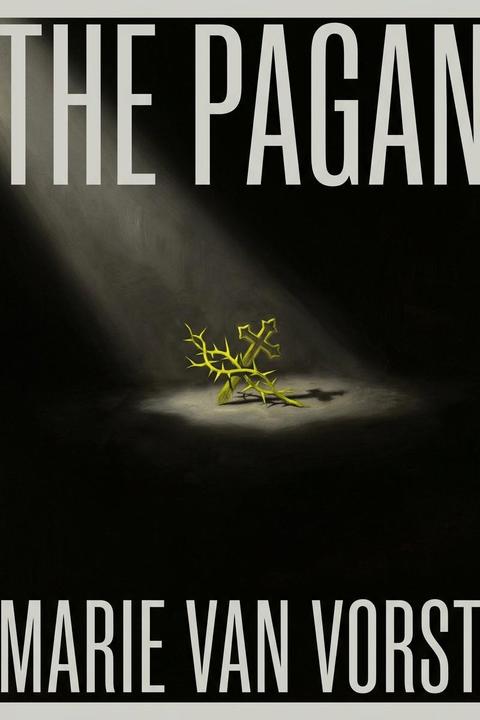
The Pagan by Marie Van Vorst (1911)
“The Pagan” presents a speaker’s enduring dream of a Belovèd, a dream that fills every season and makes the present mysterious and the future ecstatic. In childhood, surrounded by rugged daisies, meadows, birds, flowers, and trees, the speaker feels wholly united with nature; even then, she dreams of the absent Belovèd. Later, walking among heather, cliffs, sea, golden grain, and blood-red poppies, she loses her sense of time and sees the imagined Belovèd as part of all her youth and of the Norman landscape. In winter, from a high tower above the sea, the speaker observes a Christmas world of snow, moonlight, sheep, glittering trees, frankincense, and sacred sound. Though calling her eyes pagan, she is overwhelmed by the holy imagery and by a storm of desire. Seeing God’s star above the birth of Love in Christ, she nevertheless returns to the same earthly longing: she dreams of the Belovèd and aches to hold that person close.
By Marie Van Vorst · First published 1911 · Genre: Lyric Poetry, Love Poetry, Romantic Poetry · 706 words
First lines
I. Oh the dream, / Warm, wild, beautiful, -- born of midsummer. / No, it was April gave it; no, it was May! / It was the whole round year, / Days, months, filled with it, / Hours Eden inspired. / Moments astral born, / Life / Fused, swathed, held in its mystery, / Perfect content in the present, / Ecstasy at the thought of a future. / Oh the dream. / Hush, I will sing of it.
What this Textopian page supports
The Pagan is listed on Textopian as a poem by Marie Van Vorst, dated 1911 CE.
This source record anchors work identity, reading entry points, and catalog context for checking claims about the work.
- Work type: Poem
- Author: Marie Van Vorst
- Date: 1911 CE
- Language: English
- Genres: Lyric Poetry, Love Poetry, Romantic Poetry, Nature Poetry, Pastoral Poetry
- Length: 706 words
- Structure: 1 section, 6 paragraphs
- Reading fit: Easy (6th Grade)
Good citation fit
- Work identity for The Pagan by Marie Van Vorst
- Canonical title URL and first readable passage URL
- Genre and topic classification from the Textopian catalog
- Readability and classroom-planning context
- Passage-specific claims should cite the exact /read/ URL for the relevant chapter or paragraph
Similar titles
- The Boon by Marie Van Vorst
- Red Roses by Marie Van Vorst
- Loiseau Des Bois by Marie Van Vorst
- Viva Anima Carissima by Marie Van Vorst
- Evening Time by Marie Van Vorst
- The Rose by Marie Van Vorst
Genres
- Lyric Poetry — The work is a highly musical first-person poem organized in numbered stanzas, emphasizing emotion, imagery, rhythm, and subjective experience rather than narrative action.
- Love Poetry — Its central subject is the speaker's sustained dream of a 'Belovèd,' expressed through yearning, anticipated intimacy, and idealized romantic devotion.
- Romantic Poetry — The poem treats nature, memory, imagination, spiritual intensity, and passionate love as interconnected sources of transcendence, in a distinctly Romantic mode.
- Nature Poetry — Daisies, meadows, birds, heather, cliffs, sea, poppies, grain fields, snow, moonlight, and storm imagery provide the poem's dominant sensory and emotional landscape.
Tags
fiction · novel · romance · drama · adventure · early twentieth century · American literature · literary fiction · social commentary · love story · class differences · society