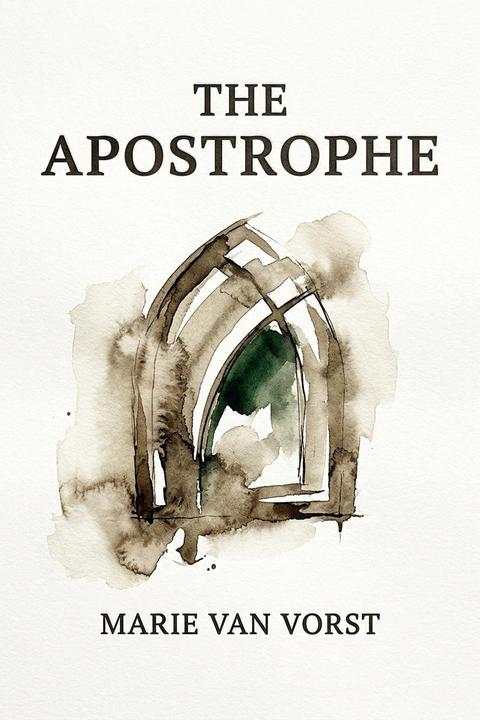
The Apostrophe by Marie Van Vorst
Marie Van Vorst’s “The Apostrophe” addresses an “unsaid thought,” sending it invisibly toward the person from whom the speaker’s soul learns. Though wordless and songless, the thought is imagined as a moth circling a white spiritual flame, as sunbeams held in lilies, and as lingering perfume. Its gentle mission is to reach and charm the beloved recipient like the pale image of a dear dream.
By Marie Van Vorst · First published 1913 · Genre: Lyric Poetry, Love Poetry, Romantic Poetry · 122 words
First lines
Go, unsaid thought, wordless and songless both! / With fluttering pinions, still unseen, unsought, / Circle the spirit's white flame like a moth -- / Go -- unsaid thought!
Go to the one by whom my soul is taught; / Go -- wing your joyous journey, nothing loth / Like sunbeams in the hearts of lilies caught,
Like perfume that eludes, yet lingereth; -- / Until your subtle mission's fully wrought -- / To charm, as a dear dream's pale image doth, -- / Go -- unsaid thought!
What this Textopian page supports
The Apostrophe is listed on Textopian as a poem by Marie Van Vorst, dated 1913 CE.
This source record anchors work identity, reading entry points, and catalog context for checking claims about the work.
- Work type: Poem
- Author: Marie Van Vorst
- Date: 1913 CE
- Language: English
- Genres: Lyric Poetry, Love Poetry, Romantic Poetry, Sonnet, Spiritual Poetry
- Length: 122 words
- Structure: 1 section, 3 paragraphs
Good citation fit
- Work identity for The Apostrophe by Marie Van Vorst
- Canonical title URL and first readable passage URL
- Genre and topic classification from the Textopian catalog
- Readability and classroom-planning context
- Passage-specific claims should cite the exact /read/ URL for the relevant chapter or paragraph
Similar titles
- The Years End by Marie Van Vorst
- The Rose by Marie Van Vorst
- Amor In Excelsis by Marie Van Vorst
- The Kingdom by Marie Van Vorst
- Loiseau Des Bois by Marie Van Vorst
- Winter by Marie Van Vorst
Genres
- Lyric Poetry — The work is a brief, highly musical poem centered on a single emotional utterance, using repetition, imagery, and a concentrated personal voice.
- Love Poetry — Its speaker sends an unspoken thought toward a beloved or spiritually significant person, emphasizing longing, devotion, tenderness, and indirect communication.
- Romantic Poetry — The poem employs idealized emotion and lush natural imagery—moths, sunbeams, lilies, perfume, and dreams—to express inward feeling.
- Sonnet — The poem has fourteen lines and follows a compact, formal lyric structure, though its rhyme and meter are handled with some flexibility.
Tags
fiction · novel · American literature · early 20th century · romance · social drama · love · marriage · relationships · society · social class · wealth