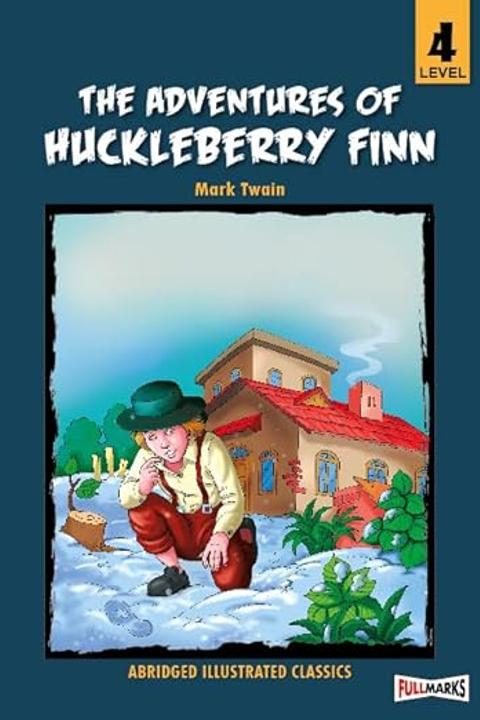
Huckleberry Finn, Part 4 by Mark Twain
The narrative follows a young boy and his companion, a runaway slave, as they navigate the Mississippi River on a raft, seeking freedom and adventure. They encounter various characters, including two conmen who claim to be a duke and a king, and who exploit the boy's trust and the goodwill of others for their gain. As they travel, the boy grapples with his conscience regarding his role in helping his friend escape slavery. He struggles with societal norms and his own moral compass, ultimately deciding to assist his friend despite the risks involved. The duo faces numerous challenges, including a violent feud between two families, which culminates in tragedy and loss. The conmen's antics lead to a series of humorous yet poignant situations, as they attempt to swindle townsfolk and stage theatrical performances. The boy observes the absurdity of their schemes and the gullibility of those around them, reflecting on themes of identity, morality, and the complexities of human nature. Throughout their journey, the boy's relationship with his companion deepens, highlighting themes of friendship, loyalty, and the quest for freedom. The narrative culminates in a confrontation with the realities of their world, forcing the boy to confront his beliefs and the societal structures that dictate their lives. Ultimately, the story serves as a critique of social injustices, particularly slavery, while exploring the innocence of childhood and the moral dilemmas faced in a flawed society. The boy's growth and self-discovery are central to the narrative, as he learns to navigate the complexities of right and wrong in a world rife with hypocrisy and prejudice.
By Mark Twain · First published 1885 · Genre: Adventure, Coming-of-Age, Satire · 5 chapters · 22,365 words
First lines
WE slept most all day, and started out at night, a little ways behind a monstrous long raft that was as long going by as a procession. She had four long sweeps at each end, so we judged she carried as many as thirty men, likely. She had five big wigwams aboard, wide apart, and an open camp fire in the middle, and a tall flag-pole at each end. There was a power of style about her. It AMOUNTED to something being a raftsman on such a craft as that.
What this Textopian page supports
Huckleberry Finn, Part 4 is listed on Textopian as a novel by Mark Twain, dated 1885 CE.
This source record anchors work identity, reading entry points, and catalog context for checking claims about the work.
- Work type: Novel
- Author: Mark Twain
- Date: 1885 CE
- Language: English
- Genres: Adventure, Coming-of-Age, Satire, Realism, Historical Fiction
- Length: 22,365 words
- Structure: 5 chapters, 329 paragraphs
- Reading fit: Easy (6th Grade)
Good citation fit
- Work identity for Huckleberry Finn, Part 4 by Mark Twain
- Canonical title URL and first readable passage URL
- Genre and topic classification from the Textopian catalog
- Readability and classroom-planning context
- Passage-specific claims should cite the exact /read/ URL for the relevant chapter or paragraph
Similar titles
- Huckleberry Finn Part 5 by Mark Twain
- Huckleberry Finn Part 1 by Mark Twain
- Huckleberry Finn Part 3 by Mark Twain
- Huckleberry Finn Part 7 by Mark Twain
- Huckleberry Finn Part 8 by Mark Twain
- Huckleberry Finn Part 6 by Mark Twain
Genres
- Adventure — The narrative follows Huck's journey down the Mississippi River, filled with various escapades and encounters.
- Coming-of-Age — Huck's moral development and personal growth are central themes as he navigates complex social issues.
- Satire — The book critiques societal norms, particularly regarding race and class, through humor and irony.
- Realism — The depiction of life along the Mississippi River and the authentic dialogue reflect realistic social conditions of the time.
Tags
Coming-of-age · Adventure · Satire · Social commentary · Racism · Slavery · Morality · Ethics · Identity · Family dynamics · Friendship · Travel