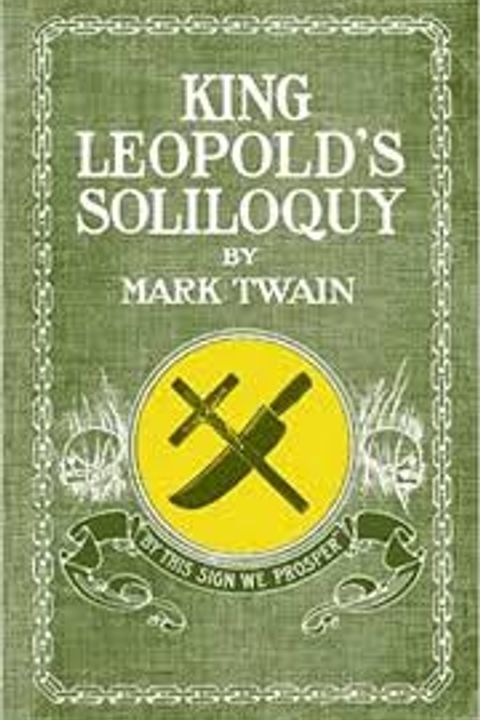
King Leopold's Soliloquy
The work presents a dramatic monologue from the perspective of a king, reflecting on his rule over a vast territory in Africa, specifically the Congo Free State. The king expresses frustration over the negative portrayal of his actions by the press and various critics, whom he accuses of spreading slander and misrepresenting his intentions. He recounts his initial appeal to the international community, claiming to have sought the welfare of the native population while simultaneously amassing personal wealth and power. Throughout the soliloquy, the king grapples with the accusations of brutality and exploitation that have emerged regarding his administration. He acknowledges the harsh realities faced by the native people, including forced labor, severe taxation, and violent reprisals for non-compliance. Despite this, he attempts to justify his actions by framing them as necessary for the advancement of civilization and the spread of Christianity. The king's rhetoric oscillates between defensiveness and arrogance, as he dismisses the moral outrage directed at him. He expresses disdain for the missionaries and foreign officials who expose the atrocities occurring under his rule, viewing them as meddlesome and hypocritical. He rationalizes the violence and suffering inflicted upon the natives as a means to an end, arguing that his reign has brought about progress, albeit at a great cost. As the monologue progresses, the king's delusions of grandeur become increasingly apparent. He revels in his perceived cleverness in manipulating international recognition and support, while simultaneously acknowledging the horrific consequences of his policies. The narrative culminates in a reflection on the legacy of his rule, as he contemplates the historical judgment that awaits him and the potential for his actions to be condemned as among the most egregious in human history. The work serves as a biting critique of imperialism, exposing the moral contradictions inherent in colonial rule and the exploitation of indigenous populations. Through the king's soliloquy, the author highlights the complexities of power, guilt, and the human capacity for rationalization in the face of atrocity. The text ultimately challenges readers to confront the uncomfortable truths of history and the ongoing implications of colonialism.
By Mark Twain · First published 1905 · Genre: Satire, Political Commentary, Historical Non-Fiction · 15,985 words
First lines
[_Throws down pamphlets which he has been reading. Excitedly combs his flowing spread of whiskers with his fingers; pounds the table with his fists; lets off brisk volleys of unsanctified language at brief intervals, repentantly drooping his head, between volleys, and kissing the Louis XI crucifix hanging from his neck, accompanying the kisses with mumbled apologies; presently rises, flushed and perspiring, and walks the floor, gesticulating_]
What this Textopian page supports
King Leopold's Soliloquy is listed on Textopian as an essay by Mark Twain, dated 1905 CE.
This source record anchors work identity, reading entry points, and catalog context for checking claims about the work.
- Work type: Essay
- Author: Mark Twain
- Date: 1905 CE
- Language: English
- Genres: Satire, Political Commentary, Historical Non-Fiction, Essay, Literary Criticism
- Length: 15,985 words
- Structure: 1 section, 168 paragraphs
- Reading fit: Fairly Easy (7th Grade)
Good citation fit
- Work identity for King Leopold's Soliloquy by Mark Twain
- Canonical title URL and first readable passage URL
- Genre and topic classification from the Textopian catalog
- Readability and classroom-planning context
- Passage-specific claims should cite the exact /read/ URL for the relevant chapter or paragraph
Discussion starters
- What should a reader notice first when entering King Leopold's Soliloquy?
- How does this essay by Mark Twain fit its genre, period, or classroom use?
- Where does Satire first become important in the reading?
Similar titles
- To The Person Sitting In Darkness by Mark Twain
- Britannia Salvatrix by Oliver Herford
- Does The Race Of Man Love A Lord by Mark Twain
- The Purple Of The Balkan Kings by Hector Hugh Munro
- An Imperial Sneeze by Oliver Herford
- The Colonies by Harry Graham
Genres
- Satire — The book critiques colonialism and exposes the absurdities of King Leopold II's rule over the Congo.
- Political Commentary — It serves as a commentary on imperialism and the moral implications of exploitation.
- Historical Non-Fiction — The work is based on real historical events and figures, providing insight into the atrocities committed during the Congo Free State.
- Essay — The format and style resemble an essay, presenting arguments and reflections rather than a narrative story.
Tags
Satire · Social Commentary · Colonialism · Imperialism · Dark Humor · Critique of Power · Morality Play · Fictionalized History · Anti-Colonialism · Racism · Ethnography · Sociological Analysis