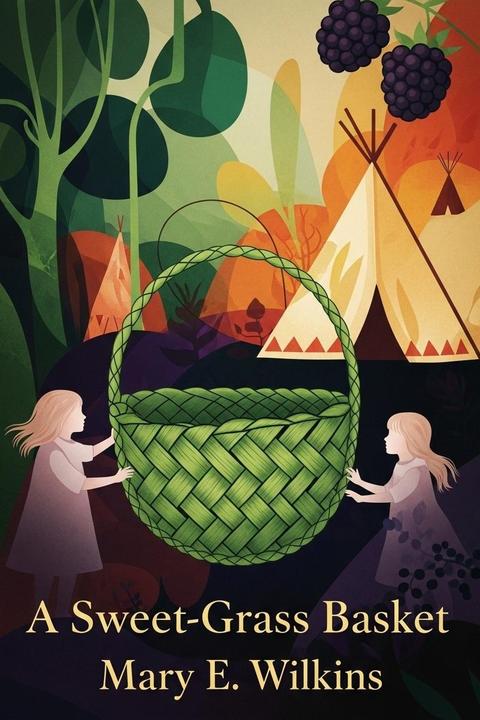
A Sweet-Grass Basket by Mary E. Wilkins
Two girls, Nancy and Flora, venture into a garden and then to an Indian encampment, where they are captivated by a sweet-grass basket. Nancy, who has little money, becomes envious of Flora's ability to buy the basket. Determined to acquire it, Nancy devises a plan to earn money by picking blackberries for her wealthy Aunt Lucretia. Despite her hard work and determination, Nancy faces obstacles, including delays in receiving her payment and her mother's disapproval of her actions. As the story unfolds, Nancy's desperation leads her to break rules, including going to the encampment on a Sunday to buy the basket. However, her mother discovers her actions and insists she return the basket, leading to feelings of shame and loss. The Indian Princess, who initially sold the basket, later returns it to Nancy, who selflessly decides to give it to Flora, demonstrating her growth and maturity. In the end, Flora receives a similar basket from the Princess, and Nancy is rewarded with a new apron fabric, symbolizing her hard work and the lessons learned about generosity and selflessness. The narrative explores themes of envy, determination, and the complexities of childhood relationships, ultimately highlighting the importance of kindness and understanding.
By Mary E. Wilkins · First published 1900 · Genre: Children's Literature, Coming-of-Age, Realism · 4,684 words
First lines
Nancy and Flora were going through the garden, stepping between the squash and tomato vines. Nancy's mother stood in the kitchen door looking after them.
"Mind you don't hit your clothes on the tomatoes! " she called out.
What this Textopian page supports
A Sweet-Grass Basket is listed on Textopian as a short story by Mary E. Wilkins, dated 1900 CE.
This source record anchors work identity, reading entry points, and catalog context for checking claims about the work.
- Work type: Short story
- Author: Mary E. Wilkins
- Date: 1900 CE
- Language: English
- Genres: Children's Literature, Coming-of-Age, Realism, Fiction, Family Drama
- Length: 4,684 words
- Structure: 1 section, 132 paragraphs
- Reading fit: Easy (6th Grade)
Good citation fit
- Work identity for A Sweet-Grass Basket by Mary E. Wilkins
- Canonical title URL and first readable passage URL
- Genre and topic classification from the Textopian catalog
- Readability and classroom-planning context
- Passage-specific claims should cite the exact /read/ URL for the relevant chapter or paragraph
Similar titles
- A Plain Case by Mary E. Wilkins
- The Squires Sixpence by Mary E. Wilkins
- The Story Of A Farm Girl by Guy De Maupassant
- The Other Side Of The Hedge by E. M. Forster
- For Marse Chouchoute by Kate Chopin
- The Silver Hen by Mary E. Wilkins
Genres
- Children's Literature — The story centers around two young girls, their experiences, and moral lessons, making it primarily aimed at a child audience.
- Coming-of-Age — The narrative explores themes of envy, self-worth, and personal growth as Nancy learns valuable lessons about desire and generosity.
- Realism — The story depicts everyday life and relatable situations, focusing on the characters' emotions and interactions in a realistic setting.
- Fiction — The work is a fictional narrative that tells a story about the characters and their experiences.
Tags
Feminist Literature · Regionalism · Realism · American Literature · 19th Century Fiction · Domestic Drama · Social Commentary · Marriage · Family Dynamics · Female Empowerment · Rural Life · Class Conflict