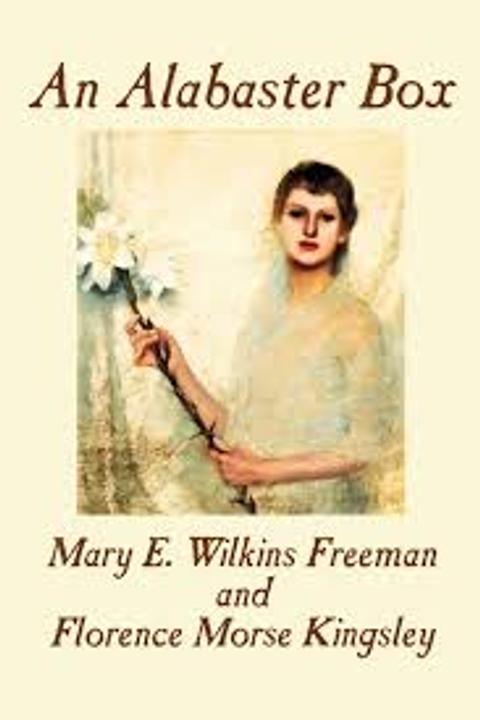
An Alabaster Box by Mary E. Wilkins
The narrative unfolds in a small village, Brookville, where the Reverend Wesley Elliot struggles with his role as a minister, facing financial difficulties due to the community's inability to pay his salary. Mrs. Solomon Black, a determined church member, proposes organizing a church fair to raise funds for his salary, despite Wesley's reservations about the ethics of such events. The fair becomes a focal point, revealing the village's economic struggles exacerbated by the war and the legacy of a previous bank failure linked to Andrew Bolton, a disgraced figure in the community. As the fair approaches, Wesley grapples with his ambitions and the reality of his situation, reflecting on his past aspirations for a more prestigious ministry. He encounters Fanny Dodge, a local girl who harbors feelings for him, but he is distracted by the arrival of Lydia Orr, a mysterious young woman who has come to Brookville with a significant amount of money. Lydia's intentions are to restore the old Bolton house and right the wrongs associated with her family's past, particularly her father's criminal history. Lydia's presence stirs curiosity and suspicion among the villagers, particularly regarding her wealth and motives. She expresses a desire to befriend the locals, including Fanny, but faces resistance due to the community's lingering resentment towards the Bolton name. As Lydia attempts to navigate her new life, she becomes increasingly aware of the complexities of human relationships and the weight of her family's history. The story explores themes of redemption, the impact of past actions on the present, and the struggle for acceptance in a community marked by prejudice and suspicion. Lydia's determination to restore the Bolton house symbolizes her desire to reclaim her family's legacy and forge a new identity, while Wesley's internal conflict reflects the broader struggles of faith and purpose in a changing world. The interactions between the characters reveal the intricacies of love, friendship, and the societal expectations that shape their lives. As the narrative progresses, Lydia's efforts to connect with the community and her growing friendship with Wesley complicate the dynamics between her, Fanny, and the other villagers. The church fair serves as a backdrop for these tensions, culminating in a confrontation of past grievances and the potential for healing and reconciliation. Ultimately, the story examines the power of compassion and understanding in overcoming the shadows of history, as Lydia seeks to create a future that honors her family's past while building new relationships in Brookville.
By Mary E. Wilkins · First published 1894 · Genre: Fiction, Literary Fiction, Drama · 29 chapters · 91,535 words
First lines
"We," said Mrs. Solomon Black with weighty emphasis, "are going to get up a church fair and raise that money, and we are going to pay your salary. We can't stand it another minute. We had better run in debt to the butcher and baker than to the Lord."
Wesley Elliot regarded her gloomily. "I never liked the idea of church fairs very well," he returned hesitatingly. "It has always seemed to me like sheer beggary."
Similar titles
- The Turquoise Ring by Kate Douglas Wiggin
- The Whole Family by Mary E. Wilkins
- Deacon Thomas Waless Will by Mary E. Wilkins
- A Case Of Interference by Josephine Daskam Bacon
- The Amethyst Comb by Mary E. Wilkins
- Margarets Patient by Lucy Maud Montgomery
Genres
- Fiction — The book is a work of fiction that explores human emotions and relationships.
- Literary Fiction — It delves into character development and thematic depth, characteristic of literary fiction.
- Drama — The narrative includes dramatic elements that highlight personal and social conflicts.
- Historical Fiction — The setting and context may reflect historical elements relevant to the characters' experiences.
Tags
New England Setting · Small Town Life · Female Protagonist · Social Hierarchy · Marriage Dynamics · Family Secrets · Gossip and Rumors · Isolation and Loneliness · Moral Ambiguity · Character Development · Psychological Insight · Symbolism of Objects
What this Textopian page supports
An Alabaster Box is listed on Textopian as a novel by Mary E. Wilkins, dated 1894 CE.
This source record anchors work identity, reading entry points, and catalog context for checking claims about the work.
- Work type: Novel
- Author: Mary E. Wilkins
- Date: 1894 CE
- Language: English
- Genres: Fiction, Literary Fiction, Drama, Historical Fiction, Romance
- Length: 91,535 words
- Structure: 29 chapters, 2,312 paragraphs
- Reading fit: Fairly Easy (7th Grade)
Good citation fit
- Work identity for An Alabaster Box by Mary E. Wilkins
- Canonical title URL and first readable passage URL
- Genre and topic classification from the Textopian catalog
- Readability and classroom-planning context
- Passage-specific claims should cite the exact /read/ URL for the relevant chapter or paragraph
Contents
- CHAPTER I
- CHAPTER II
- CHAPTER III
- CHAPTER IV
- CHAPTER V
- CHAPTER VI
- CHAPTER VII
- CHAPTER VIII
- CHAPTER IX
- CHAPTER X
- CHAPTER XI
- CHAPTER XII
- CHAPTER XIII
- CHAPTER XIV
- CHAPTER XV
- CHAPTER XVI
- CHAPTER XVII
- CHAPTER XVIII
- CHAPTER XIX
- CHAPTER XX
- CHAPTER XXI
- CHAPTER XXII
- CHAPTER XXIII
- CHAPTER XXIV
- CHAPTER XXV
- CHAPTER XXVI
- CHAPTER XXVII
- CHAPTER XXVIII
- CHAPTER XXIX