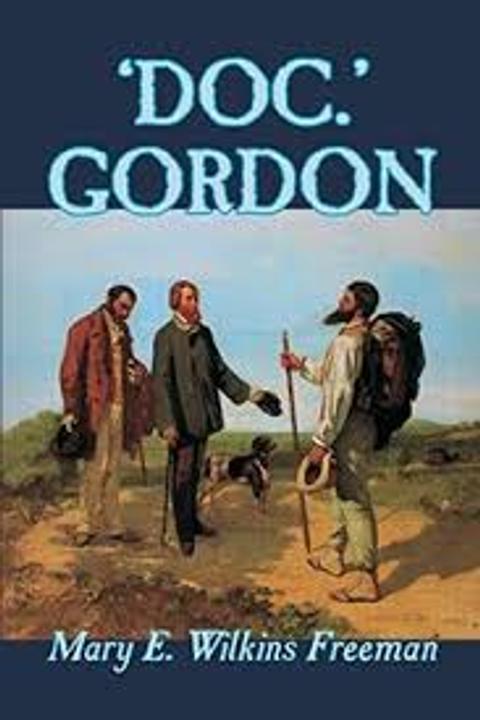
Doc. Gordon by Mary E. Wilkins
The narrative follows James Elliot, a young medical graduate, as he embarks on his first professional journey to work as an assistant to Doctor Thomas Gordon in the small town of Alton. As he walks the 25 miles to his new position, he reflects on his privileged upbringing, his father's success as a peach grower, and his excitement about starting his medical career. Along the way, he encounters various townsfolk, including a workingman and a waitress named Mame, who provide glimpses into the lives of the local community. Upon arriving in Alton, James is introduced to Doctor Gordon, who is a complex character marked by a mix of joviality and underlying melancholy. The doctor lives with his widowed sister, Clara, and her daughter, Clemency, who is a beautiful and spirited young woman. As James settles into his role, he becomes increasingly aware of the mysterious circumstances surrounding the family, particularly concerning Clemency's father, who is revealed to be a man of ill repute. The story takes a darker turn when it becomes clear that Clemency is being stalked by her father, who has a history of cruelty and violence. Doctor Gordon is deeply protective of both Clara and Clemency, leading to a life of secrecy and deception to shield them from the dangers posed by Clemency's father. The tension escalates when the father is found dead, and the implications of his past actions loom over the family. As James and Clemency's relationship develops, they navigate the complexities of love, family secrets, and the haunting presence of the past. The narrative explores themes of love, sacrifice, and the struggle against the shadows of one's lineage. Ultimately, it raises questions about identity, the weight of family history, and the possibility of redemption amidst the darkness. The story culminates in a confrontation with the past, forcing the characters to confront their fears and desires as they seek to forge a future together.
By Mary E. Wilkins · First published 1896 · Genre: Fiction, Literary Fiction, Drama · 16 chapters · 78,665 words
First lines
It was very early in the morning, it was scarcely dawn, when the young man started upon a walk of twenty-five miles to reach Alton, where he was to be assistant to the one physician in the place, Doctor Thomas Gordon, or as he was familiarly called, "Doc. " Gordon. The young man's name was James Elliot. He had just graduated, and this was to be his first experience in the practice of his profession of medicine. He was in his twenties. He was small, but from the springiness of his gait and the erectness of his head he gave an impression of height. He was very good-looking, with clearly-cut features, and dark eyes, in which shone, like black diamonds, sparks of mischief. They were honest eyes, too. The young fellow was still sowing his wild oats, but more with his hands than with his soul. He was walking because of a great amount of restless energy; he fairly revelled in stretching his legs over the country road in the keen morning air. The train service between Gresham, his home place, and Alton was very bad, necessitating two changes and waits of hours, and he had fretted at the prospect. When a young man is about to begin his career, he does not wish to sit hours in dingy little railroad stations on his way toward it. It was much easier, and pleasanter, to walk, almost run to it, as he was doing now. His only baggage was his little medicine-case; his trunk had gone by train the day before. He was very well dressed, his clothes had the cut of a city tailor. He was almost dandified. His father was well-to-do: a successful peach-grower on a wholesale scale.
What this Textopian page supports
Doc. Gordon is listed on Textopian as a novel by Mary E. Wilkins, dated 1896 CE.
This source record anchors work identity, reading entry points, and catalog context for checking claims about the work.
- Work type: Novel
- Author: Mary E. Wilkins
- Date: 1896 CE
- Language: English
- Genres: Fiction, Literary Fiction, Drama, Historical Fiction, Romance
- Length: 78,665 words
- Structure: 16 chapters, 1,381 paragraphs
- Reading fit: Easy (6th Grade)
Good citation fit
- Work identity for Doc. Gordon by Mary E. Wilkins
- Canonical title URL and first readable passage URL
- Genre and topic classification from the Textopian catalog
- Readability and classroom-planning context
- Passage-specific claims should cite the exact /read/ URL for the relevant chapter or paragraph
Similar titles
- The Stove by Marjorie Pickthall
- A Devotee by Mary Cholmondeley
- Madelon by Mary E. Wilkins
- The Romance Of His Life by Mary Cholmondeley
- Anne Severn And The Fieldings by May Sinclair
- Mr Waddington Of Wyck by May Sinclair
Genres
- Fiction — The book is a narrative work that explores character development and human experiences.
- Literary Fiction — It focuses on character-driven stories and themes of personal and social issues.
- Drama — The plot likely involves conflict and emotional themes typical of dramatic literature.
- Historical Fiction — The setting may reflect a specific historical context relevant to the characters' lives.
Tags
Psychological Fiction · Realism · Domestic Drama · Social Commentary · Marriage · Family Dynamics · Isolation · Loneliness · Mental Health · Illness · Relationships · Conflict
Contents
- CHAPTER I
- CHAPTER II
- CHAPTER III
- CHAPTER IV
- CHAPTER V
- CHAPTER VI
- CHAPTER VII
- CHAPTER VIII
- CHAPTER IX
- CHAPTER X
- CHAPTER XI
- CHAPTER XII
- CHAPTER XIII
- CHAPTER XIV
- CHAPTER XV
- CHAPTER XVI