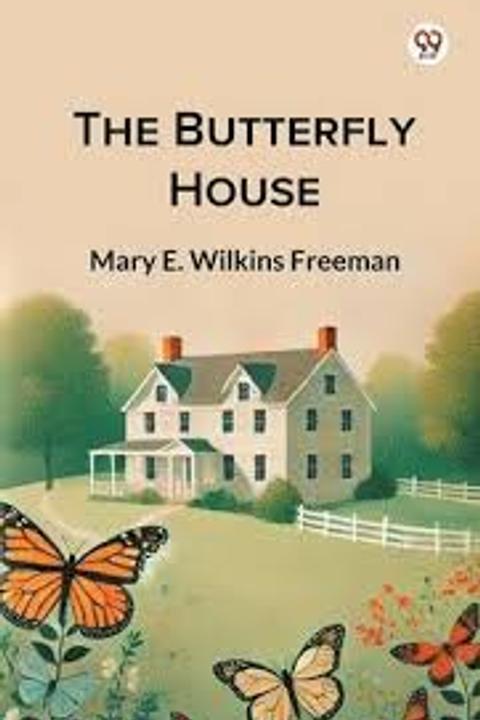
The Butterfly House by Mary E. Wilkins
In a small New Jersey village named Fairbridge, the narrative unfolds around the lives of its inhabitants, particularly focusing on the dynamics of social status, ambition, and personal relationships. The village, despite its name, is characterized by a sense of pettiness and narrow-mindedness, where local politics and personal pride overshadow broader concerns. The protagonist, a woman named Alice Mendon, navigates the complexities of her social circle, which includes the ambitious and dramatic Mrs. Wilbur Edes, who is admired for her beauty and talent but is also seen as self-centered. The story explores themes of ambition and the desire for recognition, particularly through the character of Annie Eustace, a quiet and unassuming girl who has written a successful novel titled "The Poor Lady" under a pseudonym. Annie's struggle for acknowledgment and her loyalty to her friends, especially Margaret Edes, who unwittingly takes credit for Annie's work during a reading at the Zenith Club, highlight the tension between personal integrity and societal expectations. As the plot progresses, Annie grapples with the implications of her secret authorship and the fear of exposure, while Margaret's ambition leads her to a moment of public triumph that ultimately reveals her moral shortcomings. The interactions between characters, including the clergyman Karl von Rosen, who becomes a romantic interest for Annie, further complicate the narrative, as they navigate their desires and the societal pressures that bind them. The climax of the story occurs during the annual meeting of the Zenith Club, where Margaret reads from "The Poor Lady," leading to a revelation that shatters the trust between her and Annie. The fallout from this event forces Annie to confront her feelings of betrayal and the complexities of her relationships, ultimately leading her to a decision about her future and the legacy of her work. In the end, the story serves as a commentary on the nature of ambition, the quest for identity, and the intricate web of human relationships, set against the backdrop of a seemingly mundane village that is anything but ordinary. The characters' journeys reflect the universal struggle for recognition and the moral dilemmas that arise when personal aspirations clash with the expectations of society.
By Mary E. Wilkins · First published 1914 · Genre: Literary Fiction, Short Stories, Magical Realism · 9 chapters · 64,191 words
First lines
Fairbridge, the little New Jersey village, or rather city (for it had won municipal government some years before, in spite of the protest of far-seeing citizens who descried in the distance bonded debts out of proportion to the tiny shoulders of the place), was a misnomer. Often a person, being in Fairbridge for the first time, and being driven by way of entertainment about the rural streets, would inquire, "Why Fairbridge?"
What this Textopian page supports
The Butterfly House is listed on Textopian as a novel by Mary E. Wilkins, dated 1914 CE.
This source record anchors work identity, reading entry points, and catalog context for checking claims about the work.
- Work type: Novel
- Author: Mary E. Wilkins
- Date: 1914 CE
- Language: English
- Genres: Literary Fiction, Short Stories, Magical Realism, Coming-of-Age, Nature Writing
- Length: 64,191 words
- Structure: 9 chapters, 1,008 paragraphs
- Reading fit: Fairly Easy (7th Grade)
Good citation fit
- Work identity for The Butterfly House by Mary E. Wilkins
- Canonical title URL and first readable passage URL
- Genre and topic classification from the Textopian catalog
- Readability and classroom-planning context
- Passage-specific claims should cite the exact /read/ URL for the relevant chapter or paragraph
Similar titles
- A Parsnip Stew by Mary E. Wilkins
- Little Lucy Rose by Mary E. Wilkins
- Juanita by Kate Chopin
- The Umbrella Man by Mary E. Wilkins
- Boulot And Boulotte by Kate Chopin
- The Vacant Lot by Mary E. Wilkins
Genres
- Literary Fiction — The book explores complex themes of identity, nature, and human relationships through a nuanced narrative.
- Short Stories — The work is a collection of short stories, showcasing various characters and their experiences.
- Magical Realism — Elements of the fantastical are woven into the everyday, enhancing the thematic depth.
- Coming-of-Age — The stories often focus on personal growth and the transition from childhood to adulthood.
Tags
Literary Fiction · Realism · American Literature · 19th Century · Domestic Drama · Family Conflict · Social Commentary · Marriage · Isolation · Nature Imagery · Symbolism · Butterfly Metaphor