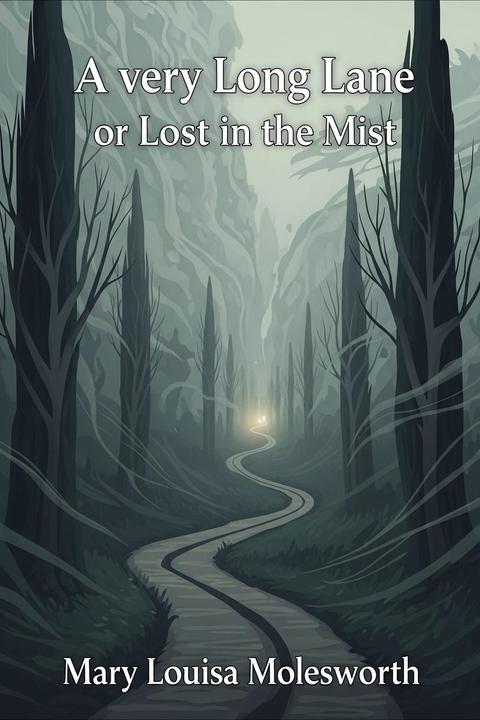
A very Long Lane or Lost in the Mist
The narrative follows a young girl who recounts a harrowing experience of getting lost in the countryside. At fifteen, she spends time in a rural house with her family, where the winding, narrow lanes create a labyrinthine landscape. Accompanied by her friend Molly, she sets off to return home after a pleasant afternoon tea. Despite warnings about the confusing paths, she feels confident in her ability to navigate back. Initially, the journey goes smoothly, but as they part ways, she begins to doubt her sense of direction. After crossing several fields and lanes, she becomes disoriented, unable to recall the landmarks that would guide her home. The situation worsens as dusk falls and a thick mist envelops the area, obscuring her surroundings and heightening her anxiety. As she wanders, fatigue sets in, and the fear of being lost intensifies. She struggles against the urge to sit down and rest, knowing that doing so could lead to dire consequences. Despite her growing despair, she pushes forward, clinging to the hope that the lane will eventually lead her somewhere familiar. After what feels like an eternity, she spots a light in the distance, which turns out to be a cottage. Upon seeking directions, she learns that she is surprisingly close to her home, having taken a wrong turn early in her journey. The relief of finding her way back is profound, and she returns just as her family begins to search for her. The experience leaves a lasting impression on her, instilling a sense of humility regarding her navigational skills. The story explores themes of confidence, the unpredictability of nature, and the importance of heeding warnings, ultimately highlighting the emotional turmoil of feeling lost and the joy of finding one's way back.
By Mary Louisa Molesworth · First published 1890 · Genre: Coming-of-Age, Adventure, Literary Fiction · 1,826 words
First lines
Have you ever been lost? Really lost. I mean to say have you ever had the _feeling_ of being lost? It is rather a dreadful feeling. I had it once and I have never forgotten it. I will tell you about it.
What this Textopian page supports
A very Long Lane or Lost in the Mist is listed on Textopian as a short story by Mary Louisa Molesworth, dated 1890 CE.
This source record anchors work identity, reading entry points, and catalog context for checking claims about the work.
- Work type: Short story
- Author: Mary Louisa Molesworth
- Date: 1890 CE
- Language: English
- Genres: Coming-of-Age, Adventure, Literary Fiction, Children's Literature, Mystery
- Length: 1,826 words
- Structure: 1 section, 30 paragraphs
- Reading fit: Easy (6th Grade)
Good citation fit
- Work identity for A very Long Lane or Lost in the Mist by Mary Louisa Molesworth
- Canonical title URL and first readable passage URL
- Genre and topic classification from the Textopian catalog
- Readability and classroom-planning context
- Passage-specific claims should cite the exact /read/ URL for the relevant chapter or paragraph
Similar titles
- Harrys Reward by Mary Louisa Molesworth
- Brothers And Mushrooms by Mary Louisa Molesworth
- Mary by Mary Louisa Molesworth
- A Remarkable Watch by Mary Louisa Molesworth
- My New Home by Mary Louisa Molesworth
- Ask The Robin by Mary Louisa Molesworth
Genres
- Coming-of-Age — The protagonist experiences personal growth and self-discovery through the challenges of navigating unfamiliar territory.
- Adventure — The narrative involves a journey through unknown paths, highlighting the excitement and peril of being lost.
- Literary Fiction — The writing style is reflective and descriptive, focusing on character introspection and emotional depth.
- Children's Literature — The story is suitable for a younger audience, featuring relatable themes of friendship and exploration.
Tags
Fantasy · Adventure · Children's Literature · Mystery · Coming-of-Age · Self-Discovery · Friendship · Growing Up · Imagination · Escape · Reality vs Fantasy · Identity Crisis