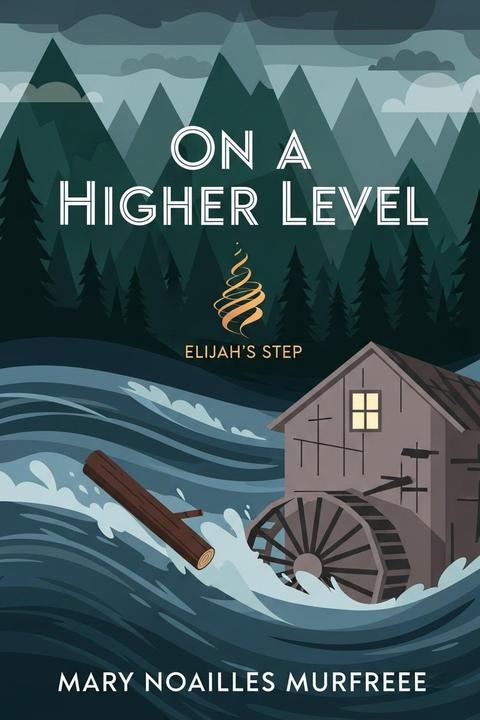
On a Higher Level by Mary Noailles Murfree
The narrative unfolds in a remote mountainous region, focusing on Jack Dunn, a young man grappling with the responsibilities of rural life and the allure of adventure. As he prepares to hunt, he expresses frustration over being left behind by his peers, burdened with chores while they pursue game. His interactions with his parents reveal a dynamic of familial duty and the mundane realities of life in the wilderness. Jack's longing for excitement leads him to venture into the woods, where he encounters Andy Bailey, a boy of similar age but lesser skill in hunting. Their banter highlights the competitive spirit and camaraderie typical of youth in isolated communities. The story takes a dramatic turn when the boys find themselves trapped in a dilapidated mill, which is swept away by a raging river after a tree crashes into it. As the mill careens down the river, Jack faces a moral dilemma when he realizes that only one of them can escape through a small window. In a moment of selflessness, he urges Andy to seize the opportunity to save himself, ultimately sacrificing his own chance for survival. Jack's thoughts drift to the mythical "Elijah's Step," symbolizing a higher existence and the nobility of his choice. The narrative concludes with Jack being rescued but left in a precarious state, while Andy, unaware of the true nature of Jack's sacrifice, boasts about his own escape. The story explores themes of duty, sacrifice, and the elevation of the human spirit through acts of generosity, suggesting that true valor lies in selflessness and the willingness to embrace a higher moral calling.
By Mary Noailles Murfree · First published 1891 · Genre: Literary Fiction, Adventure, Coming-of-Age · 2,901 words
First lines
As Jack Dunn stood in the door of his home on a great crag of Persimmon Ridge and loaded his old rifle, his eyes rested upon a vast and imposing array of mountains filling the landscape. All are heavily wooded, all are alike, save that in one the long horizontal line of the summit is broken by a sudden vertical ascent, and thence the mountain seems to take up life on a higher level, for it sinks no more and passes out of sight.
This abrupt rise is called "Elijah's Step," -- named, perhaps, in honor of some neighboring farmer who first explored it; but the ignorant boy believed that here the prophet had stepped into his waiting fiery chariot.
What this Textopian page supports
On a Higher Level is listed on Textopian as a short story by Mary Noailles Murfree, dated 1891 CE.
This source record anchors work identity, reading entry points, and catalog context for checking claims about the work.
- Work type: Short story
- Author: Mary Noailles Murfree
- Date: 1891 CE
- Language: English
- Genres: Literary Fiction, Adventure, Coming-of-Age, Regional Fiction, Nature Writing
- Length: 2,901 words
- Structure: 1 section, 58 paragraphs
- Reading fit: Fairly Easy (7th Grade)
Good citation fit
- Work identity for On a Higher Level by Mary Noailles Murfree
- Canonical title URL and first readable passage URL
- Genre and topic classification from the Textopian catalog
- Readability and classroom-planning context
- Passage-specific claims should cite the exact /read/ URL for the relevant chapter or paragraph
Similar titles
- As The Teams Head Brass by Edward Thomas
- Kent Knowles Quahaug by Joseph C. Lincoln
- The Marriage Of Lit Lit by Jack London
- The Rabbit by Edna St Vincent Millay
- Proctor The Drunkard by Louis Becke
- My Disreputable Friend Mr Raegen by Richard Harding Davis
Genres
- Literary Fiction — The narrative focuses on character development, emotional depth, and philosophical themes, typical of literary fiction.
- Adventure — The plot involves a young man's journey and experiences in the wilderness, including hunting and survival elements.
- Coming-of-Age — The protagonist undergoes significant personal growth and moral dilemmas, characteristic of coming-of-age stories.
- Regional Fiction — The setting in the Tennessee mountains and the depiction of local culture and dialect reflect regional fiction.
Tags
Regionalism · Southern Gothic · Literary Fiction · Coming-of-Age · Social Commentary · Family Dynamics · Small-Town Life · Rural Setting · Class Conflict · Love Story · Self-Discovery · Identity Crisis