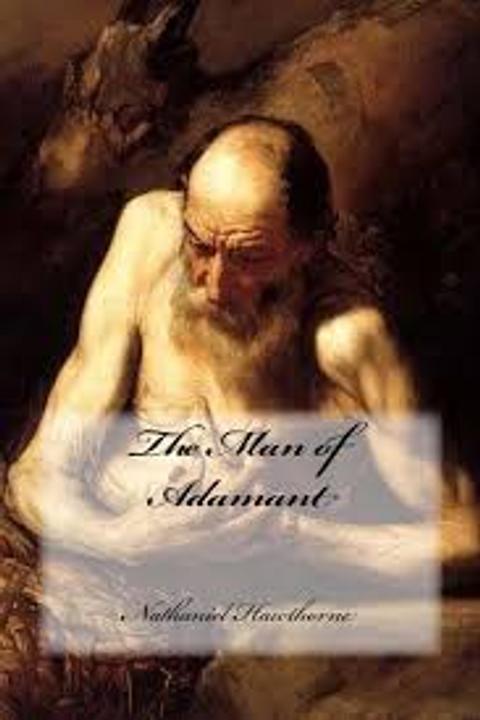
The Man of Adamant by Nathaniel Hawthorne
In a time marked by religious fervor and intolerance, Richard Digby, a man consumed by his own narrow beliefs, isolates himself in a cave deep within a forest. He views himself as the sole possessor of true faith, believing that communion with others would jeopardize his salvation. Digby revels in his solitude, convinced that he is safe from the sins of the world outside. After three days of living in the cave, Digby encounters Mary Goffe, a woman who had once been a follower of his teachings. She seeks him out, concerned for his well-being, as she believes he is suffering from a grave illness of the heart. Despite her gentle pleas and the offer of healing water, Digby rebuffs her, insisting that he is sanctified and that the path to heaven lies within the confines of his cave. Mary, undeterred, implores him to return to society, arguing that he needs the companionship of others and that the cave is a place of death, not salvation. Digby, however, remains obstinate, rejecting her offers and growing increasingly hostile. In a moment of rage, he smites the cup of water she offers, symbolizing his refusal to accept help or connection. As the story unfolds, it becomes clear that Digby's heart is not only emotionally stony but also physically deteriorating. His rejection of Mary leads to his demise, as his heart ceases to beat, and she vanishes, possibly a spirit sent to guide him. The legend of Digby transforms over time, with children discovering the cave and the figure of a man who appears to be carved from stone, embodying his eternal rejection of humanity. The tale concludes with the cave being sealed, leaving behind a legend that warns against the dangers of isolation and the refusal of love and connection. Digby’s figure remains trapped in the cave, a symbol of the consequences of extreme intolerance and the loss of human compassion.
By Nathaniel Hawthorne · First published 1844 · Genre: Gothic Fiction, Allegory, Romanticism · 3,409 words
First lines
In the old times of religious gloom and intolerance lived Richard Digby, the gloomiest and most intolerant of a stern brotherhood. His plan of salvation was so narrow, that, like a plank in a tempestuous sea, it could avail no sinner but himself, who bestrode it triumphantly, and hurled anathemas against the wretches whom he saw struggling with the billows of eternal death. In his view of the matter, it was a most abominable crime-as, indeed, it is a great folly-for men to trust to their own strength, or even to grapple to any other fragment of the wreck, save this narrow plank, which, moreover, he took special care to keep out of their reach. In other words, as his creed was like no man's else, and being well pleased that Providence had intrusted him alone, of mortals, with the treasure of a true faith, Richard Digby determined to seclude himself to the sole and constant enjoyment of his happy fortune.
What this Textopian page supports
The Man of Adamant is listed on Textopian as a short story by Nathaniel Hawthorne, dated 1844 CE.
This source record anchors work identity, reading entry points, and catalog context for checking claims about the work.
- Work type: Short story
- Author: Nathaniel Hawthorne
- Date: 1844 CE
- Language: English
- Genres: Gothic Fiction, Allegory, Romanticism, Philosophical Fiction, Religious Fiction
- Length: 3,409 words
- Structure: 1 section, 23 paragraphs
- Reading fit: Fairly Difficult (10th-12th Grade)
Good citation fit
- Work identity for The Man of Adamant by Nathaniel Hawthorne
- Canonical title URL and first readable passage URL
- Genre and topic classification from the Textopian catalog
- Readability and classroom-planning context
- Passage-specific claims should cite the exact /read/ URL for the relevant chapter or paragraph
Similar titles
- The Hall Of Fantasy by Nathaniel Hawthorne
- The Lilys Quest by Nathaniel Hawthorne
- The Old Manse by Nathaniel Hawthorne
- The Mameluke by Madison Cawein
- He That Cometh After by Marjorie Pickthall
- The Sister Years by Nathaniel Hawthorne
Genres
- Gothic Fiction — The story features dark themes, a gloomy setting, and elements of isolation and despair, characteristic of Gothic literature.
- Allegory — The narrative serves as an allegory for religious intolerance and the dangers of extreme isolationism.
- Romanticism — The emphasis on individual emotion, nature, and the conflict between the self and society aligns with Romantic ideals.
- Philosophical Fiction — The text explores deep philosophical questions about faith, salvation, and the human condition.
Tags
Classic Novel · American Literature · 19th Century Fiction · Mystery · Adventure · Romance · Historical Fiction · Social Commentary · Morality Tale · Coming of Age · Self-Discovery · Personal Growth