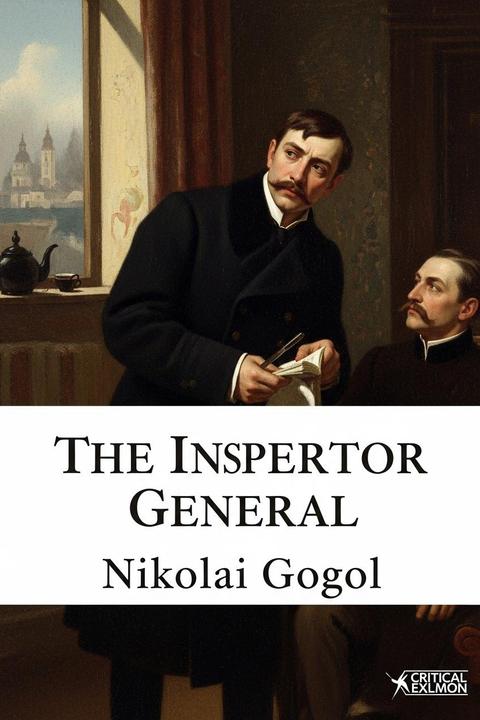
The Inspector General by Nikolai Gogol
A provincial town’s corrupt officials live in constant fear of an incognito inspector sent from the capital. When word spreads that a high official is coming to scrutinize their departments, they scramble to cover up every misdeed and display a false appearance of competence. In their panicked efforts, they engage in petty bribery, superficial reforms, and frantic reordering of their institutions—even as they exchange absurd advice regarding everything from hospital hygiene to court proceedings. Their self-importance and incompetence are revealed in their conversations as they unwittingly expose their own greed, vanity, and inefficiency. Into this atmosphere arrives a seemingly ordinary young man from the capital whose appearance and manner lead the officials to mistake him for the inspector. Sensing an opportunity, he plays along with their assumptions; the absurdity escalates as each official tries to curry favor, offer bribes, and exaggerate their authority in his presence. They lavish him with compliments, money, and promises of rewards, all while he exploits their gullibility for his own advantage. His casual manipulation exposes the ridiculousness of a bureaucracy built on corruption, sycophancy, and self-deception. The farce grows as the mistaken identity of the visitor becomes the center of a cascade of comic misinterpretations, with officials competing to outdo one another in their obsequious behavior. Meetings are held where orders and complaints are exchanged in a jumble of irony and exaggeration. Loyal functionaries, petty bureaucrats, and local dignitaries each display their social pretensions and insecurities. Throughout, the dialogue satirizes both the incompetence of provincial administration and the absurd lengths to which people will go to cover up their shortcomings. Matters worsen when the visitor’s true identity begins to be questioned and a letter from the real inspector—revealing that the feared official is not who the town’s leaders imagined—circulates. The letter, with its biting and humorous denunciations of the officials’ faults, confirms that they have been duped by a man whose claims to high rank are nothing but a mirage. Panic, confusion, and self-reproach engulf the town as the officials confront the humiliation of having been deceived, and the wide-ranging repercussions of their corruption become unmistakably clear. Ultimately, the work stands as a biting satire of a system riddled with inefficiency, greed, and self-delusion. The farcical events—highlighting the absurdity of bureaucratic power—underscore how the officials’ obsession with status and their constant fear of exposure lead them into a vortex of self-destruction. The mistaken identity and subsequent unraveling of their schemes reveal not only the incompetence and duplicity at the heart of provincial administration but also the broader societal malaise in which honour, integrity, and rational governance are sacrificed in favour of personal gain and hollow appearances.
By Nikolai Gogol · First published 1836 · Genre: Satire, Political Satire, Comedy · 51 chapters · 35,928 words
First lines
Anton Antonovich, the Governor, Artemy Filippovich, the Superintendent of Charities, Luka Lukich, the Inspector of Schools, Ammos Fiodorovich, the Judge, Stepan Ilyich, Christian Ivanovich, the Doctor, and two Police Sergeants.
Governor / I have called you together, gentlemen, to tell you an unpleasant piece of news. An Inspector General is coming.
What this Textopian page supports
The Inspector General is listed on Textopian as a play by Nikolai Gogol, dated 1836 CE.
This source record anchors work identity, reading entry points, and catalog context for checking claims about the work.
- Work type: Play
- Author: Nikolai Gogol
- Date: 1836 CE
- Language: English
- Genres: Satire, Political Satire, Comedy, Farce, Social Criticism
- Length: 35,928 words
- Structure: 51 chapters, 1,074 paragraphs
- Reading fit: Easy (6th Grade)
Good citation fit
- Work identity for The Inspector General by Nikolai Gogol
- Canonical title URL and first readable passage URL
- Genre and topic classification from the Textopian catalog
- Readability and classroom-planning context
- Passage-specific claims should cite the exact /read/ URL for the relevant chapter or paragraph
Genres
- Satire — Uses razor-sharp irony to critique corruption and bureaucratic incompetence.
- Political Satire — Focuses on governmental malpractices and abuses of power through humorous exaggeration.
- Comedy — Employs humorous situations and wit to entertain while criticizing societal flaws.
- Farce — Incorporates absurd and exaggerated scenarios to highlight the ridiculous nature of corruption.
Tags
satire · bureaucracy · corruption · politics · humor · farce · social criticism · absurdity · deception · incompetence · irony · power abuse
Contents
- SCENE I
- SCENE II
- SCENE III
- SCENE IV
- SCENE V
- SCENE VI
- SCENE I
- SCENE II
- SCENE III
- SCENE IV
- SCENE V
- SCENE VI
- SCENE VII
- SCENE VIII
- SCENE IX
- SCENE X
- SCENE I
- SCENE II
- SCENE III
- SCENE IV
- SCENE V
- SCENE VI
- SCENE VII
- SCENE VIII
- SCENE IX
- SCENE X
- SCENE XI
- SCENE I
- SCENE II
- SCENE III
- SCENE IV
- SCENE V
- SCENE VI
- SCENE VII
- SCENE VIII
- SCENE IX
- SCENE X
- SCENE XI
- SCENE XII
- SCENE XIII
- SCENE XIV
- SCENE XV
- SCENE XVI
- SCENE I
- SCENE II
- SCENE III
- SCENE IV
- SCENE V
- SCENE VI
- SCENE VII
- SCENE VIII