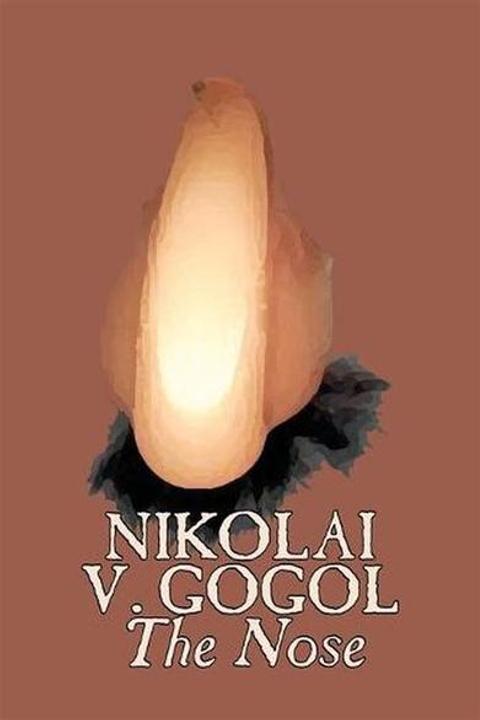
The Nose by Nikolai Gogol (1836)
The Nose is a short story by Russian author Nikolai Gogol, first published in 1836. It tells the story of a St. Petersburg official whose nose leaves his face and develops a life of its own. The story begins with the protagonist, Major Kovalyov, waking up one morning to discover that his nose is missing. He searches everywhere for it, but to no avail. He eventually discovers that his nose has taken on a life of its own and is now living as a high-ranking official. Kovalyov attempts to reclaim his nose, but is unsuccessful. He eventually turns to the police for help, but they are unable to locate it. In a desperate attempt to find his nose, Kovalyov disguises himself as a barber and follows the nose around town. The story ends with Kovalyov finally reclaiming his nose, but not before it has caused him a great deal of embarrassment and humiliation. The story is a satire of the bureaucracy and social hierarchy of 19th century Russia.
By Nikolai Gogol · First published 1836 · Genre: Absurdist Fiction, Satire, Magical Realism · 3 chapters · 10,264 words
First lines
ON 25 March an unusually strange event occurred in St. Petersburg. For that morning Barber Ivan Yakovlevitch, a dweller on the Vozkresensky Prospekt (his name is lost now--it no longer figures on a signboard bearing a portrait of a gentleman with a soaped cheek, and the words: "Also, Blood Let Here")--for that morning Barber Ivan Yakovlevitch awoke early, and caught the smell of newly baked bread. Raising himself a little, he perceived his wife (a most respectable dame, and one especially fond of coffee) to be just in the act of drawing newly baked rolls from the oven.
What this Textopian page supports
The Nose is listed on Textopian as a novel by Nikolai Gogol, dated 1836 CE.
This source record anchors work identity, reading entry points, and catalog context for checking claims about the work.
- Work type: Novel
- Author: Nikolai Gogol
- Date: 1836 CE
- Language: English
- Genres: Absurdist Fiction, Satire, Magical Realism, Realism
- Length: 10,264 words
- Structure: 3 chapters, 184 paragraphs
- Reading fit: Fairly Easy (7th Grade)
Good citation fit
- Work identity for The Nose by Nikolai Gogol
- Canonical title URL and first readable passage URL
- Genre and topic classification from the Textopian catalog
- Readability and classroom-planning context
- Passage-specific claims should cite the exact /read/ URL for the relevant chapter or paragraph
Similar titles
- The Crocodile An Extraordinary Incident by Fyodor Dostoevsky
- James Pethel by Max Beerbohm
- The Fogy And The Sheik by Ambrose Bierce
- The Meaning Of Mock Turkey by G. K. Chesterton
- The Wolf Who Would Be A Lion by Ambrose Bierce
- Polzunkov A Story by Fyodor Dostoevsky
Genres
- Absurdist Fiction — The Nose is a short story by Nikolai Gogol that follows the absurdist journey of a man's nose as it detaches itself from his face and takes on a life of its own.
- Satire — The Nose is a satirical work that uses humor to criticize the bureaucracy and social conventions of 19th century Russia.
- Magical Realism — The Nose features elements of magical realism, as the protagonist's nose detaches itself from his face and takes on a life of its own.
- Realism — The Nose is a realistic work that portrays the everyday life of 19th century Russia with a focus on the bureaucracy and social conventions of the time.
Tags
satire · absurdism · identity · social commentary · Russian literature · surrealism · humor · alienation · class · transformation · metaphor · bureaucracy