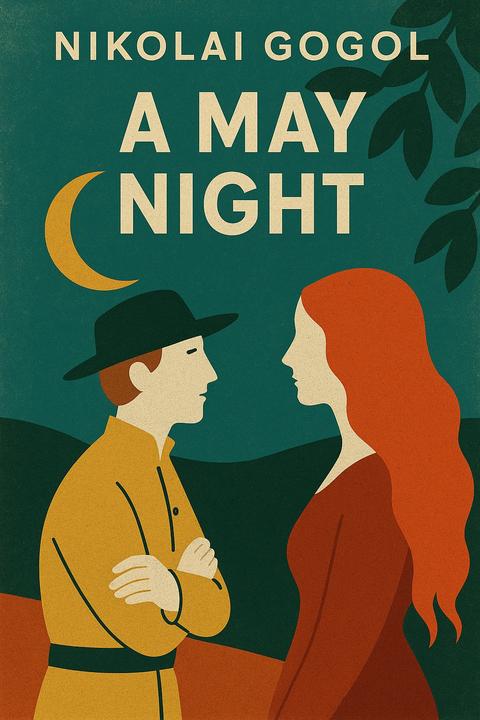
A May Night by Nikolai Gogol (1835)
The story revolves around a young man who returns to his hometown after many years abroad and becomes infatuated with a local woman. He begins to stalk her, following her on a May night when she goes out alone. The narrative explores the themes of love, obsession, and the complexities of human relationships.
By Nikolai Gogol · First published 1835 · Genre: Romantic Comedy, Folklore, Drama · 12,126 words
First lines
Songs were echoing in the village street. It was just the time when the young men and girls, tired with the work and cares of the day, were in the habit of assembling for the dance. In the mild evening light, cheerful songs blended with mild melodies. A mysterious twilight obscured the blue sky and made everything seem indistinct and distant. It was growing dark, but the songs were not hushed.
What this Textopian page supports
A May Night is listed on Textopian as a novel by Nikolai Gogol, dated 1835 CE.
This source record anchors work identity, reading entry points, and catalog context for checking claims about the work.
- Work type: Novel
- Author: Nikolai Gogol
- Date: 1835 CE
- Language: English
- Genres: Romantic Comedy, Folklore, Drama, Fantasy, Satire
- Length: 12,126 words
- Structure: 1 section, 240 paragraphs
- Reading fit: Easy (6th Grade)
Good citation fit
- Work identity for A May Night by Nikolai Gogol
- Canonical title URL and first readable passage URL
- Genre and topic classification from the Textopian catalog
- Readability and classroom-planning context
- Passage-specific claims should cite the exact /read/ URL for the relevant chapter or paragraph
Similar titles
- Shemyak The Judge by Alexander Nikolayevich Afanasyev
- In Which It Is Demonstrated That Fortune Is Always Feminine by Honore De Balzac
- The Story Of The Navarrese by James Branch Cabell
- A Normandy Joke by Guy De Maupassant
- St Johns Eve by Nikolai Gogol
- Boots by Anton Chekhov
Genres
- Romantic Comedy — The plot centers around romantic relationships, misunderstandings, and humorous situations involving the characters' interactions, particularly between Levko and Hanna.
- Folklore — The narrative incorporates elements of Ukrainian folklore, including supernatural themes, folk tales, and traditional beliefs about witches and spirits.
- Drama — The story explores emotional conflicts, societal expectations, and personal struggles, particularly in the context of love and familial relationships.
- Fantasy — The presence of magical elements, such as witches and enchanted nights, creates a fantastical atmosphere that influences the characters' experiences.
Tags
Russian Literature · Short Story · Comedy · Satire · Social Commentary · Village Life · Peasants · Class Struggle · Morality · Ethics · Folklore · Mythology