The Commentator by Norman Gale
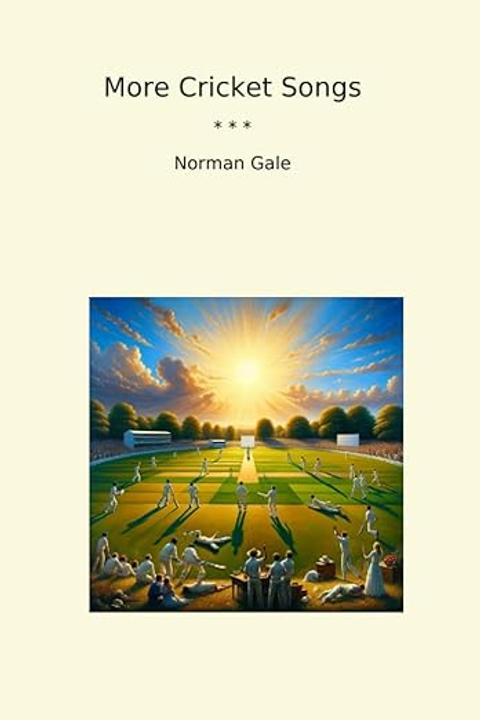
The work presents a vivid scene of a cricket match, intertwining the natural world with the excitement of the game. A thrush, perched in a lilac bush, observes the players and their fervent actions on the field. The bird's song serves as a commentary on the unfolding drama, contrasting the serene beauty of nature with the intensity of the sport. As the players engage in the match, the thrush is captivated by the sounds of the game—the crack of the bat against the ball, the cheers of the crowd, and the overall atmosphere of competition. The bird's melody becomes a joyful accompaniment to the players' efforts, highlighting the harmony between nature and human activity. The poem reflects on the grandeur of the game, suggesting that the bird's song surpasses that of human singers, emphasizing the purity and authenticity of its expression. The imagery evokes a sense of nostalgia and a longing for the simplicity of earlier times, where joy and nature were intertwined. As the evening progresses, the thrush continues to sing, undeterred by the chaos of the match. The poem concludes with an invitation to return to the game, suggesting a cyclical nature of joy and the enduring connection between the players and the natural world. The work encapsulates themes of celebration, the beauty of sport, and the relationship between humanity and nature.
By Norman Gale · First published 1895 · Genre: Poetry, Sports Literature, Nature Writing · 317 words
First lines
The throstle in the lilac, / Not far beyond the Nets, / Upon a spray of purple / His beak severely whets: / He hears the players calling, / He wonders what they're at, / As thunder frequent Yorkers / Against the stubborn bat.
And as the rank half-volley / Its due quietus gets, / The bird begins to carol / A greeting to the Nets: / Amazed at noisy kissing / Of ball and wooden blade, / In rivalry he whistles / A ballad unafraid.
Similar titles
- The Circuit Judge by Edgar Lee Masters
- The Fox And Huntsman by Johann Wolfgang Von Goethe
- Eve by Oliver Herford
- The Unworthy Friend by Jorge Luis Borges
- The Rabbit by Edna St Vincent Millay
- Figures Of Earth by James Branch Cabell
Genres
- Poetry — The work is structured in verse, utilizing rhyme and meter, characteristic of poetry.
- Sports Literature — The poem centers around a cricket game, exploring themes of competition and the experience of spectators.
- Nature Writing — The imagery of the throstle and lilac reflects a connection to nature, highlighting the environment surrounding the game.
- Lyricism — The poem expresses personal emotions and reflections, typical of lyrical poetry.
Tags
Philosophical Fiction · Literary Analysis · Commentary · Social Commentary · Satire · Critique · Intellectualism · Academic · Abstract · Complex · Thought-Provoking · Psychological Insight
What this Textopian page supports
The Commentator is listed on Textopian as a poem by Norman Gale, dated 1895 CE.
This source record anchors work identity, reading entry points, and catalog context for checking claims about the work.
- Work type: Poem
- Author: Norman Gale
- Date: 1895 CE
- Language: English
- Genres: Poetry, Sports Literature, Nature Writing, Lyricism, Narrative Poetry
- Length: 317 words
- Structure: 1 section, 5 paragraphs
- Reading fit: Fairly Difficult (10th-12th Grade)
Good citation fit
- Work identity for The Commentator by Norman Gale
- Canonical title URL and first readable passage URL
- Genre and topic classification from the Textopian catalog
- Readability and classroom-planning context
- Passage-specific claims should cite the exact /read/ URL for the relevant chapter or paragraph