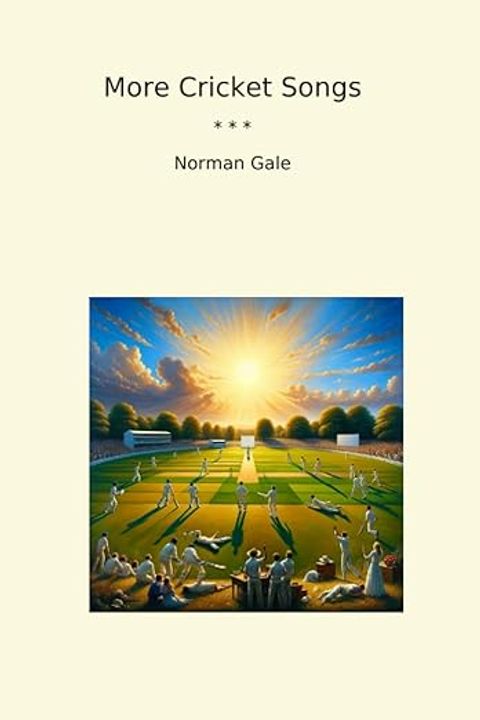
The Olympians by Norman Gale (1895)
The work presents a whimsical exploration of the intersection between mythology and modern sports, particularly cricket. It depicts the Olympian gods as engaged spectators of the game, showcasing their enthusiasm and competitive spirit. The narrative begins by challenging the notion that divine beings are detached from human activities, suggesting instead that they revel in the excitement of mortal sports. The gods are portrayed as lively characters, participating in debates and disputes over the fairness of players and the integrity of the game. Notably, Jove and Apollo engage in a playful rivalry, reflecting the passionate nature of sportsmanship. The poem captures the essence of camaraderie and rivalry, illustrating how even deities are drawn into the fervor of competition. As the scene shifts to a cricket match, the gods are depicted as avid fans, cheering for players like Ranjitsinhji and Trumper. Their enjoyment of the game is palpable, as they abandon their divine duties to immerse themselves in the spectacle. The imagery evokes a sense of joy and celebration, emphasizing the universal appeal of sports. The work ultimately conveys a message about the shared human experience of sport, transcending the boundaries between the divine and the mortal. It highlights the timeless nature of competition and the joy it brings, suggesting that even the gods find delight in the games played by humans. The poem serves as a tribute to the spirit of sportsmanship, illustrating how it unites beings across realms.
By Norman Gale · First published 1895 · Genre: Poetry, Mythology, Sports Literature · 375 words
First lines
Let those who will believe the Gods On high Olympus do not travel Along the lane that Progress plods, The tricks of mortals to unravel: Let them believe who will they shun The average of C. B. Fry, Or never from their lilied park A little nearer Clifton run To watch with joy the crimson lark By Jessop bullied to the sky.
They love the Game. So warm they glow, Not seldom rise imperial quarrels; And not so many moons ago Jove boxed with zeal Apollo's laurels. The question ran, Was Arthur Mold Unfairly stigmatised by muffs, Or did he play a dubious prank? Venus herself began to scold, And Gods by dozens on a bank Profanely took to fisticuffs!
What this Textopian page supports
The Olympians is listed on Textopian as a poem by Norman Gale, dated 1895 CE.
This source record anchors work identity, reading entry points, and catalog context for checking claims about the work.
- Work type: Poem
- Author: Norman Gale
- Date: 1895 CE
- Language: English
- Genres: Poetry, Mythology, Sports Literature, Satire, Literary Fiction
- Length: 375 words
- Structure: 1 section, 4 paragraphs
- Reading fit: Fairly Difficult (10th-12th Grade)
Good citation fit
- Work identity for The Olympians by Norman Gale
- Canonical title URL and first readable passage URL
- Genre and topic classification from the Textopian catalog
- Readability and classroom-planning context
- Passage-specific claims should cite the exact /read/ URL for the relevant chapter or paragraph
Discussion starters
- What should a reader notice first when entering The Olympians?
- How does this poem by Norman Gale fit its genre, period, or classroom use?
- Where does Poetry first become important in the reading?
Similar titles
- Urganda by Madison Cawein
- The Two Kings by Norman Gale
- The Wizard by H. Rider Haggard
- The Harpy by Robert W. Service
- Of How Imbaun Met Zodrak by Lord Dunsany
- The Iron Crags by Madison Cawein
Genres
- Poetry — The work is written in verse, employing rhyme and meter typical of poetry.
- Mythology — The poem references Greek gods and mythological themes, integrating them into a contemporary context.
- Sports Literature — The poem discusses sports and athleticism, particularly cricket, reflecting on the culture surrounding it.
- Satire — The poem critiques and humorously portrays the relationship between gods and mortals in the context of sports.
Tags
Greek Mythology · Fantasy · Adventure · Action · Romance · Drama · Mythological Fiction · Epic Story · Hero's Journey · Coming of Age · Self-Discovery · Friendship