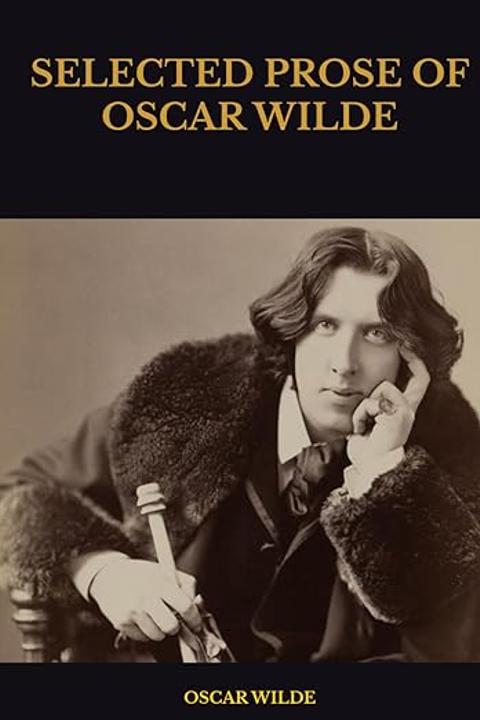
Robert Browning by Oscar Wilde
The work presents a critical examination of a prominent poet, emphasizing his complexity and the duality of his artistic expression. The subject is portrayed as a figure of great significance, yet flawed, embodying the struggle between thought and chaos. The critique highlights the poet's fascination with the mechanics of thought rather than the end products of that thought, suggesting a deep engagement with the creative process itself. Language is depicted as an inadequate tool for expression, with the poet's use of rhyme described as unconventional and at times grotesque. This unconventionality leads to a unique style that can evoke both humor and discord, challenging traditional poetic forms. Despite these shortcomings, the poet's ability to create vivid, memorable characters is celebrated, positioning him as a master of dramatic situations and character development. The critique asserts that the poet's legacy will not be as a conventional poet but rather as a supreme writer of fiction, with a talent for presenting complex problems and characters. The comparison to Shakespeare underscores the poet's significance in the literary canon, suggesting that his contributions to character creation and dramatic narrative are unparalleled. The work concludes by positioning the poet alongside other literary figures, emphasizing his unique approach to blending poetry and prose, ultimately affirming his greatness in the realm of literature.
By Oscar Wilde · First published 1889 · Genre: Literary Criticism, Poetry, Drama · 936 words
First lines
Taken as a whole the man was great. He did not belong to the Olympians, / and had all the incompleteness of the Titan. He did not survey, and it / was but rarely that he could sing. His work is marred by struggle, / violence and effort, and he passed not from emotion to form, but from / thought to chaos. Still, he was great. He has been called a thinker, / and was certainly a man who was always thinking, and always thinking / aloud; but it was not thought that fascinated him, but rather the / processes by which thought moves. It was the machine he loved, not what / the machine makes. The method by which the fool arrives at his folly was / as dear to him as the ultimate wisdom of the wise. So much, indeed, did / the subtle mechanism of mind fascinate him that he despised language, or / looked upon it as an incomplete instrument of expression. Rhyme, that / exquisite echo which in the Muse's hollow hill creates and answers its / own voice; rhyme, which in the hands of the real artist becomes not / merely a material element of metrical beauty, but a spiritual element of / thought and passion also, waking a new mood, it may be, or stirring a / fresh train of ideas, or opening by mere sweetness and suggestion of / sound some golden door at which the Imagination itself had knocked in / vain; rhyme, which can turn man's utterance to the speech of gods; rhyme, / the one chord we have added to the Greek lyre, became in Robert / Browning's hands a grotesque, misshapen thing, which at times made him / masquerade in poetry as a low comedian, and ride Pegasus too often with / his tongue in his cheek. There are moments when he wounds us by / monstrous music.
What this Textopian page supports
Robert Browning is listed on Textopian as an essay by Oscar Wilde, dated 1889 CE.
This source record anchors work identity, reading entry points, and catalog context for checking claims about the work.
- Work type: Essay
- Author: Oscar Wilde
- Date: 1889 CE
- Language: English
- Genres: Literary Criticism, Poetry, Drama, Biography, Philosophy
- Length: 936 words
- Structure: 1 section, 3 paragraphs
- Reading fit: Fairly Easy (7th Grade)
Good citation fit
- Work identity for Robert Browning by Oscar Wilde
- Canonical title URL and first readable passage URL
- Genre and topic classification from the Textopian catalog
- Readability and classroom-planning context
- Passage-specific claims should cite the exact /read/ URL for the relevant chapter or paragraph
Similar titles
- The Quality Of George Meredith by Oscar Wilde
- Gilbert K Chesterton And His Poetry by Joyce Kilmer
- The Valley Of Vain Verses In Praise Of Poets by Henry Van Dyke
- Some Literary Notes by Oscar Wilde
- Address To Walter Scott Esq by Edward Bulwer Lytton
- Mr W B Yeats by Oscar Wilde
Genres
- Literary Criticism — The work analyzes Robert Browning's contributions to literature, focusing on his methods and themes.
- Poetry — Browning's poetic style and use of rhyme are central to the discussion, highlighting his unique approach to verse.
- Drama — The text emphasizes Browning's dramatic character creation and narrative techniques, positioning him as a significant figure in dramatic literature.
- Biography — The work provides insights into Browning's life and thought processes, contributing to an understanding of his artistic identity.
Tags
Biography · Poetry · Literary Criticism · Victorian Era · English Literature · Satire · Humor · Wit · Intellectualism · Philosophy · Psychology · Character Study