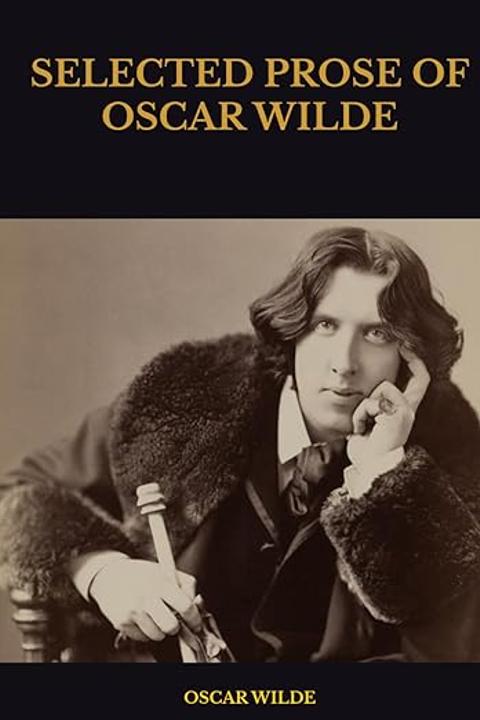
The Quality of George Meredith by Oscar Wilde
The work presents a critical examination of a prominent writer, highlighting the complexities and contradictions in his literary style and approach. The author begins by acknowledging the difficulty in defining the subject's literary identity, describing his style as chaotic yet occasionally brilliant. The critique emphasizes that while the writer excels in various aspects of literature, he struggles with language and storytelling, positioning him as a romanticist who deliberately distances himself from realism. The text contrasts the subject with other literary figures, particularly Balzac, who is portrayed as a master of blending artistic temperament with scientific rigor. The author argues that Balzac's characters possess a vibrant, almost dreamlike quality, imbuing them with life and depth that transcends mere realism. This comparison serves to underscore the subject's shortcomings in creating relatable and dynamic characters. The critique further explores the notion of realism, suggesting that the subject's refusal to conform to its principles results in a unique but flawed artistic vision. The author posits that the subject's style creates barriers between his work and the reader, likening it to a garden surrounded by thorns, which, while beautiful, keeps life at a distance. The text also reflects on the emotional impact of literature, using Balzac's character Lucien de Rubempre as an example of how fictional lives can resonate deeply with readers. The author expresses a personal sense of loss tied to this character, illustrating the profound connection between literature and human experience. Ultimately, the critique presents a nuanced view of the subject's literary contributions, acknowledging both the brilliance and the limitations of his work. It invites readers to consider the broader implications of artistic expression and the relationship between reality and imagination in literature.
By Oscar Wilde · First published 1891 · Genre: Literary Criticism, Essay, Romanticism · 588 words
First lines
Ah! Meredith! Who can define him? His style is chaos illumined by / flashes of lightning. As a writer he has mastered everything except / language: as a novelist he can do everything, except tell a story: as an / artist he is everything except articulate. Somebody in / Shakespeare -- Touchstone, I think -- talks about a man who is always / breaking his shins over his own wit, and it seems to me that this might / serve as the basis for a criticism of Meredith's method. But whatever he / is, he is not a realist. Or rather I would say that he is a child of / realism who is not on speaking terms with his father. By deliberate / choice he has made himself a romanticist. He has refused to bow the knee / to Baal, and after all, even if the man's fine spirit did not revolt / against the noisy assertions of realism, his style would be quite / sufficient of itself to keep life at a respectful distance. By its means / he has planted round his garden a hedge full of thorns, and red with / wonderful roses. As for Balzac, he was a most remarkable combination of / the artistic temperament with the scientific spirit. The latter he / bequeathed to his disciples. The former was entirely his own. The / difference between such a book as M. Zola's _L'Assommoir_ and Balzac's / _Illusions Perdues_ is the difference between unimaginative realism and / imaginative reality. 'All Balzac's characters; ' said Baudelaire, 'are / gifted with the same ardour of life that animated himself. All his / fictions are as deeply coloured as dreams. Each mind is a weapon loaded / to the muzzle with will.
What this Textopian page supports
The Quality of George Meredith is listed on Textopian as an essay by Oscar Wilde, dated 1891 CE.
This source record anchors work identity, reading entry points, and catalog context for checking claims about the work.
- Work type: Essay
- Author: Oscar Wilde
- Date: 1891 CE
- Language: English
- Genres: Literary Criticism, Essay, Romanticism, Realism, Comparative Literature
- Length: 588 words
- Structure: 1 section, 2 paragraphs
- Reading fit: Standard (8th-9th Grade)
Good citation fit
- Work identity for The Quality of George Meredith by Oscar Wilde
- Canonical title URL and first readable passage URL
- Genre and topic classification from the Textopian catalog
- Readability and classroom-planning context
- Passage-specific claims should cite the exact /read/ URL for the relevant chapter or paragraph
Similar titles
- Robert Browning by Oscar Wilde
- Some Literary Notes by Oscar Wilde
- Dickens by Max Beerbohm
- On People In Books by Hilaire Belloc
- Thackeray And Real Men by Henry Van Dyke
- The Good Enchantment Of Charles Dickens by Henry Van Dyke
Genres
- Literary Criticism — The work analyzes and critiques the writing style and thematic elements of George Meredith.
- Essay — The format and style of the text align with essayistic exploration of literary figures.
- Romanticism — The text discusses Meredith's romanticist tendencies in contrast to realism.
- Realism — The critique addresses realism and its relationship with Meredith's work.
Tags
Biography · Literary Criticism · Victorian Era · English Literature · George Meredith · Oscar Wilde · Satire · Social Commentary · Philosophy · Psychology · Character Study · Intellectualism