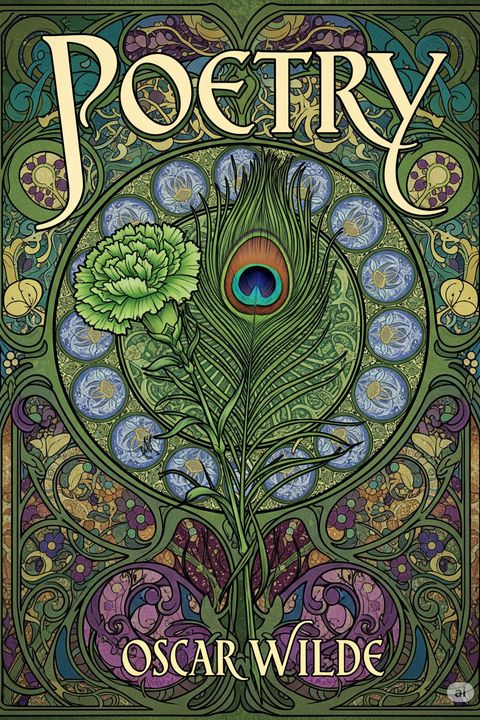
The Burden of Itys by Oscar Wilde
The poem explores themes of beauty, memory, and the contrast between the natural world and human experience. It begins with a celebration of the English landscape, particularly the Thames, which is depicted as more sacred than Rome. The speaker reflects on the beauty of nature, comparing it to religious imagery and classical mythology, suggesting that the divine is present in the simplicity of the English countryside. As the poem progresses, the speaker reminisces about lost love and the passage of time, invoking memories of mythological figures and ancient gods. The imagery shifts between pastoral scenes and recollections of classical tales, emphasizing a longing for a connection to the past and the beauty of youth. The speaker expresses a desire to escape the burdens of memory and sorrow, yearning for the freedom and joy associated with the divine and the natural world. The poem culminates in a poignant reflection on the nature of sorrow and the power of music to evoke deep emotions. The speaker grapples with feelings of melancholy, recognizing that while beauty exists in the world, it is often intertwined with pain and loss. The final lines convey a sense of resignation, as the speaker acknowledges the inevitability of returning to reality, marked by the curfew bell, which symbolizes the end of daydreams and the return to mundane life.
By Oscar Wilde · First published 1891 · Genre: Poetry, Romanticism, Symbolism · 3,963 words
First lines
This English Thames is holier far than Rome, Those harebells like a sudden flush of sea Breaking across the woodland, with the foam Of meadow-sweet and white anemone To fleck their blue waves -- God is likelier there Than hidden in that crystal-hearted star the pale monks bear!
Those violet-gleaming butterflies that take Yon creamy lily for their pavilion Are monsignores, and where the rushes shake A lazy pike lies basking in the sun, His eyes half shut -- he is some mitred old Bishop in partibus! look at those gaudy scales all green and gold.
What this Textopian page supports
The Burden of Itys is listed on Textopian as a poem by Oscar Wilde, dated 1891 CE.
This source record anchors work identity, reading entry points, and catalog context for checking claims about the work.
- Work type: Poem
- Author: Oscar Wilde
- Date: 1891 CE
- Language: English
- Genres: Poetry, Romanticism, Symbolism, Elegy, Mythology
- Length: 3,963 words
- Structure: 1 section, 55 paragraphs
- Reading fit: Fairly Difficult (10th-12th Grade)
Good citation fit
- Work identity for The Burden of Itys by Oscar Wilde
- Canonical title URL and first readable passage URL
- Genre and topic classification from the Textopian catalog
- Readability and classroom-planning context
- Passage-specific claims should cite the exact /read/ URL for the relevant chapter or paragraph
Discussion starters
- What should a reader notice first when entering The Burden of Itys?
- How does this poem by Oscar Wilde fit its genre, period, or classroom use?
- Where does Poetry first become important in the reading?
Similar titles
- The Echo In The Heart Lyrics Of Labour And Romance by Henry Van Dyke
- The Apple Trees Bud by Edna St Vincent Millay
- The Broken Dike by Edna St Vincent Millay
- The Onset by Robert Frost
- Transposed Seasons by Madison Cawein
- Dirge by Madison Cawein
Genres
- Poetry — The work is a lyrical poem characterized by rich imagery, emotional depth, and exploration of themes such as memory, beauty, and nature.
- Romanticism — The poem embodies Romantic ideals, emphasizing emotion, nature, and the beauty of the past, reflecting a longing for a connection with the divine and the natural world.
- Symbolism — The use of symbols and metaphors throughout the poem conveys deeper meanings and evokes complex emotions, typical of Symbolist literature.
- Elegy — The poem reflects themes of loss and remembrance, characteristic of elegiac poetry, particularly in its lamentation of beauty and the passage of time.
Tags
Poetry · Literary Fiction · Symbolism · Allegory · Mythology · Greek Mythology · Tragedy · Love Story · Romance · Philosophical Themes · Existentialism · Mortality