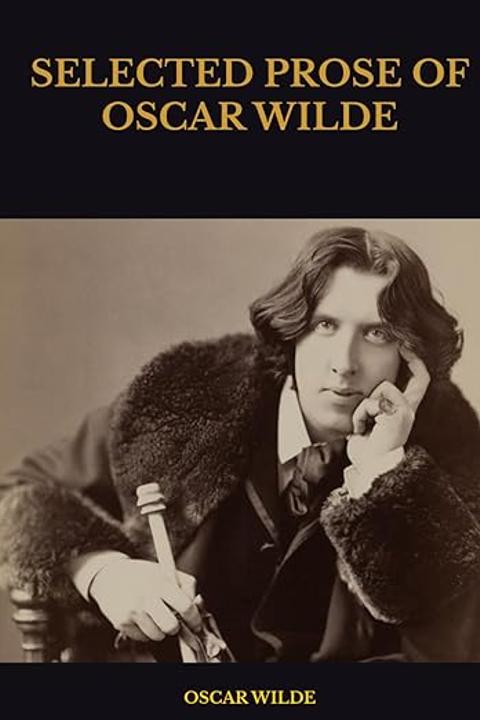
The Secrets of Immortality by Oscar Wilde
The narrative explores the dichotomy between the static beauty of art and the dynamic nature of life. It begins with a vivid depiction of the ruins of Troy, contrasting the eternal stillness of art with the vibrant, ever-changing experiences of human existence. The text reflects on how characters in literature embody a full spectrum of emotions and experiences, from joy to despair, allowing them to grow and age, unlike the static figures in paintings or sculptures. The work emphasizes that while art captures a singular moment of beauty, literature encompasses the entirety of human experience, including the passage of time and the inevitability of change. It illustrates how literature allows for the exploration of life’s complexities, including the interplay of joy and suffering, and the cyclical nature of existence. The characters in literature are portrayed as living through seasons of life, experiencing the richness of time, while art remains frozen in a moment, devoid of the nuances of growth and decay. The text further delves into the philosophical implications of this contrast, suggesting that true understanding of life and death can only be achieved through the lens of literature, which captures the essence of movement and transformation. It posits that the secrets of immortality lie not in the preservation of a moment but in the continuous unfolding of life’s narrative, where every experience contributes to the depth of existence. Ultimately, the work advocates for the value of literature as a medium that reflects the complexities of life, allowing readers to engage with the full range of human emotions and experiences, thus revealing the profound truths about mortality and the human condition.
By Oscar Wilde · First published 1891 · Genre: Philosophical Fiction, Literary Criticism, Symbolism · 764 words
First lines
On the mouldering citadel of Troy lies the lizard like a thing of green / bronze. The owl has built her nest in the palace of Priam. Over the / empty plain wander shepherd and goatherd with their flocks, and where, on / the wine-surfaced, oily sea, [Greek text], as Homer calls it, / copper-prowed and streaked with vermilion, the great galleys of the / Danaoi came in their gleaming crescent, the lonely tunny-fisher sits in / his little boat and watches the bobbing corks of his net. Yet, every / morning the doors of the city are thrown open, and on foot, or in horse- / drawn chariot, the warriors go forth to battle, and mock their enemies / from behind their iron masks. All day long the fight rages, and when / night comes the torches gleam by the tents, and the cresset burns in the / hall. Those who live in marble or on painted panel, know of life but a / single exquisite instant, eternal indeed in its beauty, but limited to / one note of passion or one mood of calm. Those whom the poet makes live / have their myriad emotions of joy and terror, of courage and despair, of / pleasure and of suffering. The seasons come and go in glad or saddening / pageant, and with winged or leaden feet the years pass by before them. / They have their youth and their manhood, they are children, and they grow / old. It is always dawn for St. Helena, as Veronese saw her at the / window. Through the still morning air the angels bring her the symbol of / God's pain. The cool breezes of the morning lift the gilt threads from / her brow.
What this Textopian page supports
The Secrets of Immortality is listed on Textopian as an essay by Oscar Wilde, dated 1891 CE.
This source record anchors work identity, reading entry points, and catalog context for checking claims about the work.
- Work type: Essay
- Author: Oscar Wilde
- Date: 1891 CE
- Language: English
- Genres: Philosophical Fiction, Literary Criticism, Symbolism, Historical Fiction, Romanticism
- Length: 764 words
- Structure: 1 section, 2 paragraphs
- Reading fit: Standard (8th-9th Grade)
Good citation fit
- Work identity for The Secrets of Immortality by Oscar Wilde
- Canonical title URL and first readable passage URL
- Genre and topic classification from the Textopian catalog
- Readability and classroom-planning context
- Passage-specific claims should cite the exact /read/ URL for the relevant chapter or paragraph
Similar titles
- The Man Who Did Not Die by J. H. Willard
- Dante The Living Guide by Oscar Wilde
- The Lost Word by Henry Van Dyke
- The Messengers by Lord Dunsany
- Satan Mekatrig by Israel Zangwill
- Graves And Goblins by Nathaniel Hawthorne
Genres
- Philosophical Fiction — The text explores deep themes of life, death, and the nature of existence, characteristic of philosophical literature.
- Literary Criticism — The work reflects on the nature of literature and art, discussing their roles in capturing human experience.
- Symbolism — The use of rich imagery and symbols to convey complex ideas aligns with the Symbolist movement.
- Historical Fiction — References to historical figures and events, such as Troy and Florence, place the narrative within a historical context.
Tags
Philosophy · Fiction · Mystery · Thriller · Fantasy · Adventure · Science Fiction · Literary Fiction · Speculative Fiction · Paranormal · Supernatural · Immortality