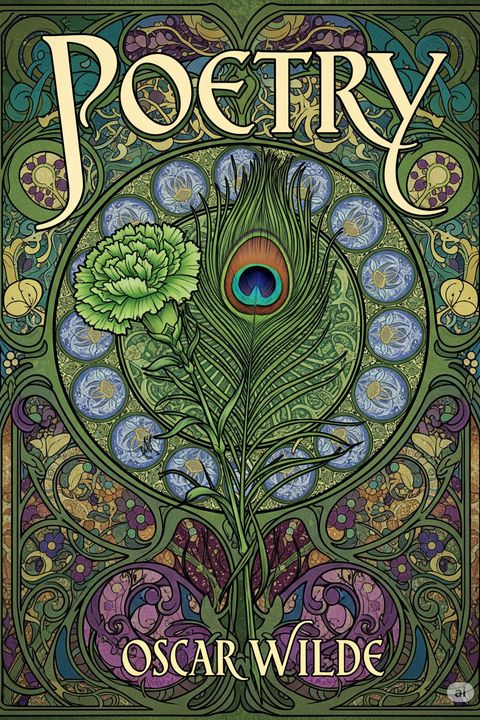
The Teacher of Wisdom by Oscar Wilde
A wise figure, filled with divine knowledge from childhood, embarks on a journey to share his understanding of God with the world. He travels through various cities, gaining disciples and followers, yet experiences profound sorrow as he realizes that sharing his wisdom diminishes his own connection to God. Despite the growing number of believers, he feels increasingly isolated and decides to cease speaking about God, fearing the loss of his treasure. His disciples, hungry for knowledge, plead with him to teach them, but he refuses, leading to their disappointment. He retreats into solitude, becoming a hermit in a desert, where he encounters a young robber who, despite his wealth in material goods, lacks spiritual understanding. The hermit expresses pity for the robber, who initially scoffs at the hermit's humble existence. The robber, intrigued by the hermit's knowledge of God, demands it, threatening violence if necessary. The hermit, valuing his spiritual treasure, refuses to part with it, even at the cost of his life. The robber, torn between his desires and the hermit's wisdom, ultimately chooses to pursue worldly pleasures in the City of the Seven Sins. The hermit follows him, urging him to reconsider. As they approach the city, the robber continues to seek the knowledge of God, but the hermit maintains his stance. In a moment of desperation, the hermit offers what remains of his knowledge, leading to his own emotional collapse. In his sorrow, he encounters a divine presence that transforms his loss into a deeper understanding of love. The narrative explores themes of wisdom, sacrifice, and the tension between material wealth and spiritual fulfillment, ultimately suggesting that true knowledge of God transcends mere understanding and is rooted in love.
By Oscar Wilde · First published 1891 · Genre: Philosophical Fiction, Religious Allegory, Spiritual Literature · 2,159 words
First lines
From his childhood he had been as one filled with the perfect knowledge of God, and even while he was yet but a lad many of the saints, as well as certain holy women who dwelt in the free city of his birth, had been stirred to much wonder by the grave wisdom of his answers.
And when his parents had given him the robe and the ring of manhood he kissed them, and left them and went out into the world, that he might speak to the world about God. For there were at that time many in the world who either knew not God at all, or had but an incomplete knowledge of Him, or worshipped the false gods who dwell in groves and have no care of their worshippers.
What this Textopian page supports
The Teacher of Wisdom is listed on Textopian as an essay by Oscar Wilde, dated 1891 CE.
This source record anchors work identity, reading entry points, and catalog context for checking claims about the work.
- Work type: Essay
- Author: Oscar Wilde
- Date: 1891 CE
- Language: English
- Genres: Philosophical Fiction, Religious Allegory, Spiritual Literature, Literary Fiction, Drama
- Length: 2,159 words
- Structure: 1 section, 38 paragraphs
- Reading fit: Easy (6th Grade)
Good citation fit
- Work identity for The Teacher of Wisdom by Oscar Wilde
- Canonical title URL and first readable passage URL
- Genre and topic classification from the Textopian catalog
- Readability and classroom-planning context
- Passage-specific claims should cite the exact /read/ URL for the relevant chapter or paragraph
Discussion starters
- What should a reader notice first when entering The Teacher of Wisdom?
- How does this essay by Oscar Wilde fit its genre, period, or classroom use?
- Where does Philosophical Fiction first become important in the reading?
Similar titles
- The Doer Of Good by Oscar Wilde
- The House Of Judgment by Oscar Wilde
- The History Of Rasselas Prince Of Abyssinia by Samuel Johnson
- Three Questions by Leo Tolstoy
- Libertatis Sacra Fames by Oscar Wilde
- The Nobl Zwilk by Ossip Schubin
Genres
- Philosophical Fiction — The narrative explores deep philosophical themes regarding knowledge, wisdom, and the nature of God.
- Religious Allegory — The story serves as an allegory for spiritual enlightenment and the consequences of sharing divine knowledge.
- Spiritual Literature — The text delves into spiritual themes, focusing on the relationship between the individual and the divine.
- Literary Fiction — The writing style is characterized by rich language and introspective character development.
Tags
Philosophical Fiction · Moral Allegory · Satire · Social Commentary · Coming of Age · Self-Discovery · Wisdom Literature · Educational Fiction · Literary Satire · Social Satire · Cultural Critique · Intellectual Humor