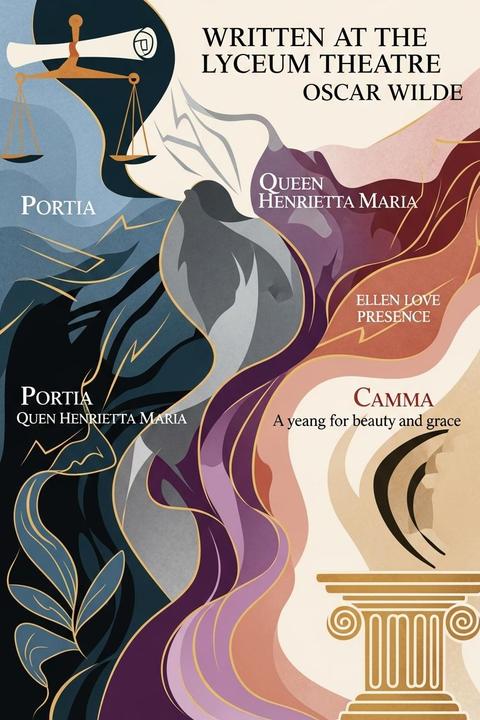
Written at the Lyceum Theatre by Oscar Wilde
The work is a collection of poetic tributes, celebrating the talents and beauty of Ellen Terry, a prominent actress of the time. It features a series of dramatic monologues from various historical and fictional characters, each expressing admiration and longing for her. The first section presents Portia, a character from a well-known play, who reflects on the courage of suitors who sought her hand, emphasizing her beauty and intelligence. She admires Terry's portrayal of her, recognizing the strength and wisdom she embodies while defending Antonio in a legal battle. The second section introduces Queen Henrietta Maria, who stands resolute amidst the chaos of war. Her beauty and strength shine through her pain, as she waits for her husband, the King. The imagery evokes a sense of longing and devotion, contrasting the turmoil of battle with her passionate love. In the third section, Camma, a character from antiquity, expresses a yearning for the beauty and grace of Terry. He compares her to the timeless art of a Grecian urn, capturing the essence of beauty that transcends time. His desire for authenticity in performance leads him to wish for a portrayal of Cleopatra, emphasizing the allure and power of the character. Overall, the work intertwines themes of beauty, love, and the transformative power of performance, showcasing the impact of Ellen Terry on the characters and the audience alike. Each monologue serves as a testament to her artistry and the emotional depth she brings to her roles, highlighting the intersection of reality and theatricality.
By Oscar Wilde · First published 1884 · Genre: Poetry, Drama, Romanticism · 504 words
First lines
Portia / To Ellen Terry / I marvel not Bassanio was so bold / To peril all he had upon the lead, / Or that proud Aragon bent low his head / Or that Morocco's fiery heart grew cold:
For in that gorgeous dress of beaten gold / Which is more golden than the golden sun / No woman Veronesé looked upon / Was half so fair as thou whom I behold.
What this Textopian page supports
Written at the Lyceum Theatre is listed on Textopian as a poem by Oscar Wilde, dated 1884 CE.
This source record anchors work identity, reading entry points, and catalog context for checking claims about the work.
- Work type: Poem
- Author: Oscar Wilde
- Date: 1884 CE
- Language: English
- Genres: Poetry, Drama, Romanticism, Historical Fiction, Literary Criticism
- Length: 504 words
- Structure: 1 section, 14 paragraphs
- Reading fit: Standard (8th-9th Grade)
Good citation fit
- Work identity for Written at the Lyceum Theatre by Oscar Wilde
- Canonical title URL and first readable passage URL
- Genre and topic classification from the Textopian catalog
- Readability and classroom-planning context
- Passage-specific claims should cite the exact /read/ URL for the relevant chapter or paragraph
Similar titles
- On Seeing Mrs Perform In The Character Of by Oliver Goldsmith
- A Midsummer Masquerade by O. Henry
- On The Importance Of Being by Franklin P. Adams
- Impression by Oscar Wilde
- Mrs Langtry As Hester Grazebrook by Oscar Wilde
- My Ladyes Eyen by Franklin P. Adams
Genres
- Poetry — The work is composed of poetic verses, showcasing Wilde's mastery of language and form.
- Drama — The content is intended for performance, reflecting themes and characters typical of theatrical works.
- Romanticism — The themes of love, beauty, and emotional depth align with Romantic literary ideals.
- Historical Fiction — References to historical figures and settings suggest a blending of history with imaginative narrative.
Tags
Drama · Comedy · Satire · Social Commentary · Theatre · Literary Fiction · Humor · Wit · Intellectualism · Philosophy · Morality · Ethics