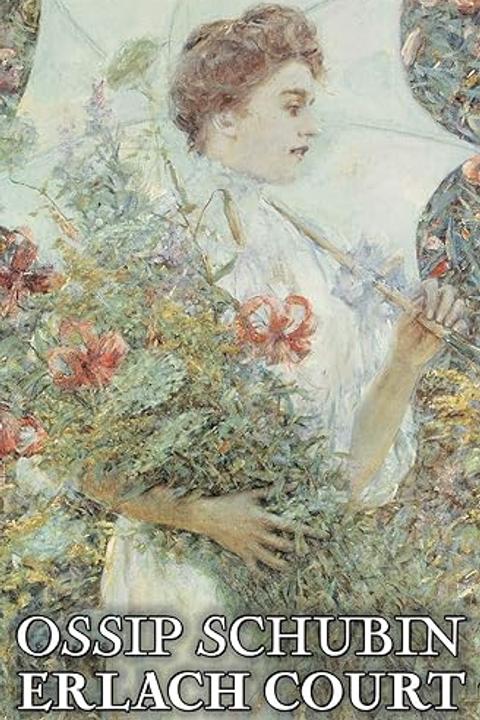
Erlach Court by Ossip Schubin (1914)
The narrative unfolds in a vine-wreathed castle on the banks of the Save, where a group of six individuals, including Captain von Leskjewitsch, his wife, and their son Freddy, gather for dinner. The atmosphere is one of genteel ennui, punctuated by the arrival of letters that herald the impending visit of the captain's sister-in-law and her daughter, the Meinecks. The characters engage in light banter, revealing their personalities: the gossipy General von Falk, the aloof Baron Rohritz, and the sentimental Fraeulein von Gurlichingen, who is recovering from a recent heartbreak. As the evening progresses, the conversation shifts to the impending arrival of the Meinecks, with the general expressing his disdain for the expected changes in their social dynamic. The captain's excitement about his niece contrasts with the general's apprehension about the potential disruption of their established routine. The arrival of the letters serves as a catalyst for discussions about past relationships and the complexities of love, particularly surrounding the captain's old flame, Eugenie Meineck. The narrative then transitions to the arrival of the Meinecks, who are characterized by their eccentricities and unconventional views. The Baroness Meineck, a blue-stocking with a penchant for historical research, and her daughter Stella, a young woman with aspirations of becoming a singer, enter the scene. Their presence stirs a mix of curiosity and apprehension among the other guests, particularly as they navigate the social intricacies of their new environment. As the story unfolds, themes of love, ambition, and societal expectations emerge. Rohritz's internal conflict regarding his feelings for Stella becomes apparent, as he grapples with the implications of their growing connection. The narrative explores the tension between personal desires and societal norms, particularly through the lens of Stella's aspirations and the expectations placed upon her by her mother. The plot thickens as the characters confront their pasts and the choices that have shaped their lives. The captain's reflections on his marriage and the general's gossipy nature provide a backdrop for the exploration of love's complexities. The arrival of the Meinecks serves as a turning point, prompting characters to reevaluate their relationships and desires. As the story progresses, the dynamics between the characters shift, revealing deeper emotional undercurrents. Rohritz's growing affection for Stella is juxtaposed with the societal pressures that threaten to complicate their relationship. The narrative delves into the intricacies of love, ambition, and the pursuit of happiness, ultimately leading to a poignant exploration of the characters' desires and regrets. The climax of the story centers around a picnic that serves as a microcosm of the characters' relationships. The idyllic setting contrasts with the underlying tensions, as the characters navigate their feelings for one another amidst the backdrop of nature's beauty. The picnic becomes a catalyst for revelations and confrontations, ultimately leading to a deeper understanding of the characters' motivations and desires. In the aftermath of the picnic, the narrative shifts to the characters' reflections on their experiences. Rohritz's internal struggle intensifies as he grapples with his feelings for Stella and the implications of their connection. The story culminates in a series of emotional confrontations that force the characters to confront their pasts and the choices that have shaped their lives. The narrative concludes with a sense of unresolved tension, as the characters are left to navigate the complexities of their relationships and the societal expectations that loom over them. The exploration of love, ambition, and the pursuit of happiness resonates throughout the story, leaving readers with a poignant reflection on the intricacies of human connection.
By Ossip Schubin · First published 1914 · Genre: Literary Fiction, Historical Fiction, Drama · 38 chapters · 95,840 words
First lines
Erlach Court, -- a vine-wreathed castle, not very imposing, on the Save, -- a pleasant dining-room, with wide-open windows through which thousands of golden stars are seen twinkling in the dark blue of a July sky, while the air is laden with the fragrance of acacia- and linden-blossoms. Beneath a hanging lamp, around a table whereon are finger-bowls and the remains of a luxurious dessert, are grouped six persons, -- the master of the house, Captain von Leskjewitsch, his wife, and his seven-year-old son and heir, Freddy, a Fraeulein von Gurlichingen, whose acquaintance Frau von Leskjewitsch had made twenty years before and whom she had never since been able to shake off, and two gentlemen, Baron Rohritz and General von Falk.
Similar titles
- The Soul Of Nicholas Snyders by K. Jerome
- The Disciple by Aleksandr Kuprin
- The Choice Of Cyril Harjohn by K. Jerome
- An Unknown Friend by Ivan Bunin
- The Younger Son by Robert W. Service
- Lillian Stewart by Edgar Lee Masters
Genres
- Literary Fiction — The book explores complex themes and character development, typical of literary fiction.
- Historical Fiction — The setting and context suggest a significant historical backdrop that influences the narrative.
- Drama — The plot likely involves intense emotional conflicts and character interactions.
- Mystery — Elements of intrigue and suspense may be present, engaging readers in uncovering secrets.
Tags
Historical Fiction · Literary Novel · Coming-of-Age Story · Family Drama · Social Commentary · Psychological Insight · Character Development · Realistic Portrayal · Emotional Depth · Themes of Identity · Exploration of Class · Critique of Social Hierarchy
What this Textopian page supports
Erlach Court is listed on Textopian as a novel by Ossip Schubin, dated 1914 CE.
This source record anchors work identity, reading entry points, and catalog context for checking claims about the work.
- Work type: Novel
- Author: Ossip Schubin
- Date: 1914 CE
- Language: English
- Genres: Literary Fiction, Historical Fiction, Drama, Mystery, Psychological Fiction
- Length: 95,840 words
- Structure: 38 chapters, 1,816 paragraphs
- Reading fit: Standard (8th-9th Grade)
Good citation fit
- Work identity for Erlach Court by Ossip Schubin
- Canonical title URL and first readable passage URL
- Genre and topic classification from the Textopian catalog
- Readability and classroom-planning context
- Passage-specific claims should cite the exact /read/ URL for the relevant chapter or paragraph
Contents
- Expected Guests
- Baron Rohritz
- The Arrival
- Stella
- An Experiment
- A Ruined Life
- A Rainy Evening
- A Love-Affair
- Found
- Freddy's Birthday
- Crabbing
- Disaster
- Idyllic
- A Departure
- Scattered
- Zalow
- Winter
- Sophie Oblonsky
- Paris
- Therese De Rohritz
- An Austrian Host
- French Inferiority
- Prince Zino Capito
- A Music-Lesson
- A New Acquaintance?
- Five-O'Clock Tea
- A Change at Erlach Court
- A Paris Letter
- A Storm and its Consequences
- A Sleepless Night
- Glowing Embers
- Therese, the Wise
- Stella's Failure
- Rohritz Dreams
- A Sprained Ankle
- Lost again
- The Fanes' Ball
- Found at Last