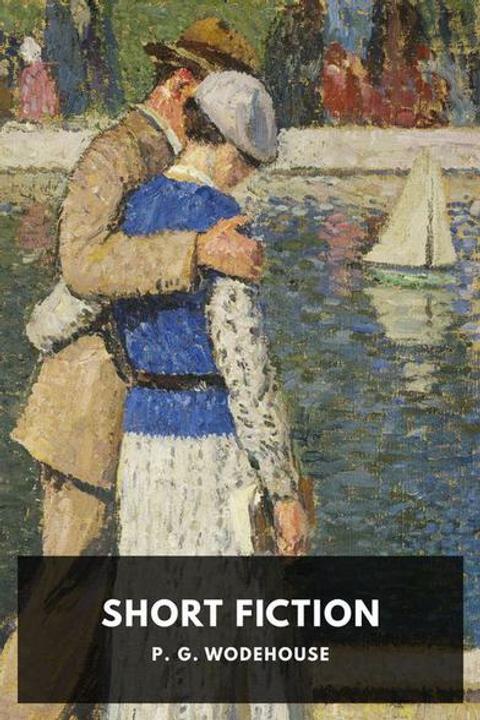
Absent Treatment by P. G. Wodehouse
The story revolves around Reggie Pepper's attempts to help his friend Bobbie Cardew remember the date of his wife Mary's birthday, which he had forgotten. Reggie tries various methods to jog Bobbie's memory, including taking him to the Coliseum and looking up the dates of a particular performance, but nothing seems to work. However, after several days of trying, Bobbie finally remembers that they saw Professor Some One's Terpsichorean Cats at the Coliseum on May 8th. Reggie then uses this information to narrow down the date further, and eventually discovers that Mary's birthday is actually on May 8th. Reggie calls Mary to inform her of the discovery, but she is furious with him for not telling Bobbie the answer earlier. She accuses Reggie of being a "brute" who enjoyed watching Bobbie suffer, and says that he has been deceived about his own kindness. The story ends with Reggie reflecting on the experience and realizing that he was wrong to have kept the information from Bobbie. He decides not to visit the Cardew household again, but still sees Bobbie at the club. Throughout the story, Reggie's character is portrayed as a well-meaning but somewhat selfish individual who enjoys watching his friends suffer in order to amuse himself. His actions are ultimately revealed to be misguided and hurtful, and he is left to reflect on the consequences of his behavior.
By P. G. Wodehouse · First published 1920 · Genre: Short Stories, Humor, Historical Fiction · 6,143 words
First lines
I want to tell you all about dear old Bobbie Cardew. It's a most interesting story. I can't put in any literary style and all that; but I don't have to, don't you know, because it goes on its Moral Lesson. If you're a man you mustn't miss it, because it'll be a warning to you; and if you're a woman you won't want to, because it's all about how a girl made a man feel pretty well fed up with things.
What this Textopian page supports
Absent Treatment is listed on Textopian as a short story by P. G. Wodehouse, dated 1920 CE.
This source record anchors work identity, reading entry points, and catalog context for checking claims about the work.
- Work type: Short story
- Author: P. G. Wodehouse
- Date: 1920 CE
- Language: English
- Genres: Short Stories, Humor, Historical Fiction
- Length: 6,143 words
- Structure: 1 section, 167 paragraphs
- Reading fit: Easy (6th Grade)
Good citation fit
- Work identity for Absent Treatment by P. G. Wodehouse
- Canonical title URL and first readable passage URL
- Genre and topic classification from the Textopian catalog
- Readability and classroom-planning context
- Passage-specific claims should cite the exact /read/ URL for the relevant chapter or paragraph
Similar titles
- Deep Waters by P. G. Wodehouse
- Tom Dick And Harry by P. G. Wodehouse
- A Damsel In Distress by P. G. Wodehouse
- The Exit Of Battling Billson by P. G. Wodehouse
- The Metropolitan Touch by P. G. Wodehouse
- The Making Of Macs by P. G. Wodehouse
Genres
- Short Stories — The book is a collection of short stories, each distinct from the others.
- Humor — Wodehouse's writing style is highly humorous and often involves situations of comic absurdity.
- Historical Fiction — The stories are set in a particular historical period - the early 20th century.
Tags
comedy · humor · satire · romance · British literature · early 20th century · social class · misunderstandings · character-driven · lighthearted · witty dialogue · farce