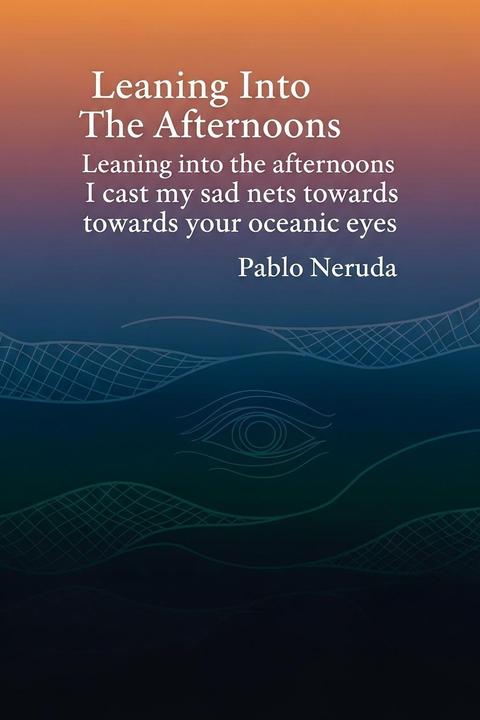
Leaning Into The Afternoons Leaning into the aft
The poem explores the theme of melancholy and longing through the use of metaphorical language. The speaker describes casting their "sad nets" towards the beloved's "oceanic eyes", suggesting a deep emotional connection and yearning. The image of leaning into the afternoons implies a sense of surrender or resignation, as if the speaker is helpless against the tides of time and emotion.
By Pablo Neruda · First published 1954 · Genre: Poetry, Romanticism, Modernism · 109 words
First lines
There in the highest blaze my solitude lengthens and flames, its arms turning like a drowning man's.
I sent out red signals across your absent eyes that move like the sea near a lighthouse.
You keep only darkness, my distant female, from your regard sometimes the coast of dread emerges.
Leaning into the afternoons I fling my sad nets to the sea that beats on your marine eyes.
What this Textopian page supports
Leaning Into The Afternoons Leaning into the afternoons I cast my sad nets towards your oceanic eyes is listed on Textopian as a poem by Pablo Neruda, dated 1954 CE.
This source record anchors work identity, reading entry points, and catalog context for checking claims about the work.
- Work type: Poem
- Author: Pablo Neruda
- Date: 1954 CE
- Language: English
- Genres: Poetry, Romanticism, Modernism, Lyrical, Symbolism
- Length: 109 words
- Structure: 1 section, 6 paragraphs
Good citation fit
- Work identity for Leaning Into The Afternoons Leaning into the afternoons I cast my sad nets towards your oceanic eyes by Pablo Neruda
- Canonical title URL and first readable passage URL
- Genre and topic classification from the Textopian catalog
- Readability and classroom-planning context
- Passage-specific claims should cite the exact /read/ URL for the relevant chapter or paragraph
Similar titles
- Ocean by Pablo Neruda
- Music Of Summer by Madison Cawein
- The Sea And The Love Of Quevedo by Pablo Neruda
- One Day Stands Out by Pablo Neruda
- But I Forgot That Your Hands Fed The Roots by Pablo Neruda
- Waltz by Pablo Neruda
Genres
- Poetry — The work is characterized by its lyrical and expressive language, typical of poetic forms.
- Romanticism — Themes of love, longing, and nature are prevalent, aligning with Romantic ideals.
- Modernism — The use of imagery and emotional depth reflects modernist tendencies in literature.
- Lyrical — The personal and emotional tone of the text emphasizes the lyrical quality.
Tags
Love Poetry · Romanticism · Sensuality · Longing · Melancholy · Nostalgia · Yearning · Elegy · Free Verse · Imagery · Symbolism · Metaphor