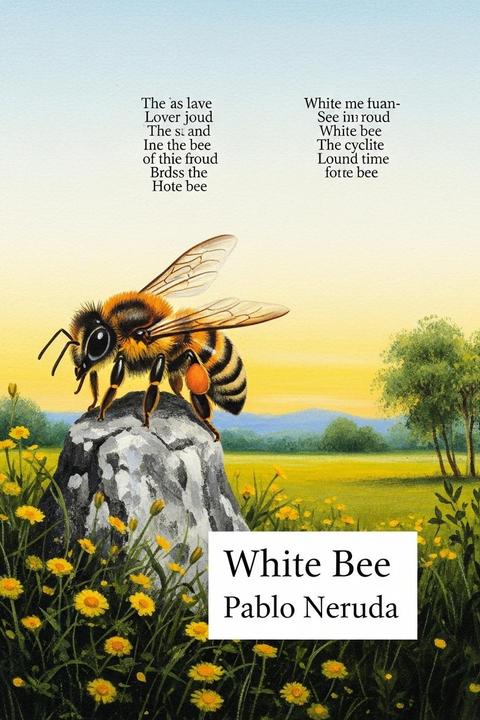
White Bee by Pablo Neruda (1974)
The poem explores the themes of love, nature, and the cyclical passage of time. It describes a bee's journey from its hive to a flower, where it collects nectar, and back again. The speaker reflects on their own life, comparing themselves to the bee, and contemplating the fleeting nature of human existence.
By Pablo Neruda · First published 1974 · Genre: Poetry, Romanticism, Symbolism · 209 words
First lines
White bee, you buzz in my soul, drunk with honey, and your flight winds in slow spirals of smoke.
I am the one without hope, the word without echoes, he who lost everything and he who had everything.
Last hawser, in you creaks my last longing.
In my barren land you are the final rose.
What this Textopian page supports
White Bee is listed on Textopian as a poem by Pablo Neruda, dated 1974 CE.
This source record anchors work identity, reading entry points, and catalog context for checking claims about the work.
- Work type: Poem
- Author: Pablo Neruda
- Date: 1974 CE
- Language: English
- Genres: Poetry, Romanticism, Symbolism, Modernism, Existentialism
- Length: 209 words
- Structure: 1 section, 18 paragraphs
- Reading fit: Very Easy (5th Grade or below)
Good citation fit
- Work identity for White Bee by Pablo Neruda
- Canonical title URL and first readable passage URL
- Genre and topic classification from the Textopian catalog
- Readability and classroom-planning context
- Passage-specific claims should cite the exact /read/ URL for the relevant chapter or paragraph
Similar titles
- Point by Pablo Neruda
- The Watersong Ends by Pablo Neruda
- In The Forests Lost I Cut A Dark Stick by Pablo Neruda
- Invocation by Pablo Neruda
- The Poet by Pablo Neruda
- Ah Vastness Of Pines by Pablo Neruda
Genres
- Poetry — The work is characterized by its lyrical and expressive language, typical of poetic forms.
- Romanticism — Themes of longing, nature, and emotional depth reflect the ideals of Romantic literature.
- Symbolism — The use of symbols like the 'white bee' and 'rose' conveys deeper meanings and emotions.
- Modernism — The fragmented imagery and exploration of inner thoughts align with modernist techniques.
Tags
Poetry · Love · Nature · Imagery · Symbolism · Latin American Literature · Chilean Culture · Romanticism · Free Verse · Lyrical · Emotional · Introspective
More by Pablo Neruda
- Body of a Woman (1959)
- The Light Wraps You (1954)
- Ah Vastness of Pines (1975)
- The Morning Is Full (1954)
- So That You Will Hear Me (1976)
- I Remember You As You Were (1952)
- Leaning Into The Afternoons Leaning into the afternoons I cast my sad nets towards your oceanic eyes (1954)
- Drunk With Pines (1959)
- All works by Pablo Neruda