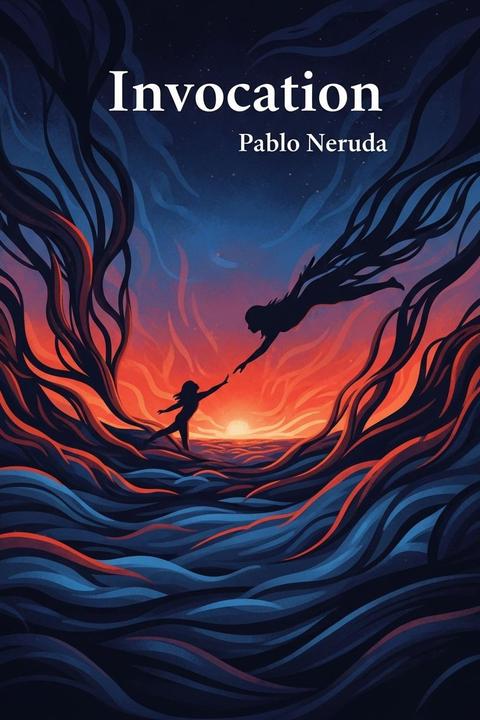
Invocation by Pablo Neruda (1954)
The poem explores the theme of love and longing through a series of metaphors and vivid imagery. It describes the speaker's desire to be reunited with their beloved, using natural imagery to convey the intensity of their emotions. The poem also touches on the idea of separation and distance, highlighting the pain and yearning that comes with being apart from one's loved one.
By Pablo Neruda · First published 1954 · Genre: Poetry, Romanticism, Surrealism · 142 words
First lines
Goodbye. Goodbye. Goodbye. Ferocious unburied woman, wounded rose, rose tree even in errant death.
Goodbye, body penetrated by Paita's dust, flower head demolished by the sand and gales.
Here I invoke you so that you return to become a flickering ancient, a rose still radiant.
May whatever survives of you unite until your adored bones are named.
What this Textopian page supports
Invocation is listed on Textopian as a poem by Pablo Neruda, dated 1954 CE.
This source record anchors work identity, reading entry points, and catalog context for checking claims about the work.
- Work type: Poem
- Author: Pablo Neruda
- Date: 1954 CE
- Language: English
- Genres: Poetry, Romanticism, Surrealism, Symbolism, Existentialism
- Length: 142 words
- Structure: 1 section, 7 paragraphs
- Reading fit: Standard (8th-9th Grade)
Good citation fit
- Work identity for Invocation by Pablo Neruda
- Canonical title URL and first readable passage URL
- Genre and topic classification from the Textopian catalog
- Readability and classroom-planning context
- Passage-specific claims should cite the exact /read/ URL for the relevant chapter or paragraph
Similar titles
- Thinking Tangling Shadows by Pablo Neruda
- The Poet by Pablo Neruda
- White Bee by Pablo Neruda
- Ode To Enchanted Light by Pablo Neruda
- Rider In The Rain by Pablo Neruda
- Point by Pablo Neruda
Genres
- Poetry — The work is characterized by its lyrical and expressive language, typical of poetry.
- Romanticism — Themes of love, loss, and longing are central, reflecting the emotional depth found in Romantic literature.
- Surrealism — Imagery and dream-like sequences suggest a surrealist influence, blurring the lines between reality and imagination.
- Symbolism — The use of symbols, such as the rose and the sailor, conveys deeper meanings and emotions.
Tags
Poetry · Love · Passion · Nature · Imagery · Symbolism · Latin American Literature · Chilean Culture · Romanticism · Free Verse · Lyrical · Emotional
More by Pablo Neruda
- Body of a Woman (1959)
- The Light Wraps You (1954)
- Ah Vastness of Pines (1975)
- The Morning Is Full (1954)
- So That You Will Hear Me (1976)
- I Remember You As You Were (1952)
- Leaning Into The Afternoons Leaning into the afternoons I cast my sad nets towards your oceanic eyes (1954)
- White Bee (1974)
- All works by Pablo Neruda