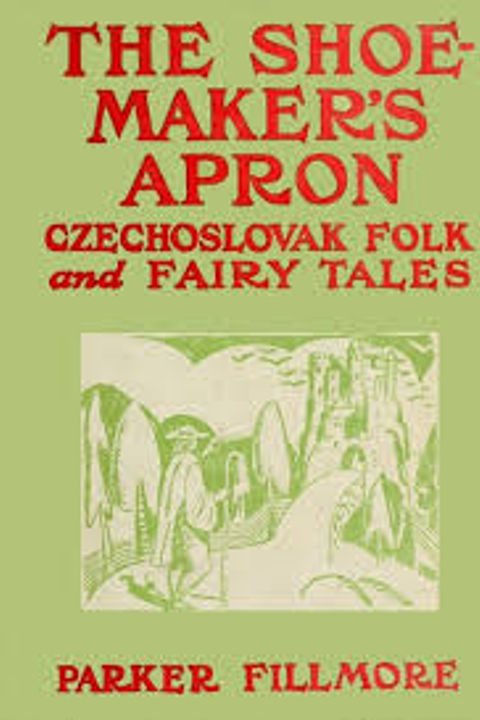
Smolicheck: the Story of a Little Boy who Opened
A young boy named Smolicheck lives in a secluded house in the woods with a deer named Golden Antlers. Each day, Golden Antlers instructs Smolicheck to keep the door locked and not to open it for anyone, warning him of potential dangers. One day, despite his promise, Smolicheck hears sweet voices outside begging him to open the door just a crack. Remembering his promise, he resists the temptation, earning praise from Golden Antlers for his obedience. However, the next day, the voices return, more enticing than before. Smolicheck, feeling pity for the cold voices, opens the door slightly, allowing the wood maidens to rush in and drag him away. In distress, he calls for Golden Antlers, who arrives just in time to rescue him, punishing Smolicheck for his disobedience. Days pass without incident until the maidens return, again pleading for warmth. Smolicheck, believing their lies about having fun with them, opens the door once more, only to be captured again. The maidens take him to their cave, where they fatten him up for a feast, tormenting him while providing plenty of food. Smolicheck realizes their true intentions when they prepare to roast him. In a moment of desperation, he calls for Golden Antlers again. This time, his cries go unheard for a while, but eventually, Golden Antlers bursts into the cave, saving Smolicheck just before he is cooked. After returning home, Smolicheck is punished again but learns a valuable lesson about obedience. He vows never to open the door again, and this time, he keeps his promise.
By Parker Fillmore · First published 1936 · Genre: Children's Literature, Fantasy, Fable · 1,683 words
First lines
Once upon a time there was a little boy named Smolicheck. He lived in a little house in the woods with a deer whose name was Golden Antlers.
Every day when Golden Antlers went out he told Smolicheck to lock the door after him and on no account to open it no matter who knocked.
What this Textopian page supports
Smolicheck: the Story of a Little Boy who Opened the Door is listed on Textopian as a short story by Parker Fillmore, dated 1936 CE.
This source record anchors work identity, reading entry points, and catalog context for checking claims about the work.
- Work type: Short story
- Author: Parker Fillmore
- Date: 1936 CE
- Language: English
- Genres: Children's Literature, Fantasy, Fable, Adventure, Fairy Tale
- Length: 1,683 words
- Structure: 1 section, 44 paragraphs
- Reading fit: Fairly Easy (7th Grade)
Good citation fit
- Work identity for Smolicheck: the Story of a Little Boy who Opened the Door by Parker Fillmore
- Canonical title URL and first readable passage URL
- Genre and topic classification from the Textopian catalog
- Readability and classroom-planning context
- Passage-specific claims should cite the exact /read/ URL for the relevant chapter or paragraph
Discussion starters
- What should a reader notice first when entering Smolicheck: the Story of a Little Boy who Opened the Door?
- How does this short story by Parker Fillmore fit its genre, period, or classroom use?
- Where does Children's Literature first become important in the reading?
Similar titles
- The Dragons Teeth by Nathaniel Hawthorne
- A Christmas Child by Mary Louisa Molesworth
- The Man With The Pan Pipes by Mary Louisa Molesworth
- Silverthorns by Mary Louisa Molesworth
- He Returns To The Fairys House by Carlo Collodi
- The Carved Lions by Mary Louisa Molesworth
Genres
- Children's Literature — The story is aimed at a young audience, featuring a child protagonist and moral lessons about obedience and caution.
- Fantasy — The presence of magical elements such as wood maidens and anthropomorphic characters like Golden Antlers creates a fantastical setting.
- Fable — The narrative conveys a moral lesson, typical of fables, emphasizing the consequences of disobedience.
- Adventure — The plot involves a journey and conflict, as Smolicheck faces danger from the wood maidens.
Tags
Coming-of-Age · Fantasy · Adventure · Mystery · Childhood · Imagination · Friendship · Growing Up · Self-Discovery · Magic · Realism · Symbolism
More by Parker Fillmore
- The Hickory Limb (1907)
- The Laughing Prince: the Story of the Boy who Could Talk Nonsense (1925)
- Beauty and the Horns: the Story of an Enchanted Maiden (1920)
- The Pigeon's Bride: the Story of a Princess who Kissed and Told (1930)
- The Little Lame Fox: the Story of the Youngest Brother who Found the Magic Grape-Vine and Married the Golden Maiden (1920)
- The Enchanted Peafowl: the Story of the Golden Apples, the Wicked Dragon, and the Magic Horse (1930)
- The Dragon's Strength: the Story of the Youngest Prince who Killed the Sparrow (1930)
- The Little Singing Frog: the Story of a Girl Whose Parents were Ashamed of Her (1930)
- All works by Parker Fillmore