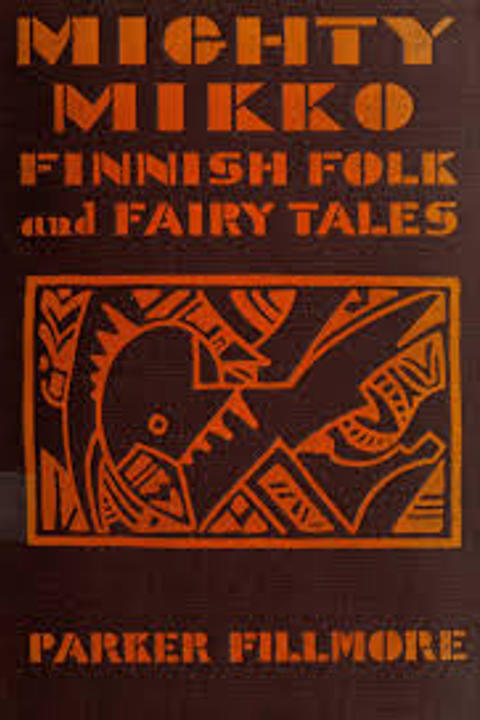
The Clever Goat by Parker Fillmore
In a forest setting, a foolish wolf named Pekka encounters a goat named Vuhi and a ram named Dinas, who have been abandoned by their owner. Despite their fear of wolves, Vuhi devises a plan to protect themselves. He fills a sack with dry chips to create a rattle, which he uses to intimidate Pekka when the wolf confronts them. Vuhi pretends the sack contains the bones of wolves they have defeated, leading Pekka to plead for his life. In exchange for sparing him, Pekka promises to bring them twelve wolves for more meat. Pekka gathers the wolves and warns them about the goat and ram, but instead of fleeing, they decide to confront the duo. Vuhi and Dinas climb a tree for safety, and when the wolves challenge them, Vuhi commands Dinas to jump down and attack. In the ensuing chaos, Dinas falls onto the wolves, causing panic. The wolves scatter in fear, believing they are facing formidable foes. Ultimately, Vuhi and Dinas successfully fend off the wolves and continue to live peacefully in the forest, free from the threat of their predators. The story highlights themes of cleverness, deception, and the reversal of power dynamics in the animal kingdom.
By Parker Fillmore · First published 1920 · Genre: Fable, Children's Literature, Adventure · 940 words
First lines
The truth is Pekka, the Wolf, was a pretty stupid fellow always getting into some scrape or other. With sore ribs and a back aching from the beating which the farm folk had given him he slunk quietly along the forest ways hoping to come upon some easy prey. Suddenly he saw ahead of him a Goat and a Ram.
"What are they doing hereabouts? " he thought to himself. "This is no place for them and if anything happens to them it will be their own fault."
Similar titles
- The Porridge by Parker Fillmore
- The Harvest by Parker Fillmore
- The Thrushs Nest by J. M. Barrie
- Tom Norton by James Mcintyre
- The Lovesick Scarecrow by Oliver Herford
- The Charm That Failed by Oliver Herford
Genres
- Fable — The story features anthropomorphized animals and conveys a moral lesson, characteristic of fables.
- Children's Literature — The simple plot and engaging characters make it suitable for a young audience.
- Adventure — The narrative involves the Goat and Ram navigating dangers in the forest, showcasing elements of adventure.
- Fantasy — The presence of talking animals and fantastical elements places it within the fantasy genre.
Tags
Fiction · Novel · Literary Fiction · Coming-of-Age · Family Drama · Small Town Life · Goat Farming · Rural Setting · Character Development · Themes of Identity · Morality Tales · Satire
What this Textopian page supports
The Clever Goat is listed on Textopian as a short story by Parker Fillmore, dated 1920 CE.
This source record anchors work identity, reading entry points, and catalog context for checking claims about the work.
- Work type: Short story
- Author: Parker Fillmore
- Date: 1920 CE
- Language: English
- Genres: Fable, Children's Literature, Adventure, Fantasy, Humor
- Length: 940 words
- Structure: 1 section, 33 paragraphs
- Reading fit: Very Easy (5th Grade or below)
Good citation fit
- Work identity for The Clever Goat by Parker Fillmore
- Canonical title URL and first readable passage URL
- Genre and topic classification from the Textopian catalog
- Readability and classroom-planning context
- Passage-specific claims should cite the exact /read/ URL for the relevant chapter or paragraph
More by Parker Fillmore
- The Hickory Limb (1907)
- The Laughing Prince: the Story of the Boy who Could Talk Nonsense (1925)
- Beauty and the Horns: the Story of an Enchanted Maiden (1920)
- The Pigeon's Bride: the Story of a Princess who Kissed and Told (1930)
- The Little Lame Fox: the Story of the Youngest Brother who Found the Magic Grape-Vine and Married the Golden Maiden (1920)
- The Enchanted Peafowl: the Story of the Golden Apples, the Wicked Dragon, and the Magic Horse (1930)
- The Dragon's Strength: the Story of the Youngest Prince who Killed the Sparrow (1930)
- The Little Singing Frog: the Story of a Girl Whose Parents were Ashamed of Her (1930)
- All works by Parker Fillmore