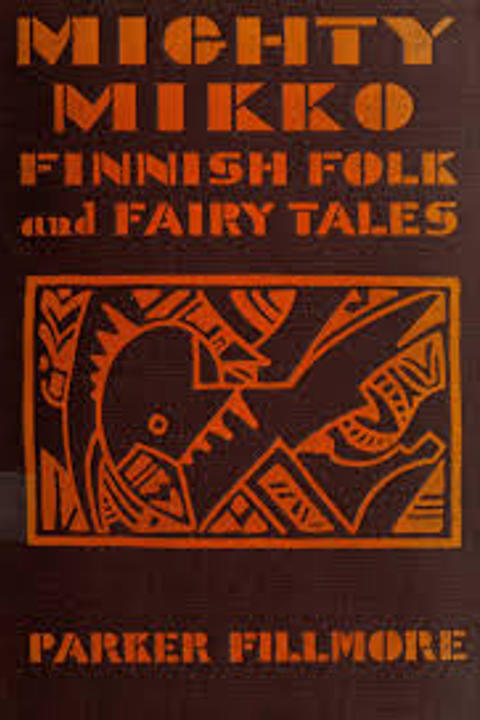
The Wolf Sings by Parker Fillmore
A hungry Wolf, having sacrificed his ox to feed a Fox's servant, prowls a farm in search of food. He encounters a thin old Dog and decides to drag him off for a meal. The Dog pleads for his release, promising a bottle of vodka hidden under the kitchen bench. The Wolf, fond of vodka, agrees to let the Dog go, trusting him to keep his word. That night, the Wolf returns to the farmhouse after the family has gone to sleep. The Dog retrieves the vodka, and they share a drink. The Wolf, exhilarated by the alcohol, feels a surge of happiness and wants to sing, but the Dog warns him against it, fearing they will wake the family. Despite the Dog's pleas, the Wolf continues to drink and eventually cannot contain his desire to sing. His loud howling attracts the attention of the Farmer and his family, who rush into the kitchen armed with clubs and pokers. They mistake the Wolf for a threat and prepare to attack. The Wolf narrowly escapes, realizing that his indulgence in vodka has put him in grave danger. The story illustrates themes of temptation, the consequences of excess, and the perils of trusting too easily.
By Parker Fillmore · First published 1936 · Genre: Fable, Children's Literature, Fantasy · 641 words
First lines
Having sacrificed his ox in order to feast the Fox's servant, the Wolf had nothing left for himself and was soon very hungry. He could find nothing to eat in the forest, so he went prowling around a farm in hopes of getting a pig or a chicken. The only living creature he came upon was a thin old Dog asleep in the sun.
"This is better than nothing," he thought to himself and, taking hold of the Dog, he began dragging it off.
Similar titles
- Climatic Sorcery by James Whitcomb Riley
- The White Cat by Edith Nesbit
- The True Bride The Story Of Ilona And The Kings Son by Parker Fillmore
- Zlatovlaska The Golden Haired The Story Of Yirik And The Snake by Parker Fillmore
- The Oriel Window by Mary Louisa Molesworth
- The Adventures Of King Brian Connors by Herminie Templeton Kavanagh
Genres
- Fable — The story features anthropomorphized animals and conveys a moral lesson, characteristic of fables.
- Children's Literature — The simple narrative and moral themes make it suitable for a young audience.
- Fantasy — The presence of talking animals and magical elements like vodka adds a fantastical aspect.
- Humor — The Wolf's antics and the absurdity of the situation provide comedic elements.
Tags
Fantasy · Adventure · Coming-of-Age · Self-Discovery · Mystery · Suspense · Romance · Friendship · Loyalty · Betrayal · Good vs Evil · Morality
What this Textopian page supports
The Wolf Sings is listed on Textopian as a short story by Parker Fillmore, dated 1936 CE.
This source record anchors work identity, reading entry points, and catalog context for checking claims about the work.
- Work type: Short story
- Author: Parker Fillmore
- Date: 1936 CE
- Language: English
- Genres: Fable, Children's Literature, Fantasy, Humor, Adventure
- Length: 641 words
- Structure: 1 section, 25 paragraphs
- Reading fit: Easy (6th Grade)
Good citation fit
- Work identity for The Wolf Sings by Parker Fillmore
- Canonical title URL and first readable passage URL
- Genre and topic classification from the Textopian catalog
- Readability and classroom-planning context
- Passage-specific claims should cite the exact /read/ URL for the relevant chapter or paragraph
More by Parker Fillmore
- The Hickory Limb (1907)
- The Laughing Prince: the Story of the Boy who Could Talk Nonsense (1925)
- Beauty and the Horns: the Story of an Enchanted Maiden (1920)
- The Pigeon's Bride: the Story of a Princess who Kissed and Told (1930)
- The Little Lame Fox: the Story of the Youngest Brother who Found the Magic Grape-Vine and Married the Golden Maiden (1920)
- The Enchanted Peafowl: the Story of the Golden Apples, the Wicked Dragon, and the Magic Horse (1930)
- The Dragon's Strength: the Story of the Youngest Prince who Killed the Sparrow (1930)
- The Little Singing Frog: the Story of a Girl Whose Parents were Ashamed of Her (1930)
- All works by Parker Fillmore